Three roads through the Haslital’s high mountains
The Haslital is the valley behind Meiringen, the market town about 20 minutes by train from Interlaken Ost. From its upper reaches, three mountain roads climb out in different directions: the Grimsel Pass heads south-west into the Valais, the Susten Pass heads north-east towards Uri and Lake Lucerne, and the Furka Pass continues south from the top of the Grimsel towards the Rhône glacier and Andermatt. None of them is a quick detour. All three sit above 2,100 metres, all three are closed roughly half the year, and all three reward a full day rather than a rushed afternoon.
This is not the polished, ticketed excursion of the Jungfraujoch or the Schilthorn. There is no single railway doing the work. It is a driving and postbus day, built around dam reservoirs, a genuinely startling funicular, and roads that were engineering achievements of their era and still feel like it.
Getting there from Interlaken
Meiringen is the gateway. Trains from Interlaken Ost run roughly every half hour and take about 20 minutes; from there, postbuses continue up into the passes in summer only.
| Leg | Mode | Time | Approx. cost (one way) |
|---|---|---|---|
| Interlaken Ost to Meiringen | Train | ~20 min | CHF 9 (half fare CHF 4.50) |
| Meiringen to Grimsel Pass | Postbus | ~55 min | CHF 27 |
| Meiringen to Susten Pass (Steingletscher) | Postbus | ~50 min | CHF 25 |
| Interlaken to Grimsel Pass | Car | ~1 h 15 | Fuel + parking |
These prices are for standard second-class fares without a travel pass; a Swiss Travel Pass covers the train leg but postbus surcharges on mountain routes are not always included, so check before boarding. If you are driving, note that parking at the passes themselves is limited to roadside pull-offs and small paid car parks near the Grimsel Hospiz and Steingletscher — arriving before 10am on a weekend avoids the worst of it.
Grimsel Pass: dams, reservoirs and a road built for hydropower
The Grimsel Pass road climbs out of the Haslital in a long series of switchbacks above two large reservoirs, the Grimselsee and the Räterichsbodensee, both built for hydroelectric power in the mid-20th century. The dams themselves are worth stopping for: the Spitallamm dam holding back the Grimselsee is a genuine feat of concrete engineering, and a newer dam was completed alongside the original in 2023 after inspections found the old structure cracking.
At the top, 2,164 metres, sits the Grimsel Hospiz, a hotel and restaurant with a history going back to a medieval hospice for travellers crossing the pass on foot. It is not cheap — expect CHF 25–35 for a simple lunch — but it is the only realistic stop at the summit and the terrace views over the reservoir are the reason to pause rather than drive straight through.
From the Grimsel summit, the road either continues over the Furka Pass towards the Aletsch Arena and Valais, or drops back the way it came for those doing Grimsel and Susten only.
Lake Gelmer and the steepest funicular in the world
The genuine highlight of the Grimsel side is a detour that is easy to miss: the Gelmerbahn. From the Handegg stop on the pass road (or the Gelmerbahn’s own car park), a small funicular climbs at a maximum gradient of 106% — meaning parts of the track are literally overhanging — up to Lake Gelmer, a milky turquoise reservoir ringed by bare rock and hanging valleys.
The funicular was built in 1926 to service the dam’s construction and still runs on its original alignment, now purely for tourists. A return ticket costs a little over CHF 30, the ride takes about six minutes each way, and it operates only from around early May to late October, weather and maintenance permitting. Once at the top, a level path runs along the lakeshore for anyone wanting a short walk rather than just the view from the funicular platform; allow at least two hours total for the return trip and a walk.
This is one stop where booking ahead matters in July and August — queues for the funicular can run past an hour on a sunny Saturday, and it does close in strong wind.
Susten Pass: the road through the ice
The Susten Pass, at 2,224 metres, runs from Innertkirchen in the Haslital to Wassen in the canton of Uri, and is generally reckoned the more scenically dramatic of the two roads, with the Steingletscher glacier visible directly from the road on the eastern approach. Built between 1938 and 1945, it was one of the more ambitious road projects of its era, cut through granite with tunnels and viaducts rather than simple switchbacks, and it shows: the surface and gradients are gentler than the Grimsel’s western flank, which is part of why it is a favourite with cyclists and motorcyclists.
The Steingletscher hotel, just below the summit on the Uri side, sits with a direct view of the retreating glacier and serves meals to non-guests; it is a natural lunch stop if the Grimsel Hospiz timing does not work. The glacier itself has retreated visibly even within the last decade — a stark, photographable reminder of what is happening across the region, echoed at Kandersteg’s Oeschinensee and the wider Aletsch glacier further south.
Cyclists take note: the Susten climb from either side is a recognised Tour de Suisse stage climb, roughly 20 km of ascent from Innertkirchen with an average gradient around 5–6%, manageable by alpine-pass standards but long. There is minimal shoulder on some sections, so allow for shared road space with cars and coaches in peak season.
Furka Pass and the vanishing Rhône Glacier
For those with a full extra day, the Furka Pass connects directly from the Grimsel summit at Gletsch, climbing to 2,429 metres before dropping towards Andermatt and, ultimately, Zermatt via Brig. It is best known for two things: the Rhône Glacier ice grotto, a genuine ice cave cut into the retreating glacier each summer (and covered in reflective fleece blankets in winter in an attempt to slow the melt), and the hairpin road used as the car-chase location in the James Bond film Goldfinger.
The ice grotto is a paid attraction (around CHF 12), reachable by a short walk or a shuttle from the car park at Gletsch, and it is worth being honest about: the glacier has retreated so far and so fast that the cave now sits well below where it did even fifteen years ago, and it is smaller and less impressive each passing summer. It is still worth ten minutes if you are already on the pass, not worth a special trip on its own.
The Three Passes postbus route
For travellers without a car, PostAuto Switzerland runs a summer-only route often marketed as the Drei-Pässe-Fahrt, linking Meiringen with all three passes on a single circular or point-to-point journey, typically via Grimsel, Furka and Susten back to Meiringen (or the reverse). It runs roughly late June to early October, with one or two departures a day depending on the exact year’s timetable, and the full loop takes most of a day — closer to seven or eight hours including stops.
Seats should be reserved in July and August; the vehicles used on the pass roads are smaller than standard coaches to handle the hairpins, and popular departures sell out. This is genuinely one of the better ways to see three high alpine roads without driving unfamiliar switchbacks yourself, and it suits anyone basing themselves in Interlaken without a rental car — see driving and parking in the Jungfrau region for the wider picture on whether renting is worth it at all.
When the passes are open — and when they are not
| Pass | Typical opening | Typical closing | Notes |
|---|---|---|---|
| Grimsel Pass | Early to mid-June | Mid-October | Closes earlier in heavy snow years |
| Susten Pass | Late May to mid-June | Late October | Generally the last of the three to close |
| Furka Pass | Mid-June | Mid-October | Depends on Rhône glacier road clearance |
| Gelmerbahn funicular | Early May | Late October | Weather and maintenance closures possible any month |
These dates move by two to three weeks in either direction depending on the previous winter’s snowfall, and none of the three passes has webcams or live status pages that fully substitute for checking directly before setting out. Do not plan a trip for early June or mid-October without confirming the current status; arriving to find a barrier and a diversion sign costs the whole day. The same caution applies to Berner Oberland mountain excursions generally — spring and autumn maintenance closures are the single biggest cause of ruined day trips in this region.
Driving, postbus or bicycle
Drivers get the most flexibility and can stop wherever the view demands it, but need to be comfortable with sustained switchback driving, share the road with cyclists and coaches in July and August, and accept limited parking at the best viewpoints. Postbus travellers trade flexibility for a relaxed ride and no navigation stress, but are tied to a fixed schedule and a handful of stops. Anyone who would rather not plan the logistics at all can look at a guided Bernese Oberland day trip from Interlaken, which trades the high roads for a ready-made route. Cyclists get the full experience of both climbs at their own pace, but should expect a demanding day — the Susten and Grimsel together involve well over 3,000 metres of combined ascent if done as a there-and-back loop, and should not be underestimated by anyone without recent mountain training.
None of the three passes has a scheduled train service; the Bernese Oberland’s railways and cable cars serve Grindelwald, Wengen and the Jungfrau side, not the Haslital passes, which is precisely why this corner of the region sees far fewer visitors than Grindelwald First or Harder Kulm on a comparable summer day.
Where to stop and eat
Beyond the Grimsel Hospiz and the Steingletscher hotel already mentioned, Innertkirchen at the foot of the Susten side has a handful of cafés and a Coop supermarket for anyone wanting to pack a cheaper lunch before the climb — worth doing given how limited and pricey options are once above 1,800 metres. Gletsch, at the junction of the Grimsel and Furka roads, has one historic grand hotel dating from the 19th-century tourism boom, now open seasonally, with a restaurant terrace looking directly up at the Furka hairpins.
Meiringen itself, the natural start and end point, has ordinary Swiss restaurant prices rather than mountain-summit prices, and is worth a stop on the way back. If the passes are closed or the weather turns, the nearby Rosenlaui valley makes a gentler alternative, for example an e-bike tour through the Rosenlaui valley. See also the Sherlock Holmes connection that gives the town an unlikely second claim to fame beyond the passes and the nearby Aare Gorge.
Practical notes before setting out
A few things matter more here than on most Interlaken day trips. Fuel up before starting the loop — there are no petrol stations on any of the three passes, and the nearest reliable stations are in Meiringen or Innertkirchen. Motion sickness affects a meaningful share of passengers on the tighter Grimsel switchbacks; if it is a concern, sit at the front of the postbus or take the driving seat rather than the passenger side. Mobile signal drops out in stretches near all three summits, so download offline maps in advance. Warm layers are worth carrying even in August, since the summits sit above 2,100 metres and wind chill on an exposed pass road is a different proposition from a sunny Interlaken afternoon at 568 metres.
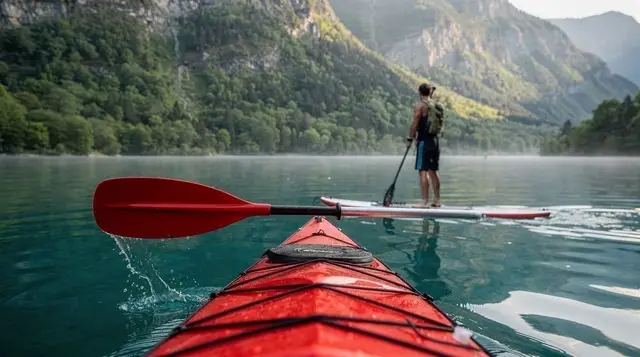
For those weighing this against other big Bernese Oberland days, it sits alongside options like the day trips from Interlaken roundup and pairs naturally with a wider Grand Tour of Switzerland loop for anyone with a full week and a car. If you have a spare day before or after the passes, a calmer way to balance the long hours on the road is time on the water, such as a kayak outing on Lake Brienz. The passes are a longer, more self-directed day than the region’s cable-car excursions, and that is exactly their appeal: fewer crowds, real engineering history, and views that most Interlaken visitors never see because they never leave the Jungfrau side of the valley.