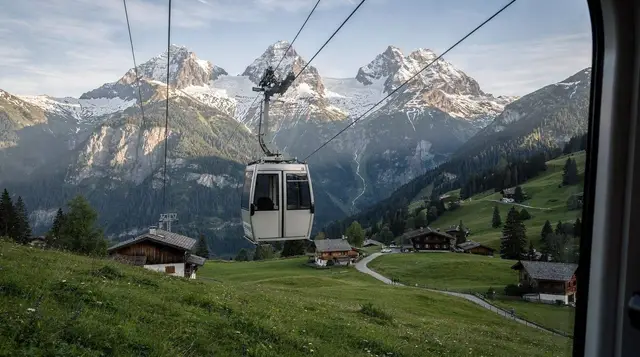
Explore Interlaken by region
Ten regions worth visiting around Interlaken, from the Bödeli between the lakes to the high peaks of the Jungfrau region and the Rhine Falls.
Must-visit areas
The regions every first-time visitor should build a trip around — Interlaken and the Bödeli, the Jungfraujoch and Grindelwald, and Lake Thun and Lake Brienz on either side of town.

Bern: Switzerland's capital, 50 minutes from Interlaken
Bern's arcaded old town, the Zytglogge, bear pits, Zentrum Paul Klee and swimming the Aare, as a single day trip from Interlaken by train.

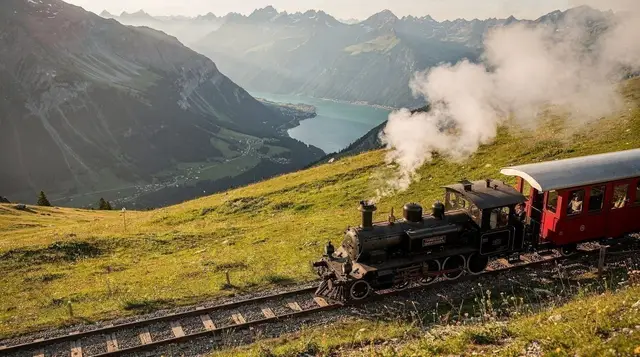
Brienz & the Rothorn Railway
Brienz's steam rack railway climbs 1,678m in an hour to the Rothorn. Fares, timetable, alternatives, and the village's wood-carving and violin schools.

Grindelwald: the village under the Eiger north face
Grindelwald village guide: Eiger north face views, the Grindelwald Terminal, Eiger Express, Bort, Pfingstegg and the glacier gorge, with real CHF prices.

Grindelwald First
Grindelwald First at 2,168m: the Cliff Walk, First Flieger, Mountain Cart, the Bachalpsee walk and why the Faulhorn-Bussalp loop is worth a full day.

Gruyères: cheese, chocolate and a castle on a hill
Gruyères pairs La Maison du Gruyère, the Cailler chocolate factory at Broc, a medieval castle and the Giger Museum in one long day from Interlaken.

Harder Kulm
Harder Kulm in 8 minutes: opening times, restaurant prices, the walk down, and the spring/autumn closures that catch visitors out.
55 guides →
Interlaken
What Interlaken town actually offers: the Höhematte, Höheweg hotels, two train stations, the Kursaal and the views you get without leaving the valley
55 guides →
Jungfraujoch: the Top of Europe
Jungfraujoch at 3,454m: both routes up, real CHF prices, discounts that work, and when fog makes the trip pointless.

Kandersteg and Lake Oeschinen
Cable car plus a 20-minute walk to Oeschinensee: real swim temperatures, the summer luge, the 2-hour lake loop, or the steeper trail up on foot.

Lake Brienz
Why Lake Brienz turns turquoise, the Interlaken Ost boat line, north-shore villages and cold swimming, and how it differs from Lake Thun.

Lake Thun
Paddle steamers, lakeside castles, real swimming spots and boat-train times on Lake Thun — plus the difference between its two shores.
4 guides →
Lauterbrunnen: the valley of 72 waterfalls
Lauterbrunnen's waterfalls, the paid Trümmelbachfälle, valley-floor walking and cycling, parking, and where to actually sleep.

Lucerne: a day trip from Interlaken
How to do Lucerne as a day trip from Interlaken: the panoramic train, Chapel Bridge, the Lion Monument, and a boat-plus-mountain afternoon.

Montreux & Chillon: the Lake Geneva riviera from Interlaken
Montreux and Chillon Castle by Lake Geneva: the GoldenPass line, Rochers-de-Naye marmots, the jazz festival and real day-trip prices from Interlaken.

Mürren
Mürren sits car-free at 1,638m above Lauterbrunnen: how to reach it, the Allmendhubel flower trail, the via ferrata to Gimmelwald, and honest prices.

The Rhine Falls
Europe's biggest waterfall by volume: both banks, the boat to the rock, Laufen Castle, and nearby Schaffhausen and its Munot fortress.

Schilthorn & Piz Gloria
Piz Gloria's revolving restaurant, Bond World, Thrill Walk and 360° panorama at 2,970m — the real ticket price and how to cut it.

Thun
Thun's 1190 castle, rooftop-pavement old town, Aare locks and Schadau park — a practical guide to Switzerland's lake-end town, 25 minutes from Interlaken.
4 guides →
Wengen: the car-free village facing the Jungfrau
Wengen is reached only by train from Lauterbrunnen, faces the Jungfrau, and empties out after 6pm. What it costs, how to get there, and what to walk.

Wilderswil and Schynige Platte
Wilderswil's 1893 rack railway climbs 1,400m in 52 minutes to Schynige Platte's alpine garden and Panoramaweg, with one of the best views of the Jungfrau.
55 guides →
Zermatt: a car-free town under the Matterhorn
Zermatt is car-free and 2h15 from Interlaken via Spiez and Visp. Gornergrat, Matterhorn Glacier Paradise and Sunnegga, with honest costs and timings.

Zurich
Zurich as a full day trip from Interlaken: Bahnhofstrasse, the Grossmünster, Fraumünster windows, lake baths and the Uetliberg viewpoint.
More to explore
Regions for a second trip or a longer first one — Kandersteg and the Simmental, Zermatt and the Matterhorn, and the vineyards of Lake Geneva.

Adelboden: World Cup slopes, waterfalls and family summers
Adelboden guide: the Chuenisbärgli World Cup piste, Engstligen Falls, Tschentenalp, the link to Lenk, and family summer activities.

The Aletsch Arena: the Alps' largest glacier, seen from three balconies
How to see the Aletsch glacier from Riederalp, Bettmeralp and Fiescheralp, and travel there from Interlaken.

Ballenberg open-air museum
Ballenberg's 110 historic buildings, working craftspeople and heritage-breed animals across 66 hectares near Brienz — what it costs and how long you need.

Basel
Basel's art museums, red-sandstone old town, Rhine ferries and river swimming, plus the practical details for a day trip from Interlaken.

Beatenberg and the Niederhorn
The Beatus Caves and Niederhorn's 1,950m summit, reached from Interlaken in about 50 minutes, cost CHF 90–130 for a half or full day.
4 guides →
The Emmental: Switzerland's cheese country
The Emmental region explained: the Affoltern demonstration dairy, overhanging farmhouses, Langnau and Burgdorf, and why the cheese has holes.

Engelberg and Mount Titlis: the rotating cable car to 3,020m
Mount Titlis at 3,020m from Engelberg: the Rotair rotating cable car, Europe's highest suspension bridge, an ice cave, and snow year-round.

Frutigen and the Blausee
The Blausee's blue water and trout, and Frutigen's tunnel-heated greenhouse and caviar farm: two easy stops near Kandersteg.

Grimsel and Susten passes: the Haslital's high roads
Grimsel Pass, Susten Pass and the Gelmerbahn funicular: how to see the Haslital's high alpine roads from Interlaken by car or postbus.

Gstaad
Gstaad guide: the car-free Promenade, Glacier 3000's Peak Walk, the Menuhin Festival, and how the resort sits inside a working dairy valley.

Iseltwald and Giessbach Falls
The Korean drama pier, the new entry fee, the shore path to Bönigen, and Giessbach Falls' 1879 funicular to the Grandhotel.

Kleine Scheidegg and Männlichen
The 2,061m pass below the Eiger north face, the Männlichen gondola and its flat panoramic trail, and the Lauberhorn ski run in winter.

Lake Lucerne: steamers, the Rütli meadow and the Bürgenstock lift
Lake Lucerne from Interlaken: paddle steamers, the Rütli oath meadow, Weggis and Vitznau, the Bürgenstock lift and the Swiss Path along Lake Uri.

Lavaux and Vevey
UNESCO vineyard terraces above Lake Geneva, the Chexbres-Lutry path, open cellars, Vevey's Alimentarium and Chaplin's World.

Lenk & the Simmental
Lenk beyond Gstaad: the Iffigfall waterfall trail, Betelberg's marmot path and the Diemtigtal's historic farms, with real CHF prices and travel times.

Meiringen and the Aare Gorge
Meiringen's Aare Gorge, Reichenbach Falls, Sherlock Holmes sites, meringue legend and the Hasliberg cable car, with prices, hours and travel times.

Mount Pilatus
The world's steepest cogwheel railway, the Golden Round Trip, Pilatus dragon lore, and honest advice for cloudy summit days from Interlaken.

Mount Rigi
Mount Rigi from Interlaken: Europe's first mountain railway, two routes up, Rigi Kaltbad baths, sunrise views, prices and how to get there.

Oberhofen and Hilterfingen, Lake Thun's castle shore
Oberhofen's turreted castle stands in Lake Thun; Hilterfingen's Hünegg sits minutes away. Costs, opening dates, and the lakeshore path between them.
4 guides →
Sigriswil & Merligen
Sigriswil's 340m panoramic bridge, the Two Lakes trail, Merligen on Lake Thun and the Justistal valley's September cheese festival.
4 guides →
Spiez: castle, vineyards and the Lake Thun rail junction
Spiez: the castle on its lake spur, the Romanesque church, the Spiezberg vineyards, the lido beach, and the rail junction to the Simmental and Valais.
4 guides →
Stechelberg & Trümmelbach Falls
Trümmelbach Falls inside the mountain, plus the Stechelberg cable car up to Gimmelwald, Mürren and the Schilthorn. Prices, times, what to skip.

Unterseen and Matten: the old town next door to Interlaken
Untere Gasse, the 1471 church and Stadthausplatz: Unterseen's old town lies 400 metres from the Höheweg, with cheaper beds and far fewer people.
55 guides →Off the beaten path

Aarau and Olten: the Aargau in between
Painted eaves in Aarau, a covered bridge in Olten, and the castle where the Habsburgs started. A realistic day trip from Interlaken via Bern.

Biel/Bienne: the bilingual watch town on Lake Biel
Biel/Bienne from Interlaken: Switzerland's biggest bilingual city, the Omega Museum, the Taubenloch Gorges and Rousseau's island on Lake Biel.

Fribourg
Fribourg's bilingual old town, St Nicholas Cathedral, its wastewater-powered funicular, and Murten's walkable ramparts, reached from Interlaken via Bern.

Lausanne: cathedral, Olympic Museum and Ouchy
Lausanne from Interlaken: the cathedral's night watch, the Olympic Museum, Ouchy's port and Europe's steepest metro.

Neuchâtel: the yellow city on Switzerland's biggest lake
A yellow-stone old town, a clifftop château, chocolate automatons and the Creux du Van canyon: what a day from Interlaken actually costs.

Rapperswil
Rapperswil's castle, rose gardens, 841m wooden footbridge and Knies Kinderzoo, with honest travel times and costs from Interlaken.

Saanen and the Saanenland
Saanen's painted church, French-speaking Rougemont and Château-d'Œx, January balloons, and L'Etivaz cheese aged in its own mountain cellar.

Saas-Fee: the glacier village beside Zermatt
Saas-Fee's Mittelallalin revolving restaurant, Ice Pavilion, summer skiing, car-free village, and how its prices compare with Zermatt's.

Sion & the Valais
Sion's two castles, the world's oldest playable organ, Valais vineyards and Martigny's Gianadda museum, as a day trip from Interlaken.

Solothurn: the town of eleven
Solothurn's baroque old town, St Ursen Cathedral, the Aare cruise from Biel/Bienne and the Weissenstein funicular, as a day trip with real costs.

Stans and the Stanserhorn: the open-top CabriO cable car
Stans and the Stanserhorn: the world's only open-top cable car, a 1893 funicular, and a summit view over ten lakes near Lucerne.

Stein am Rhein: painted facades on the Rhine
The painted old town of Stein am Rhein, Kloster St. Georgen and the Rhine boat to Schaffhausen, with real timings and costs from Interlaken.

Stoos and Fronalpstock: the world's steepest funicular
Stoos's 110% funicular, a car-free village, the Fronalpstock ridge, plus nearby Schwyz's charter museum and Einsiedeln Abbey.

Verbier and Crans-Montana
Verbier's Four Valleys terrain and the Mont Fort glacier meet Crans-Montana's sunny plateau and Plaine Morte glacier, both reachable from Interlaken.

Winterthur: museums, collections and a traffic-free old town
Winterthur's Technorama, Oskar Reinhart art collections and a pedestrian old town: the rainy-day escape near Zurich.

Zug: two lakes and an old town clock tower
Zug's old town, clock tower, Kirschtorte cake, lake promenade and the Zugerberg, plus getting there from Interlaken and what to budget.
Good to know about Interlaken destinations
Interlaken works best as a base with a very wide reach, and this destinations hub is built around that idea: the town itself, plus nine further regions that fan out from it, mostly by train and postbus. Interlaken & the Bödeli covers the narrow strip of land between Lake Thun and Lake Brienz where the town sits — the Hoheweg and its grand hotels, the Hohematte's open meadow with its paragliding landings, the Kursaal and its casino, Harder Kulm reached by an eight-minute funicular, the old town of Unterseen across the Aare, plus Matten, Wilderswil and the base station for the Schynige Platte railway.
The Jungfrau Region is the headline draw: Grindelwald under the Eiger's north face, Grindelwald First and the Bachalpsee, Kleine Scheidegg and the Männlichen, the Jungfraujoch at 3,454 metres, marketed as the Top of Europe and Europe's highest railway station, Lauterbrunnen's valley of 72 waterfalls, Stechelberg and the Trümmelbach Falls, car-free Mürren, Gimmelwald and Wengen, and the Schilthorn's Piz Gloria summit. Lake Thun groups Thun and its castle, Spiez, Oberhofen, Sigriswil's panoramic footbridge, and Beatenberg with the Niederhorn above it.
Lake Brienz & the Haslital covers the turquoise lake itself, Brienz and its steam-powered Rothorn train, Iseltwald and the Giessbach Falls, the Ballenberg open-air museum, Meiringen and the Aare Gorge, and the high Grimsel and Susten passes. Kandertal, Simmental & Gstaad reaches west to Kandersteg and the Oeschinensee, Adelboden, Frutigen and the Blausee, the Lenk and Simmental valley, and Gstaad with the Glacier 3000 cable car. Bern & the Emmental is the closest big city, about fifty-two minutes away by direct train, with its UNESCO-listed arcaded old town, the Zytglogge clock tower and the bear pits, plus the Emmental countryside, Solothurn and Biel/Bienne.
Lucerne & Central Switzerland is an excursion rather than a rival base — Lucerne itself about one hour fifty minutes away on the scenic Brünig line, with Lake Lucerne's paddle steamers, Pilatus, the Rigi, Engelberg and the Titlis, the Stanserhorn, the Stoos funicular and Zug. Zermatt & Valais, under the Matterhorn, is roughly two and a half hours away via Spiez and Visp, alongside Saas-Fee, the Aletsch Arena, Sion, Verbier and Crans-Montana, realistically an overnight rather than a day trip. Lake Geneva & Gruyères covers Montreux and Chillon reached by the GoldenPass line, Lavaux and Vevey, Lausanne, Gruyères, Fribourg and Neuchâtel.
Zurich, Basel & the Rhine Falls rounds out the hub with Switzerland's two largest cities, Europe's biggest waterfall at Neuhausen, Stein am Rhein, Winterthur, Rapperswil, Aarau and Olten. Each destination page below sets out realistic train times and whether a day trip or an overnight is the better call.
Frequently asked questions about Interlaken destinations
Which day trips from Interlaken can I realistically do in a single day?
Grindelwald and Lauterbrunnen (well under an hour by train), Bern (about 52 minutes) and the villages around Lake Thun and Lake Brienz are comfortable day trips with hours to spare. Zurich and Basel fall in the same category. Lucerne stretches a day trip to its limit on the scenic Brünig line, and Zermatt and the Lake Geneva area are better as overnights.
What's covered under Interlaken & the Bödeli versus the Jungfrau Region on this hub?
Interlaken & the Bödeli means the town itself — the Hoheweg, the Hohematte, the Kursaal, Harder Kulm and Unterseen — while the Jungfrau Region covers the valleys and villages beyond it: Grindelwald, Lauterbrunnen, Wengen, Mürren and the Jungfraujoch. Everything further out, from Bern to Zurich, is grouped into eight separate day-trip regions with their own pages.
Is Zermatt worth visiting as a day trip from Interlaken?
It's possible — the train takes around two and a half hours each way with a change in Spiez and Visp — but it leaves only a handful of hours under the Matterhorn after roughly five hours on trains. Most visitors who want to see Zermatt properly, including a cable car up to Gornergrat, are better off staying one night.
Can I see Lucerne in one day from Interlaken?
You can reach Lucerne in about one hour fifty minutes on the scenic Brünig line and see the old town, the Kapellbrücke and a lake cruise in the same day, but it's a longer round trip than the Jungfrau valleys on your own doorstep. An overnight in Lucerne removes the time pressure if you also want to add Pilatus or the Rigi.
Is the Rhine Falls and Zurich day trip from Interlaken worth it?
Yes, if you start early — Zurich is around two hours away by direct train, and Europe's largest waterfall at Neuhausen is a further forty-five minutes beyond it, so combining both in one day means a long stretch on trains for a shorter stretch on the ground. Splitting them into two separate day trips, or staying overnight in Zurich, gives a more relaxed pace.
Mountain excursions on GetYourGuide
Verified deep-linked GetYourGuide tours. Book through these links and we earn a small commission at no cost to you.
GetYourGuide does not provide a product photo for this activity — the image shows the meeting point, photographed by us.