Ballenberg is not a village and not a theme park, though it gets mistaken for both. It’s a working collection of 110 original farmhouses, barns, workshops, mills and chapels, dismantled beam by beam from every canton in Switzerland and rebuilt here, on 66 hectares of pasture and forest above Lake Brienz. Nothing here is a replica built to look old — every building stood somewhere else first, sometimes for four or five centuries, before it was numbered, taken apart and reassembled on this hillside between Brienz and Brienzwiler.
That distinction matters for how you should plan the visit. This isn’t a site you tick off in ninety minutes on the way to somewhere else. It’s a full day, or a serious half day, and the single most common mistake is treating it as a quick stop between the Brienzer Rothorn train and dinner back in Interlaken.
What Ballenberg actually is
The Swiss Open-Air Museum Ballenberg opened in 1978 with the idea that Switzerland’s vernacular architecture — the working farmhouses and barns of the Valais, the Ticino, the Emmental, the Grisons — was disappearing faster than it could be documented in books. Rather than photograph it, the museum’s founders moved it: entire buildings, sometimes with their original furniture, tools and stoves, transported and rebuilt on this one site.
The result is a walk through roughly two dozen distinct Swiss building traditions in the space of an afternoon. A blackened Valais grain store on stilts stands a few hundred metres from a half-timbered house from Basel-Landschaft, which is a short walk from a stone-roofed Ticino stall barn. You’d otherwise need a fortnight of driving across Switzerland to see the originals of what’s gathered here on one hillside.
It is a museum in the formal sense — there’s a curatorial framework, information boards in German, French and English, and a research library behind the scenes — but the daily experience is closer to walking through a series of small, occupied hamlets. Chickens peck around the entrance to a 1786 farmhouse from Schwyz. Someone is genuinely making rope in a workshop from the Bernese Oberland. Sheep with faces like a photographic negative — Valais Blacknose, one of several old breeds kept here — graze the slope behind a barn from their home canton.
The two entrances, and which one to use
Ballenberg has two gates, roughly two kilometres apart at opposite ends of the site: Ballenberg West, close to Brienz village, and Ballenberg Ost (East), close to Brienzwiler. Both sell full-price tickets and both give access to the entire museum — there’s no such thing as a “west-only” ticket — but which one you start from changes your route.
| Entrance | Nearest station | What’s close to this end |
|---|---|---|
| Ballenberg West | Brienz | Emmental and Bernese farmhouses, the main restaurant, the largest concentration of craft workshops |
| Ballenberg Ost | Brienzwiler | Ticino and Valais buildings, the working sawmill, quieter paths |
If you only have half a day, enter and leave from the same gate and don’t try to walk the full length of the site — you’ll spend the time walking rather than looking. If you have a full day, entering at one end and leaving from the other, with a shuttle or bus back to your starting station, covers far more ground than there-and-back on foot. A horse-drawn bus runs between the two ends of the site in season for those who’d rather not walk the connecting path twice.
Getting there from Interlaken
By train, it’s about 20 minutes from Interlaken Ost to Brienz on the line towards Lucerne, then bus 151 towards Ballenberg (around 10 to 12 minutes) for the West entrance. Door to door, that’s 35 to 45 minutes including the change. For the East entrance, stay on the same train two more minutes to Brienzwiler, then it’s a short walk or a connecting bus up to the gate.
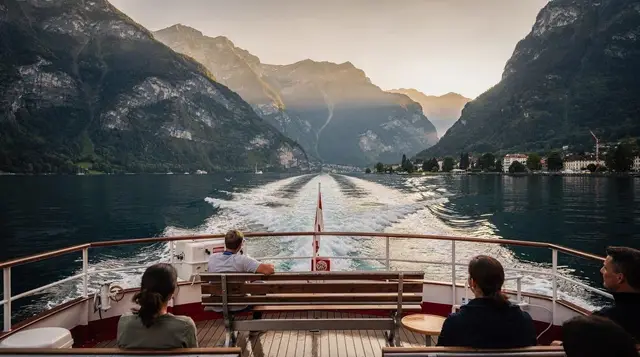
There’s also a boat option if you’re not in a hurry: the Lake Brienz ferry from Interlaken Ost to Brienz takes about an hour, which turns the journey itself into part of the day rather than a means to an end — worth doing on the way there if the weather’s good, less appealing on a tired return leg. See the Lake Brienz boat trips guide for timetables.
If you’re driving, both entrances have paid parking, and Brienzwiler’s is usually less crowded than Brienz’s on a busy August day. For transport passes and how they apply here, see the Swiss Travel Pass guide and the wider trains, buses and boats around Interlaken guide.
How the site is organised
The museum groups buildings loosely by the region they came from, so walking through Ballenberg is, in a rough way, walking across Switzerland: eastern Switzerland and Appenzell buildings cluster in one area, central Switzerland in another, western Switzerland and the Valais further along, Ticino and the southern valleys towards the far end. It isn’t a strict geographic map — some placement decisions were practical rather than thematic — but the grouping is close enough to be useful if you want to focus on one region’s architecture rather than see all 110 buildings indiscriminately.
Paths are gravel or packed earth, mostly flat with some gentle slopes, and wide enough for pushchairs, though a full circuit covers several kilometres and does add up. There are toilets, benches and picnic areas at intervals, but not densely enough that you can assume one is nearby — plan around the ones marked on the map you get at the entrance.
The buildings, region by region
A sample of what’s actually here, rather than a generic description of “traditional houses”: a 1750s Bernese farmhouse with the deep, low-pitched roof built to shed heavy snow; a Valais grain store raised on mushroom-shaped stone discs to keep rodents out, a design essentially unchanged for centuries; a Ticino stall barn built from unmortared stone with a stone slab roof, standing in stark contrast to the timber of the buildings from further north; an Appenzell house with painted decoration on its façade, a regional style still visible on new houses in that canton today; a working forge from Fribourg; a bakehouse where bread is still baked in the original oven and sold, warm, to visitors.
Interior furnishing is often original to the building or matched carefully to its period, so you’re not just looking at four walls — box beds, cooking hearths, tools and textiles fill most of what’s open. Roughly two-thirds of the buildings are open for visitors to walk through unaccompanied; the rest are used for demonstrations, storage or animal housing.
Craftspeople and demonstrations
This is where Ballenberg separates itself from a static architecture park. Through the season, the museum runs scheduled demonstrations of trades that would otherwise have died out with the buildings they’re practised in: weaving on period looms, blacksmithing, basket-making, rope-making, cheese-making in a genuine alpine cheese dairy, wood-turning, pottery, tile-making, and baking in wood-fired ovens.
Not every craft runs every day — the museum publishes a demonstration schedule at both entrances and it’s worth checking before you commit to a route, since walking twenty minutes to watch a specific craft only to find it isn’t scheduled that day is a common frustration. Wood and craft traditions from the region are covered in more depth in the woodcarving and violin-making guide, and the alpine dairy tradition on display here connects to the wider cheese dairies of the Bernese Oberland.
The working sawmill near the East entrance, powered by a water wheel, is one of the more mechanically satisfying demonstrations and worth timing your route around if it’s running the day you visit.
Heritage-breed animals
Ballenberg keeps around 250 farm animals across roughly 20 old and endangered Swiss breeds — the kind that have largely disappeared from commercial farming because they’re less productive than modern breeds, not because they’re less suited to the terrain. Valais Blacknose sheep, Appenzell chickens, Freiberger horses (Switzerland’s own horse breed), and old cattle breeds like the Evolèner and the Rätisches Grauvieh are kept in enclosures alongside the buildings they’d historically have been farmed with.
For families, the animals are frequently the strongest draw, and honestly, more reliably interesting to under-tens than the architectural detail. The Ballenberg with children guide covers routes that lean towards animal enclosures and the sawmill rather than a comprehensive building-by-building circuit.
How long you actually need
Be realistic about this before you buy the train ticket. Ballenberg’s own estimate is that a thorough visit takes a full day, and having walked it, that’s not marketing exaggeration — it’s 66 hectares, and the buildings worth stopping at number in the dozens, not a handful.
| Time available | What’s realistic |
|---|---|
| 2–3 hours | One entrance area only; skip the connecting walk to the other gate entirely |
| Half a day (4–5 hours) | One full half of the site, at a reasonable pace, with one or two demonstrations |
| Full day (7+ hours) | Both halves, several demonstrations, lunch on site, animals included |
If you’re combining Ballenberg with anything else that day — the Aare Gorge near Meiringen, for instance, or a boat back via Iseltwald and the Giessbach falls — commit to one entrance only and accept you won’t see the whole museum. Trying to do both halves plus another stop is how people end up rushing through buildings they paid to see properly.
Tickets and prices
At the time of writing, admission is around CHF 32 for an adult day ticket, with reduced rates roughly half that for young people aged 6 to 15, and free entry for children under 6. Family tickets and season passes are also available at the gate. These figures move year to year, so treat them as a planning guide rather than a quote.
The Swiss Travel Pass includes free admission to Ballenberg as part of its coverage of several hundred Swiss museums, which makes it worth checking your pass validity against your planned visit date before you buy a separate ticket. A half-fare card reduces the train and bus fares to get there but doesn’t discount admission itself.
Combine your visit with a general sense of Bernese Oberland day-trip pricing in the interlaken travel costs guide and, if you’re watching the budget closely, Interlaken on a budget.
a combined Ballenberg admission ticket booked in advance, which is worth doing in July and August when queues at the gate can run long on a fine Saturday.
Food and drink on site
Both entrance areas have a proper restaurant, and there are simpler snack points scattered through the site — a bakehouse selling fresh bread, a dairy selling cheese, occasional stalls near busier building clusters. None of it is cheap in the way a supermarket sandwich is cheap; expect ordinary Swiss museum-restaurant pricing, roughly CHF 20 to 30 for a hot main course.
Picnic tables are dotted around the grounds and there’s no rule against bringing your own food, which is the honest budget move if you’re visiting with a family and want to avoid two sit-down meals in one day. The bakehouse bread, bought warm, is worth the small extra cost regardless of budget.
When to go, and when to skip it
Ballenberg only operates mid-April to late October — there is no winter season, since most demonstrations, animal enclosures and outdoor paths depend on the season being open. Within that window, late May through September gives the fullest programme of craft demonstrations; visiting in April or October, you’ll see the buildings and most animals but a thinner schedule of working crafts, and it’s worth checking what’s actually running before you commit a full day to a shoulder-season date.
Go on a dry day if you possibly can. The paths are unpaved and the appeal of walking between farmhouses drops sharply in persistent rain, and unlike an indoor museum, there’s no fallback plan once you’re inside. If the forecast is bad, this is a day to swap for something covered — see things to do in Interlaken when it rains — and reschedule Ballenberg for later in your trip.
Weekday mornings are quieter than weekend afternoons, and August school-holiday weekends can mean genuine queues at the ticket booths, particularly at the more popular West entrance.
Ballenberg with children
Children generally respond better to the animals, the sawmill and the bakehouse than to reading building information boards, so a family day here works best with a route built around those anchor points rather than a comprehensive architectural tour. The Ballenberg with children guide and the broader Interlaken with kids guide cover pacing, pushchair-friendly routes and where the site gets muddy after rain.
For a wider view of how a Ballenberg day fits into a longer Interlaken itinerary, the day trips from Interlaken guide and the seven-day itinerary with day trips both place it alongside the region’s other half-day and full-day options, and how many days in Interlaken is worth reading if you’re still deciding how much time the whole trip needs.
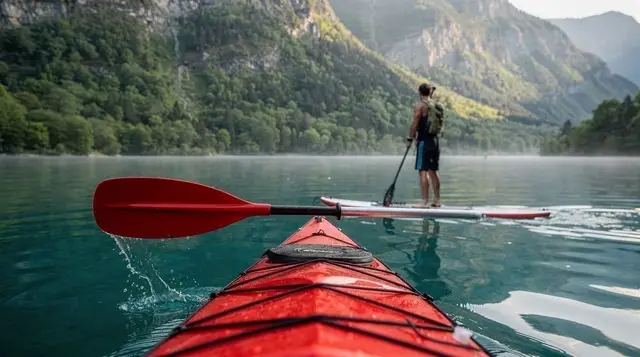
If Ballenberg is one stop in a wider Bernese Oberland day, a guided day trip around the Bernese Oberland with cable car included bundles several sights without the logistics of separate tickets. For an active alternative on the same lake, a half-day kayak trip on Lake Brienz makes a good pairing with a half-day museum visit, and if you want the high ground to go with the historic buildings, a guided ascent of the Brienzer Rothorn is a reasonable way to close the day from the same station.
Ballenberg: frequently asked questions
How much time do you need at Ballenberg?
A minimum of three to four hours if you stick to one half of the site. Most visitors who want to see both the west and east areas properly, including a couple of craft demonstrations and a sit-down lunch, need six to seven hours — effectively the whole day.
What are the two entrances to Ballenberg?
Ballenberg West, near Brienz village, and Ballenberg Ost (East), near Brienzwiler. Both sell tickets and both give access to the full 66-hectare site, but they open onto opposite ends of it, roughly two kilometres apart on foot.
How do you get to Ballenberg from Interlaken?
Take the train from Interlaken Ost towards Lucerne to Brienz (about 20 minutes), then bus 151 to the West entrance (a further 10 to 12 minutes). For the East entrance, stay on the train two more stops to Brienzwiler and walk or take the connecting bus. Door to door, allow 35 to 45 minutes.
How much does Ballenberg cost?
Adult admission is around CHF 32, with reduced rates for young people and free entry for small children. The Swiss Travel Pass, which covers free admission to several hundred Swiss museums, includes Ballenberg — check current terms before you travel, since museum lists and prices are revised each season.
Is Ballenberg open all year?
No. The museum runs a single season, roughly mid-April to late October, and closes completely over winter because most of the buildings, animal enclosures and craft workshops depend on staff and animals being on site. There is no reduced winter opening.
Can you actually see craftspeople working, or is it mostly empty buildings?
Both. Around a hundred buildings are open to walk through unattended, but on top of that the museum schedules working demonstrations — weaving, baking, blacksmithing, cheesemaking, wood-turning and more — through the day. Not every craft runs every day, so check the demonstration board near each entrance when you arrive.
Is Ballenberg suitable for young children and pushchairs?
Yes, with caveats. Paths are mostly gravel and hard-packed earth, manageable with a pushchair but tiring over the site’s full length, and some outlying buildings sit on sloped ground. Children generally like the animals and the working sawmill more than the historical detail — plan a route that doesn’t try to cover everything.
Is Ballenberg worth it if you’ve already seen other open-air museums?
The scale is the point: 110 original buildings moved from every part of Switzerland, not replicas, spread over enough ground that no two cantons’ architecture sit side by side. If you’ve found other open-air museums to be a few reconstructed cottages around a car park, Ballenberg is a different order of thing. If you found them dull regardless of scale, this one won’t convert you.