How many days in Interlaken?
How many days do I need in Interlaken?
Three full days covers Interlaken itself, one mountain excursion and Lauterbrunnen without rushing. Five days adds a second mountain and a lake cruise; seven brings Bern, Lucerne or Zermatt within reach as day trips. Two days works only as a stopover, not a proper visit.
Every Interlaken itinerary question comes down to the same arithmetic: one good weather day buys you one mountain excursion, and the Bernese Oberland has roughly six mountains worth the fare. Add the town itself, the two lakes and the villages you can’t reach by car, and the honest answer to “how many days” depends less on how much you want to see and more on how many of those things you’re willing to pay for and how much bad weather you’re prepared to absorb. This guide sets out what two, three, five and seven days actually deliver, where the returns start to flatten, and which length suits which kind of traveller.
Two days: a stopover, not a stay
Two days in Interlaken is enough to see the town and ride exactly one cable car or cogwheel railway to altitude. It is not enough to do both the Jungfraujoch and the Schilthorn, and it is not enough to add Lauterbrunnen properly on top. Most two-day visitors spend their first afternoon walking the Höheweg, crossing the Hohematte and taking the eight-minute funicular up to Harder Kulm for a view over both lakes at a fraction of the cost of the higher summits. The second day goes entirely on one big-ticket excursion: either the Jungfraujoch via Lauterbrunnen and the Kleine Scheidegg, or the Schilthorn via Mürren.
The arithmetic that makes two days feel thin: a Jungfraujoch day is effectively a full day door to door, and once you’ve spent it there is no time left for the Lauterbrunnen valley floor, for a lake cruise, or for Grindelwald. Two days works well as a stopover between two other Swiss bases — say, arriving from Zurich and continuing to Zermatt — but as a stated destination in its own right it leaves visible gaps.
If you’re arriving by train, our getting to Interlaken from Zurich Airport guide covers the connection; if you’re routing in from France or western Switzerland, the transfer described in the direct coach from Geneva to Interlaken saves a change of train and roughly ninety minutes each way.
| Two-day plan | What fits | What doesn’t |
|---|---|---|
| Day 1 | Town walk, Hohematte, Harder Kulm | Lauterbrunnen, lake cruise |
| Day 2 | One high-altitude excursion (Jungfraujoch or Schilthorn) | The other one, plus any village stop en route |
See our dedicated two-day itinerary for hour-by-hour timing.
Three days: the point of real return
Three days is where an Interlaken trip stops feeling rationed. The extra day almost always goes to the Lauterbrunnen valley, and it’s the single best-value day of any Interlaken stay: the valley floor walk past the 297-metre Staubbachfall and on to the Trümmelbach falls costs a fraction of a mountain railway ticket and takes half a day on foot. Some visitors instead use the third day for a car-free village — Wengen or Mürren — reached by train and cable car with the road left at Lauterbrunnen or Stechelberg.
Three days also gives enough slack to survive one bad-weather morning without losing an entire excursion. That matters more here than in most places: the lifts to the Jungfraujoch, Schilthorn and Grindelwald First close for scheduled revision in spring and autumn, and some close on windy days regardless of season — checking the best time to visit and building in a spare half-day is cheap insurance against a wasted ticket. An e-bike is a good way to fill a flexible half-day when the high peaks are socked in cloud but the valley floor is clear; the e-bike rental in Interlaken covers the Bödeli and both lakeshores without needing a car.
Our three-day itinerary lays out the standard version: town and one mountain on day one, Lauterbrunnen valley on day two, second mountain or a car-free village on day three.
Five days: day trips start to make sense
At five days, the maths changes. You’ve covered the immediate Interlaken area — town, Hohematte, Harder Kulm, Lauterbrunnen, one or two mountains — inside three days, so days four and five are naturally spent further afield. This is where a day trip to Bern (52 minutes each way by train) or Lucerne (about 1 hour 50 via the Brünig line) earns its place: both are close enough to go and return the same day without feeling rushed, and both offer something Interlaken itself doesn’t — a genuine old town, in Bern’s case a UNESCO-listed one.
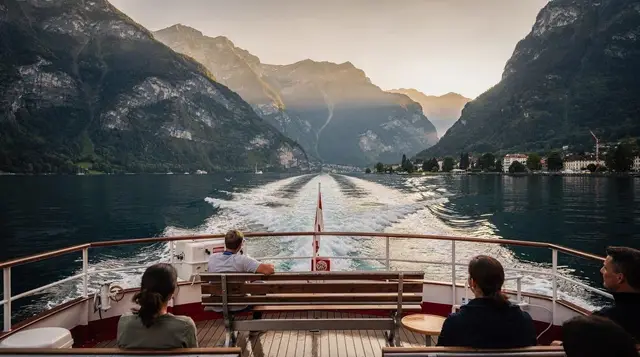
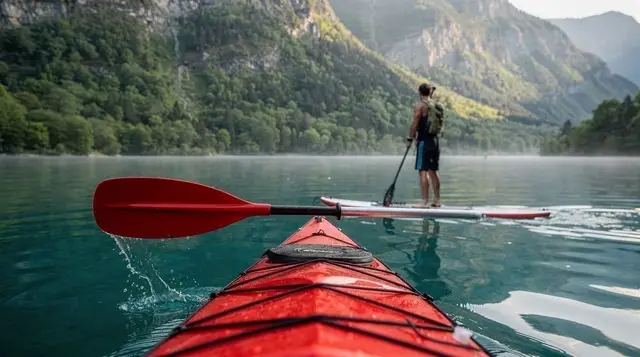
Five days is also enough to add a boat trip on Lake Thun or Lake Brienz, which most two- and three-day visitors skip entirely despite the paddle steamers being one of the region’s better-value mornings. And it’s enough to justify one further-flung outdoor activity rather than only sightseeing — a half-day on the water fits well alongside a morning like the wild valleys and waterfalls morning tour which covers ground most rail-only itineraries miss.
Where five days can go wrong: spending all five inside the Bodeli and its immediate mountains. By day four of that version, you’re re-treading terrain — a second high-altitude railway rarely feels as good as the first, and the view differences between, say, Schynige Platte and Männlichen are real but marginal to anyone who isn’t a dedicated hiker. The better five-day trip deliberately leaves Interlaken for at least one full day. See the five-day itinerary and day trips from Interlaken for the options.
| Five-day plan | Focus |
|---|---|
| Days 1–3 | Town, one mountain, Lauterbrunnen valley |
| Day 4 | Day trip to Bern or Lucerne |
| Day 5 | Lake cruise or second mountain, chosen by weather |
Seven days: the region beyond Interlaken
Seven days is where the Jungfrau region stops being the whole trip and becomes a base for the wider Bernese Oberland and beyond. Zermatt becomes realistic as a long day trip (about 2 hours 15 via Spiez and Visp), as does Montreux and the Château de Chillon via the GoldenPass line, or Gruyères for cheese and chocolate.
A seventh day is also enough to justify a proper alpine excursion further out, such as the Glacier 3000 cable car round trip near Gstaad, which most three- and five-day visitors never reach because it sits outside the core Jungfrau lift network.
The honest caveat about seven days: the marginal value of each additional day keeps dropping. Days one through three deliver the highlights everyone comes for. Days four and five extend the trip into day trips and boats that are genuinely worthwhile but optional. By day six and seven, you’re choosing between a second visit to somewhere you already liked, a long-distance day trip that eats most of the day in transit, or padding with rest days in town.
None of that is a bad trip — but it’s worth knowing going in that seven days is for depth and range, not because Interlaken itself has seven days of unique sights. Our seven-day itinerary with day trips is built around exactly this taper: front-load the must-see mountains, then spend the back half ranging outward.
Diminishing returns, in plain numbers
| Days | What’s genuinely new versus the previous length | Cost pattern |
|---|---|---|
| 1 → 2 | A second high-altitude excursion | Large jump — this is the priciest single addition |
| 2 → 3 | Lauterbrunnen valley on foot | Cheap — the best-value extra day |
| 3 → 5 | Day trips (Bern, Lucerne), lake cruises | Moderate — mostly transport, some already covered by a rail pass |
| 5 → 7 | Longer day trips (Zermatt, Montreux, Gruyères), a second visit to a favourite spot | Rises again — longer trains, more meals out |
If you’re holding a Swiss Travel Pass or regional pass, the 3-to-5-day range is where it earns back its cost fastest, since most of that stretch is train and boat travel rather than paid attractions.
Matching the number of days to the traveller
- Weekend stopover between other Swiss stops: two days, one mountain, accept you’ll miss the valley floor.
- First-time visitor, main purpose of the trip: three to four days — town, one mountain, Lauterbrunnen, a buffer day for weather.
- Couples or friends wanting a fuller trip without day-tripping far: five days, split roughly 60/40 between the immediate area and one or two day trips.
- Families with young children: five to seven days, paced more slowly — see Interlaken with kids for what actually works at altitude with a pushchair or a toddler’s nap schedule.
- Hikers using Interlaken as a hiking base: seven days minimum; the best day hikes from Interlaken alone could fill five of them before you’ve touched a museum or a lake cruise.
- Rail and mountain-railway enthusiasts: seven-plus days, since the region has more distinct railway lines — the Jungfrau line, the Schynige Platte rack railway, the Brienz Rothorn steam train, the Wengernalp railway — than any other length of stay lets you ride without repeating a route.
Practical constraints that override the ideal number
Two things override any of the day counts above. First, the lift closures for scheduled maintenance each spring and autumn: check specific opening dates for the Jungfraujoch, Schilthorn and Grindelwald First lines before fixing your dates, because a closed lift can turn a carefully planned three-day trip into a two-mountain trip that only manages one.
Second, budget: Switzerland is not cheap, and Interlaken is priced in Swiss francs, not euros — a realistic sense of what each extra day costs is covered in Interlaken travel costs and Interlaken on a budget. Extending from three days to five typically adds one or two rail-heavy days rather than expensive attraction days, which keeps the marginal cost lower than the jump from one day to two.
If you’re deciding between Interlaken and a neighbouring base entirely, our comparisons of Interlaken versus Lucerne and Interlaken versus Zermatt address a different question — where to stay — rather than how long, but the answer to “how many days” usually comes first: decide the length of the trip, then decide how much of it to spend based here versus elsewhere.
Choosing how many days for your Interlaken trip
Is one day in Interlaken enough?
One day is enough to walk the town, cross the Hohematte and ride one funicular such as Harder Kulm, but not enough for the Jungfraujoch or a village like Mürren. Treat a single day as a taste of the region, not a visit to it.
What should I skip if I only have two days?
Skip trying to combine the Jungfraujoch and Schilthorn in the same trip; pick one high-altitude excursion and spend the rest of the second day in Lauterbrunnen or on the lakes. Attempting both in two days usually means rushing each and getting weather-cancelled on one.
Is five days too long for Interlaken?
Five days is not too long if you use two of them for day trips beyond the Bodeli, such as Bern or Lucerne. Five days spent entirely within the immediate Interlaken area starts to feel repetitive by day four.
Should I split a week between Interlaken and Lucerne or Zermatt?
For a first visit, base in Interlaken for the whole week and take Lucerne or Zermatt as long day trips by train; both are under two and a half hours away. Splitting your luggage between two bases only pays off on a second visit when you already know which villages you want more time in.
Does the season change how many days I need?
Yes. In shoulder season, when lifts close for spring or autumn maintenance, add a spare day to your plan as a buffer against a closed mountain; in midwinter and midsummer, when everything runs, three days covers the same ground you’d otherwise need four for.
What’s the best use of a third day in Interlaken?
A third day is best spent in Lauterbrunnen valley, on foot along the valley floor past the Staubbachfall and into the Trümmelbach falls, rather than on a second high-altitude railway. It’s the cheapest full day of the trip and the one most visitors say they wish they’d had more time for.
Lake cruises & boat tours on GetYourGuide
Verified deep-linked GetYourGuide tours. Book through these links and we earn a small commission at no cost to you.
GetYourGuide does not provide a product photo for this activity — the image shows the meeting point, photographed by us.