Jungfraujoch: the complete guide to the Top of Europe
Is the Jungfraujoch trip worth the price?
A return ticket from Interlaken Ost runs to roughly CHF 200-224 in summer and closer to CHF 150-180 with the Good Morning discount, a Half Fare Card or the Swiss Travel Pass, and the view only shows up on a clear day. Set aside a full day: the round trip plus 2h30 at altitude takes 7-9 hours depending on the route you take.
Two routes up, and they are not interchangeable
Every train to Jungfraujoch ends at the same station, Europe’s highest at 3,454m, bored through the rock between the Mönch and the Eiger. But there are two distinct ways to get there from Interlaken, and picking the wrong one for your day can cost you 40 minutes you did not plan to lose.
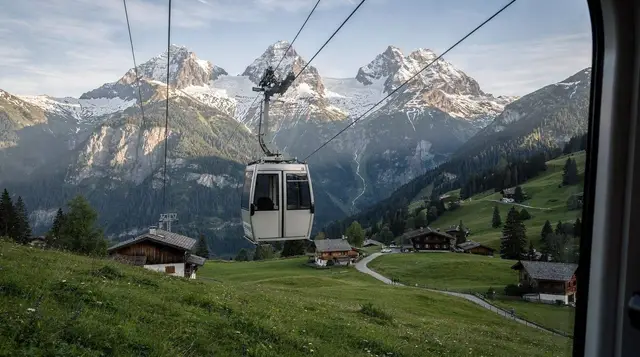
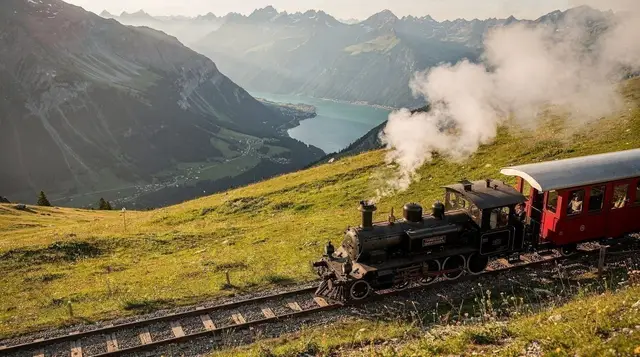
Route 1, via Lauterbrunnen and Kleine Scheidegg. From Interlaken Ost, a train drops you in Lauterbrunnen in about 20 minutes. From there the Wengernalp Railway climbs through Wengen to Kleine Scheidegg, a cog railway ride of around 50 minutes with the Eiger’s north face filling the window for most of it. At Kleine Scheidegg you change onto the Jungfrau Railway proper, which spends roughly 35 minutes climbing through tunnels cut into the Eiger and Mönch before emerging at the top. This is the original line, opened in 1912, and it is the one most photographs of the journey were taken from.
Route 2, via Grindelwald and the Eiger Express. From Interlaken Ost, a train reaches Grindelwald in about 35 minutes. From Grindelwald Terminal, the Eiger Express gondola covers the climb to Eigergletscher in around 15 minutes, cutting out the old Wengernalp line entirely. From Eigergletscher it is a short final stretch on the same rack railway used by route 1 up to the Jungfraujoch. The full write-up on this line, including how it changed the whole valley’s traffic patterns, is in the Eiger Express and Grindelwald Terminal guide.
| Via Lauterbrunnen | Via Grindelwald | |
|---|---|---|
| One-way time from Interlaken Ost | ~1h45 | ~1h10-1h15 |
| Changes | 2 (Lauterbrunnen, Kleine Scheidegg) | 2 (Grindelwald Terminal, Eigergletscher) |
| Best for | The classic Eiger north face views | Speed, families, avoiding one leg of cog railway |
| Return via | Same route or the other one | Same route or the other one |
Most people go up one way and come down the other, which costs nothing extra and means you see both valleys. If you only have time for one leg each direction, the Lauterbrunnen side has the better scenery and the Grindelwald side has the shorter queues at Eigergletscher in the morning. For the full mechanics of both lines, including the older Wengernalp Railway that most people skip past too fast, see the Jungfrau railway guide.
Full price, and every discount that actually applies
Jungfraujoch pricing is genuinely confusing because there are five or six overlapping discount schemes and none of them stack the way people assume. Treat the numbers below as a planning guide, not gospel, and check jungfrau.ch before you buy since fares are revised at least once a season.
| Ticket type | Typical return from Interlaken Ost | Notes |
|---|---|---|
| Standard adult, high season | ~CHF 224 | Includes both connecting legs, either route |
| Good Morning ticket | ~CHF 195 | First one or two departures only, non-refundable if you oversleep |
| Half Fare Card holder | ~CHF 205 | 50% off point-to-point fares up to Kleine Scheidegg/Eigergletscher, smaller reduction on the final stretch |
| Swiss Travel Pass holder | ~CHF 168 | Around 25% off, not a free excursion like most Swiss narrow-gauge lines |
| Winter season (roughly November-April, excluding peak weeks) | ~CHF 175-190 | Combined with a lower “winter” base fare |
| Children 6-15 | Half of the adult fare | Under 6 travel free |
Two things trip people up. First, the Swiss Travel Pass does not cover the Jungfraujoch the way it covers most of the network; it only discounts it, so budget the discounted fare as a real cost on top of the pass. Second, the Good Morning discount only applies to the very first services of the day, which usually means leaving Interlaken before 7am to reach the summit before the midday crowds and before afternoon cloud has a chance to build. For a full comparison of which pass suits which itinerary, see the Swiss Travel Pass guide.
Booking ahead also matters more than the price difference suggests, since walk-up tickets on a clear summer day can mean a wait for the next available train slot rather than the next train. The straightforward option is the self-guided Jungfraujoch day trip ticket, which fixes your outbound slot and leaves the route and return time flexible.
What you actually do in 2h30 at the top
The station opens onto a network of tunnels and lifts, and it takes longer to move between the sights than most people expect, so treat 2.5 hours as a working minimum rather than generous.
- Sphinx Observatory. A lift takes you up to 3,571m for the terrace and panorama windows over the Aletsch Glacier, the longest ice stream in the Alps. Queues for this lift are the main bottleneck of the whole visit, worst between 11am and 2pm.
- Ice Palace. A series of tunnels and chambers carved directly into the glacier, with ice sculptures that are re-cut most seasons. Cold and slippery underfoot; allow 20 minutes.
- Plateau. The outdoor snow terrace, weather permitting, with sledging and snow tubing runs in season. This area closes in poor visibility or high wind, which is one more reason the weather rule below matters.
- Alpine Sensation. A slower, walk-through gallery covering the history of alpine tourism and the railway’s construction, useful if you want fifteen minutes out of the wind.
- Lindt Swiss Chocolate Heaven. A branded shop and small exhibit; skippable unless travelling with children who need a pause.
- Restaurants. Several self-service and one panorama restaurant, priced as you’d expect for a captive audience at 3,454m; a coffee and pastry easily runs CHF 12-15.
A realistic 2.5-hour plan: Sphinx Observatory first while queues are shortest, then the Ice Palace, then the Plateau if the weather allows it, with lunch fitted in wherever the queue gaps appear rather than at a fixed time.
Altitude, and who should think twice
At 3,454m the air holds noticeably less oxygen than at Interlaken’s 568m, and because the train does the climbing for you, there is none of the gradual acclimatisation a hiker would get. Mild symptoms, a dull headache, shortness of breath on the stairs between levels, or slight light-headedness, are common and usually pass within the visit. They are not a sign anything has gone wrong, just the altitude doing what altitude does.
Anyone pregnant, managing a heart or lung condition, or travelling with infants should check with a doctor before booking, since the exposure is brief but the altitude is real. On the day, drink water rather than the mulled wine on sale at the summit, skip alcohol beforehand, and move at a slower pace than you would at sea level. If someone in your group develops a severe headache, confusion or real difficulty breathing, the lift back down runs constantly and getting to lower altitude is the actual treatment.
The weather rule that decides everything
More people regret the Jungfraujoch for weather than for price. The entire point of the trip is the view from the Sphinx Observatory over the Aletsch Glacier and across to the Black Forest and Vosges on a clear day; in cloud, you have paid CHF 200 to visit an indoor shopping centre with an ice sculpture room.
The rule is simple: check the official Jungfraujoch webcam the evening before and again first thing in the morning. If the Eiger and Mönch are wrapped in cloud from Interlaken’s own streets, or the forecast shows no break before mid-morning, do not go that day. Cloud on the summit ridge is common even when Interlaken itself is sunny, because the peaks generate their own weather.
If your schedule allows any flexibility at all, build in a two- or three-day window rather than a single fixed date; see Interlaken in bad weather for what to do on the days you swap it out for, and altitude, weather and what to pack for what the temperature actually does at the top even in summer, which is regularly close to freezing.
If the webcam shows the Jungfraujoch closed in but Interlaken itself is clear, a private walking day in the valley is a reasonable swap rather than wasting the ticket, and the private walking tour of Lauterbrunnen with an Irish guide works well as a same-day substitute since it does not depend on the summit being clear. For a lower-altitude alternative that is less weather-sensitive overall, the Jungfraujoch versus Schilthorn comparison is worth reading before you commit to either.
Booking, timing and avoiding the crowds
Peak crowding hits both terminals, Grindelwald Terminal and Kleine Scheidegg, between mid-morning and early afternoon in July and August, when both routes run close to capacity. The first departures of the day are quieter, cheaper under the Good Morning scheme, and more likely to catch clear morning air before afternoon cloud builds over the ridge, which is the single best reason to start early regardless of the ticket discount.
For visitors making a special occasion of it, or hoping to catch sunrise or sunset over the glacier without the day-trip time pressure, the Jungfraujoch overnight stay at 3,600m puts you above the crowds entirely for a night, though it books out months ahead in summer. If you are based in Zurich rather than Interlaken and want the trip handled end to end, including train logistics, the small-group day trip from Zurich removes the need to plan your own connections.
However you book it, the Jungfraujoch works best as a single-purpose day rather than one stop among several. Trying to combine it with a full valley itinerary usually means rushing the summit or missing a connection; the Jungfrau region highlights, three days itinerary gives it a full day on its own with the surrounding villages spread across the other two.
For how it fits against a broader Interlaken stay, see how many days in Interlaken, and for the honest account of what first-timers get wrong here, what nobody tells you about the Jungfraujoch is worth five minutes before you book. If the choice really comes down to which viewpoint above Grindelwald suits your day best, First versus Männlichen versus Kleine Scheidegg covers the lower-altitude alternatives that don’t carry the same weather risk or price tag.
Frequently asked questions about the Jungfraujoch trip
How much does the Jungfraujoch cost from Interlaken?
A standard adult return from Interlaken Ost costs around CHF 224 in high season, with the Wengernalp and Jungfrau railways both included. The Good Morning ticket on the first departures brings that down by roughly CHF 25-30, and a Swiss Travel Pass or Half Fare Card cuts it further. Prices are revised each season, so check jungfrau.ch before you book.
Which route is better, via Lauterbrunnen or via Grindelwald?
Via Lauterbrunnen and Kleine Scheidegg gives the classic view of the Eiger north face from the train and is the older, more scenic line. Via Grindelwald and the Eiger Express is roughly 30-40 minutes faster each way because the gondola skips the winding Wengernalp Railway, which suits families or anyone doing the trip as a single long day.
Does the Swiss Travel Pass cover the Jungfraujoch for free?
No. Unlike most Swiss narrow-gauge lines, the Jungfraujoch excursion is only discounted for pass holders, typically by around 25%, not included at no extra cost. Budget CHF 160-170 on top of a Swiss Travel Pass for the return fare.
Is there a cheaper ticket for an early train?
Yes. The Good Morning ticket applies to the first one or two departures of the day from Interlaken, Lauterbrunnen or Grindelwald and knocks a meaningful chunk off the return fare. The trade-off is an early start and a longer stretch at altitude before the midday crowds arrive, which is usually the better trade anyway.
How likely is altitude sickness at 3,454 metres?
Mild symptoms such as a dull headache, breathlessness on stairs or slight light-headedness are common because the train ascends fast with no time to acclimatise. Full altitude sickness is uncommon on a visit this short, but anyone pregnant, with heart or lung conditions, or travelling with infants should ask a doctor first and move slowly once at the top.
What happens if the Jungfraujoch is fogged in on the day?
Cloud sitting on the Eiger and Mönch is the single most common reason people regret the trip, since the Sphinx Observatory view is the whole point. Check the official Jungfraujoch webcam the evening before and the morning of, and if Interlaken itself is under cloud with no break forecast, postpone or swap to a lower excursion instead.
How long should I set aside for the whole trip?
Plan for a full day: roughly 2-2.5 hours up, 2-2.5 hours down, and at least 2.5 hours at the summit once queues for the lifts and Ice Palace are factored in. Door to door from an Interlaken hotel, 8-9 hours is realistic rather than the 5-6 hours the ticket price might suggest.
Mountain excursions on GetYourGuide
Verified deep-linked GetYourGuide tours. Book through these links and we earn a small commission at no cost to you.
GetYourGuide does not provide a product photo for this activity — the image shows the meeting point, photographed by us.