Interlaken in bad weather: what to check before you buy
How do I know if the weather is good enough for a mountain trip from Interlaken?
Check the live webcam for the specific summit, not the forecast for Interlaken town, since the valley can be sunny while the top is in cloud. If the webcam shows white-out or the operator's status page says restricted visibility, postpone rather than buy — most mountain tickets are non-refundable once used, though Jungfraubahnen does offer a limited weather guarantee on some Jungfraujoch tickets.
Why the Interlaken forecast can lie to you
Interlaken itself sits at 568 metres in a wide valley between Lake Thun and Lake Brienz, and its weather is often nothing like the weather 2 000 to 2 900 metres above it. A blue-sky morning on the Höheweg tells you almost nothing about whether the Jungfraujoch is sitting inside a cloud bank. This is the single most expensive mistake first-time visitors make here: they check a phone weather app for “Interlaken”, see sun, and buy a full-price return ticket to a summit that turns out to be a wall of white when they arrive. The fare doesn’t come back just because you’re disappointed.
The fix is simple but takes an extra five minutes before you queue at the counter: check the mountain, not the town. Every major lift operator in the region publishes live webcams and a same-day status note, and reading them first is the difference between a clear-day photo from the top of Europe’s highest railway station and a €200 ticket spent inside fog.
Reading the cloud ceiling before you buy anything
Cloud in the Bernese Oberland tends to behave in layers. A typical unsettled day might have a cloud base sitting around 2 000 to 2 400 metres, which would leave Harder Kulm (1 322 m) and the lower slopes clear while burying Grindelwald First (2 168 m), the Schilthorn (2 970 m) and the Jungfraujoch (3 454 m) in mist. On other days a temperature inversion does the opposite: valley fog sits over Interlaken and the lakes while the summits bask in sun above the cloud layer, which is actually one of the best reasons to go up on a grey Interlaken morning rather than stay down.
Because the two patterns look identical from your hotel window, the only reliable read is the summit’s own live feed. A rough guide to what to look for:
| Signal | What it means |
|---|---|
| Webcam shows blue sky and distant peaks | Good visibility, ticket is worth buying |
| Webcam shows grey-white with no horizon | Summit is in cloud, wait or postpone |
| Operator status page flags high wind | Open gondola sections may be suspended |
| Status page flags scheduled maintenance | Line is closed regardless of weather, check dates in advance |
The webcams worth checking
Each major operator runs its own cameras, updated every few minutes, and it’s worth bookmarking the right ones rather than relying on a generic search:
- Jungfrau Railways (jungfrau.ch) publishes webcams from the Jungfraujoch itself, from Kleine Scheidegg, and from the Eigergletscher station on the Eiger Express route, alongside a same-day weather and visibility note for the summit. This is the one to check before any Jungfraujoch trip.
- Schilthornbahn runs a webcam from Piz Gloria at the top of the Schilthorn, useful for comparing against the Jungfraujoch feed on a day when you’re deciding between the two — see our Jungfraujoch versus Schilthorn comparison if you’re choosing.
- Grindelwald First and Männlichen each have operator webcams covering their own ridgelines, relevant if your plan involves the First cliff walk or the Männlichen to Kleine Scheidegg walk.
- Harder Kulm’s funicular page carries a webcam too — lower stakes given the short, cheap ride, but still worth a glance if you specifically want the panorama over the Bodeli rather than a foggy platform.
- MeteoSwiss (the federal weather service) gives the best general cloud-base forecast for the region and is more reliable for planning a day or two ahead than any single webcam, which only shows you the present moment.
None of these tell the full story alone. A clear Jungfraujoch webcam at 8am can be a white-out by 11am if cloud is building through the morning, which is common in summer. If you have any flexibility, go early.
What the “weather guarantee” refunds actually cover
Jungfrau Railways has long offered some version of a weather guarantee on Jungfraujoch tickets: buy a ticket, find the summit socked in on arrival, and you can claim a partial refund or a discount voucher at the counter — usually the one at Interlaken Ost or at Grindelwald, and usually on the same day, against your original ticket. The exact visibility threshold and the exact refund amount are not fixed forever; they’ve changed between seasons and ticket types in the past, so treat any number you read online (including here) as indicative rather than guaranteed, and ask the staff directly before you travel or the moment you arrive at the top disappointed.
Two things matter more than the fine print. First, the guarantee generally has to be claimed in person, on the day, not by email a week later. Second, it’s specific to the operator and route — the Schilthornbahn, Grindelwald First and other independent lifts each set their own policy, and some have no weather guarantee at all. If in doubt, ask at the ticket window before you buy: “what happens if it’s in cloud when I get there” is a completely normal question and staff answer it constantly.
Wind is a separate problem from cloud, and it’s handled differently. If an operator suspends a service for high wind — most often the open sections of a gondola rather than an enclosed cogwheel train — unused tickets are normally refunded or exchanged outright, because the lift simply isn’t running rather than running with a bad view. Check the operator’s own status page on the morning of your trip; a closure posted at 8am can lift by 1pm once wind drops, so it’s worth checking again before giving up on the day entirely.
Which excursions actually need good weather
Not every Interlaken activity depends on a clear sky, and it helps to sort them before you commit a day to one plan:
Weather-dependent, don’t buy blind:
-
Jungfraujoch, Schilthorn, Grindelwald First, Männlichen, Schynige Platte and other summit trips — the entire point is the view, so cloud genuinely ruins the experience even when the lift itself is running.
-
Paragliding over the Hohematte — grounded in rain, low cloud or strong wind; operators simply won’t fly.
-
The Glacier 3000 cable car near Gstaad, a popular day trip that shares the same cloud-ceiling problem as the Jungfrau summits — worth checking its own webcam separately if you’re weighing it up. A roundtrip ticket to Glacier 3000 is easy to time for a clear window since it’s a same-day purchase at most points of sale.
Weather-tolerant, worth keeping in your back pocket:
-
E-bike routes along the valley floor and lakeshores stay rideable in light rain and don’t depend on visibility at altitude — a good fallback when the peaks are out. An e-bike rental in Interlaken lets you decide on the morning rather than book weeks ahead.
-
Rafting and canyoning on the Lütschine run regardless of cloud cover, since the interest is the river, not the skyline — an Interlaken raclette rafting trip combines the river with a fondue-country meal, so a grey day doesn’t feel wasted.
-
Waterfall walks lower in the valley hold up better than summit trips, since the falls themselves don’t care about cloud — a guided wild valleys and waterfalls morning tour is a reasonable plan B when the tops are closed in.
-
A rail day trip to Lucerne trades altitude for a lakeside old town that works in any weather; the return run pairs naturally with a Lucerne day trip from Interlaken if you’re based the other way round.
A backup plan for a genuinely grey day
When every webcam from Harder Kulm to the Jungfraujoch shows the same flat white, don’t force a mountain trip. Interlaken and the Bodeli have enough low-altitude options to fill a full day without touching a single cable car:
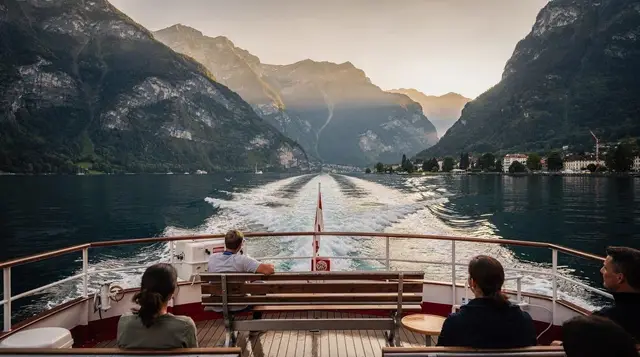
- The two lake cruises on Lake Thun and Lake Brienz, or the combined two-lakes cruise, run in light rain — the boats have covered saloons, and the shoreline scenery doesn’t need a clear summit to be worth the fare.
- Ballenberg open-air museum has partly covered walkways and enough historic buildings to duck into that a shower doesn’t end the visit, though a full downpour is still unpleasant outdoors.
- A day trip to Bern’s old town is almost entirely under the arcades that line its main streets — genuinely one of the better wet-weather escapes within an hour of Interlaken.
- Indoor pools and spa options are covered in our thermal baths near Interlaken guide, a reasonable way to spend an afternoon that the weather can’t touch.
- For a longer list built specifically around rain, see things to do in Interlaken when it rains, and for what to pack so a wet day doesn’t also become a cold, miserable one, see altitude, weather and what to pack.
Maintenance closures are a different problem from weather
Separately from day-to-day cloud and wind, most Bernese Oberland lifts close for planned maintenance in spring and again in autumn — typically a window of one to three weeks, staggered across operators so at least one major summit usually stays open, but timings shift year to year.
This has nothing to do with the forecast and can’t be fixed by checking a webcam; it has to be checked against the operator’s published calendar before you travel, especially if you’re visiting in April or November, the two months this catches people out most. Our guide to when the mountain railways open and close tracks the pattern in more detail, and it’s worth a look before you build an itinerary around a single specific summit outside the June–September or December–March peaks.
Interlaken bad weather FAQ
Is the Interlaken weather forecast a reliable guide to the summits?
No. Interlaken sits at 568 metres and its forecast describes valley conditions. The Jungfraujoch is nearly 2 900 metres higher, and cloud regularly sits on the peaks while the Bodeli is clear. Always check the summit-specific webcam and status page before deciding, not the town forecast.
Which webcams are worth checking before buying a Jungfraujoch ticket?
The Jungfrau Railways website (jungfrau.ch) publishes live webcams from the Jungfraujoch, Kleine Scheidegg and Eigergletscher, updated every few minutes, plus a same-day visibility report. Cross-check with the Schilthorn’s own Piz Gloria webcam and the Grindelwald First webcam if you’re weighing up alternatives.
Do I get a refund if the Jungfraujoch is in cloud?
Jungfrau Railways runs a limited weather guarantee on certain Jungfraujoch tickets: if visibility at the top is poor on the day, you can claim a partial refund or voucher at the ticket counter, generally same-day and against the original ticket. Terms and thresholds change between seasons, so ask at the counter in Interlaken Ost or Grindelwald before you travel rather than assuming a fixed rule.
What happens if a cable car or train closes for wind?
Jungfrau Railways, the Schilthornbahn and the Grindelwald First lifts all suspend or slow services above a certain wind speed, most often affecting the open-air gondola sections rather than the enclosed trains. If a lift is officially closed, unused tickets are normally refunded or exchanged; check the operator’s own status page, since a closure announced in the morning can lift by early afternoon.
Are the mountain railways closed for maintenance at certain times of year?
Yes. Most Bernese Oberland lifts run planned maintenance closures for one to three weeks in spring (roughly April) and again in autumn (roughly November), staggered so at least one major summit usually stays open. Always check the specific line’s calendar before building a trip around it, especially outside the June to September and December to March peaks.
What can I do in Interlaken when every mountain is closed in?
Stick to low-altitude options that don’t depend on visibility: the two lake cruises on Lake Thun and Lake Brienz, Ballenberg open-air museum (partly covered), the Touristik-Museum, indoor pools and thermal baths, Interlaken’s shops along the Höheweg, or a day trip by train to Bern’s old town, which is entirely street-level and rain-tolerant.
Is Harder Kulm a safer bet than the high Jungfrau summits in uncertain weather?
It’s a better bet but not a guaranteed one. At 1 322 metres, Harder Kulm sits well below the Jungfraujoch or Schilthorn and often stays clear when the higher peaks don’t, and the funicular ride is only eight minutes, so a wasted trip costs little. It still closes in low cloud or high wind, so check its webcam too rather than assuming altitude alone settles it.
Lake cruises & boat tours on GetYourGuide
Verified deep-linked GetYourGuide tours. Book through these links and we earn a small commission at no cost to you.
GetYourGuide does not provide a product photo for this activity — the image shows the meeting point, photographed by us.