Glacier 3000: the Peak Walk, the Alpine Coaster and snow above Gstaad
What is Glacier 3000 and is it worth the trip from Interlaken?
Glacier 3000 is a cable car station above the Col du Pillon, near Gstaad, with a suspended footbridge between two peaks, a glacier snow field open in summer, and the world's highest Alpine Coaster. It is a long day from Interlaken, roughly three hours each way by train and bus, so it suits a full day rather than a half-day add-on.
Glacier 3000 sits on a ridge above the Col du Pillon, on the far side of the Bernese Oberland from Interlaken, closer to Gstaad and to Lake Geneva than to the Jungfrau region most visitors come here for. It is not a Jungfrau Railways property and it does not accept the Jungfrau Travel Pass. What it has instead is a 107-metre suspension bridge between two summits, a glacier that still holds summer snow, and a toboggan run on rails that claims to be the highest of its kind anywhere. It is a legitimate day out, but it is a genuinely long one from Interlaken, and that changes how you should plan it.
What Glacier 3000 actually is
The name refers to the whole cable car complex above the Col du Pillon, a mountain pass at 1,546 m between the canton of Vaud and the Bernese Oberland. A large cable car climbs from the pass to the Scex Rouge summit station at 2,971 m, close enough to 3,000 m that the operator rounds up for the name. From there a second, shorter cable car crosses to the Alpine Coaster station on the actual glacier plateau, and the Peak Walk bridge connects the two rocky summits at the top.
On a clear day the view runs from Mont Blanc to the Eiger, Mönch and Jungfrau, which is the one moment the trip connects visually back to where you are staying. The rest of the experience, the restaurant, the marmot enclosure, the snow tubing area, feels closer to a Vaud alpine resort than to anything at Grindelwald or Wengen.
The Peak Walk: a bridge between two summits
The Peak Walk by Tissot opened in 2014 and was, for a while, marketed as the world’s first suspension bridge connecting two mountain peaks rather than crossing a valley. It runs 107 m between the Scex Rouge and a second rocky outcrop, hung about 3,000 m above sea level, with a mesh floor in sections so you can see straight down. It takes two or three minutes to cross at a normal pace and is included in the cable car ticket, no separate charge.
It is not a long or technically demanding crossing, and if you have already done the Trift bridge near Gadmen or read about the Titlis Cliff Walk, this one is shorter and less exposed than either. What makes it worth the diversion is less the bridge itself than the fact that it sits between two named summits rather than over a gorge, which is a genuinely different feeling from most Swiss viewing platforms. It closes in high wind along with the rest of the top station, so check conditions before you commit to the long journey out.
The Alpine Coaster: the highest in the world
Below the summit, on the glacier side, the Alpine Coaster is a single-seat cart on a fixed steel rail that you brake yourself, gravity-powered on the way down after a tow lift pulls you up. Glacier 3000’s version sits at around 2,830 m and is marketed as the highest such coaster anywhere, ahead of comparable rides at lower Swiss resorts. A ride costs roughly CHF 12 to 15 on top of the cable car ticket, and the ride shuts in poor visibility, ice, or high wind, same as the bridge.
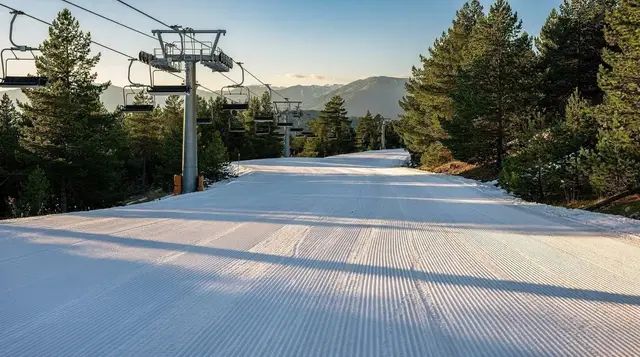
It runs alongside a snow tubing park and, in winter, connects to the ski area’s own runs. Families travelling with children who are too young for hiking or via ferrata tend to build a Glacier 3000 day around this and the marmot area rather than the view alone, which is a reasonable way to justify the distance from Interlaken if you are already spending a day in Gstaad.
Summer snow, and how much of it is left
The glacier field below the Scex Rouge station still carries snow through summer, and it is one of the few places in the Vaud Alps you can genuinely put your hands in snow in July. That said, the glacier has visibly retreated over the past fifteen years, and the operator has run artificial snow-making and reflective covers over parts of it to slow the melt in warmer summers. Expect the snow to be patchier and softer by August than it would have been a decade ago, and don’t plan a visit purely around glacier photography without checking recent trip reports first.
a day trip to Glacier 3000 from Lausanne is one option if you are approaching from Lake Geneva rather than from Interlaken, and it handles the Col du Pillon connection for you.
Getting there from Interlaken, via Gstaad
This is the part that catches people out. Glacier 3000 is not a same-region excursion the way Harder Kulm or Schynige Platte are. From Interlaken Ost, the standard public transport route is train to Zweisimmen, a change onto the MOB line to Gstaad, then a connecting postbus up to the Col du Pillon. Door to door this runs close to three hours each way, and a missed connection at Zweisimmen or Gstaad easily adds another hour.
Once you are in Gstaad itself, the postbus up to the pass takes about 40 minutes and gives you a look at the Saanenland valley on the way, which is worth factoring in if you are combining this with a wider look at Saanenland rather than a pure there-and-back. Given the length of the approach, most visitors from the Interlaken side either commit to a genuinely full day, out on an early train and back late, or book a guided day trip that handles the changes for you.
a private day trip covering Gstaad, Glacier 3000 and Montreux removes the connection risk entirely and adds Lake Geneva stops on the way back, which is a sensible way to spend a day you were already writing off as long-distance. If you would rather approach from the Vaud side and treat Interlaken as the second half of a longer Swiss loop, a Glacier 3000 day trip departing from Montreux is the shorter version of the same idea, useful if your itinerary already has you passing through Montreux.
If your actual priority for the day is closer to home, it is worth being honest that a same-length outing in the other direction, say to Gruyères or a full loop through the Jungfrau region’s own high points, will cost you less travel time for a comparable payoff. Glacier 3000 earns its place on an itinerary mainly if the Peak Walk and the coaster specifically appeal, or if you are already staying somewhere between Gstaad and Lake Geneva.
Weather, wind and when the whole thing shuts
The Scex Rouge ridge is exposed on all sides, more so than the sheltered approach to the Jungfraujoch through the Eiger tunnel. That means the top cable car section, the Peak Walk and the coaster all close independently in strong wind, and the summit sits in cloud on days when Gstaad and the valley floor are clear and sunny. Check the operator’s live status page and webcam on the morning you travel, not the night before, and build in a fallback given how far you will have travelled to get there.
Like the other high stations covered on this site, Glacier 3000 also closes for scheduled maintenance in spring and autumn, typically a window in April and again in November. If you are travelling in either shoulder season, confirm the current closure dates before booking transport, since arriving at the Col du Pillon to find the cable car shut for revision is a wasted half-day you cannot easily recover given the distance back to Interlaken.
Prices and what’s included
| Item | Approximate price (adult, CHF) | Notes |
|---|---|---|
| Cable car return, Col du Pillon to summit | ~78 | Half Fare Card and Swiss Travel Pass discounts apply |
| Peak Walk bridge crossing | Included | No separate charge with a valid cable car ticket |
| Alpine Coaster, single ride | ~12–15 | Weather dependent, closes in wind or ice |
| Snow tubing session | ~10–12 | Summer only, subject to snow cover |
| Postbus, Gstaad to Col du Pillon | ~15 return | Covered by regional and Swiss Travel Pass products |
Treat these as a guide rather than a quote; alpine cable car pricing in Switzerland moves most years and the operator’s own site is the only reliable source on the day.
Comparing Glacier 3000 with the Jungfraujoch and the Schilthorn
If you are choosing between the three big high-altitude excursions reachable in a day from Interlaken, the honest comparison runs like this. The Jungfraujoch is higher, more built up, and reachable in under two hours from Interlaken Ost, but it is also the most expensive single-day ticket in the region and gets crowded by mid-morning. The Schilthorn has the revolving Piz Gloria restaurant and a shorter approach through Lauterbrunnen or Mürren. Glacier 3000 has the Peak Walk and the coaster, but costs you roughly three hours of travel each way that neither of the other two demands.
A useful way to decide is to read the direct comparison between the Jungfraujoch and the Schilthorn first, since most Interlaken-based visitors will choose one of those two for their main high-altitude day regardless. Glacier 3000 makes more sense as an add-on to a Gstaad or Lake Geneva leg of a longer trip than as a rival to either.
a day trip from Gstaad into Lauterbrunnen and Grindelwald runs the comparison in reverse, useful if you are based in Gstaad and want a single day covering both regions rather than picking one.
Food and facilities at the top
The Scex Rouge summit station has a self-service restaurant and a small shop; there is also the Botta restaurant, designed by architect Mario Botta, partway up the route, which does table service and is the better option if you want a proper sit-down meal rather than a cafeteria tray. Both are priced at the level you would expect for a mountain station reachable only by cable car, noticeably above what you would pay in Gstaad itself. Bring water and a layer regardless of the season; wind chill at the summit is significant even on days that feel warm at the Col du Pillon.
Combining Glacier 3000 with the rest of the region
Because the journey out already routes you through Gstaad, it is worth building slack into the day rather than treating Glacier 3000 as an isolated round trip. An hour or two in Gstaad itself, or a stop in Saanenland on the way back, makes better use of the travel time than a straight there-and-back. If your wider Switzerland plans already include Lake Geneva, pairing Glacier 3000 with Montreux and Chillon Castle or a look at the Lavaux vineyard terraces spreads the long travel day across more than one attraction.
Holders of a Swiss Travel Pass get discounted cable car access here as at most Swiss mountain railways, and it is worth checking your pass coverage before buying separate postbus tickets for the Gstaad-to-pass leg. If you are stitching Glacier 3000 into a longer national route rather than a single Interlaken day trip, it also sits naturally on a longer Grand Tour of Switzerland itinerary that already loops through the Vaud Alps.
For travellers weighing whether a full day on this route is worth it against the region’s other options, the wider roundup of mountain excursions from Interlaken lines Glacier 3000 up against the Jungfraujoch, the Schilthorn, Grindelwald First and the rest, with the travel time for each spelled out. And if the connections through Zweisimmen and Gstaad put you off entirely, a guided hike from Kandersteg reaches genuinely high alpine scenery from a station under an hour from Interlaken, without the cross-country transfer.
Glacier 3000 in the Bernese Oberland day-trip planning, revisited
None of this means Glacier 3000 is a poor choice, only that it needs to be chosen deliberately rather than tacked on as a quick extra to a the Jungfrau Region holiday. If the Peak Walk and the world’s highest coaster are the specific draw, and you are prepared to give the day to travel, it delivers on both. If your time in the region is short and your priority is maximising alpine scenery per hour of travel, the Jungfraujoch, the Schilthorn or Grindelwald First will get you there faster from an Interlaken base.
Frequently asked questions about visiting Glacier 3000
How do you get to Glacier 3000 from Interlaken?
Take the train to Zweisimmen, change for Gstaad, then a postbus to Col du Pillon, where the cable car starts. The full journey runs close to three hours each way, so allow a full day and check the connections before you leave.
How much does the Glacier 3000 cable car cost?
A return ticket from Col du Pillon to the summit is around CHF 78 for an adult, with roughly half that for Half Fare Card and Swiss Travel Pass holders. Children under 6 travel free and there are family reductions.
Is the Peak Walk suspension bridge included in the ticket?
Yes. The Peak Walk by Tissot, the 107-metre footbridge linking the Scex Rouge and the summit station, is included in the cable car ticket and does not cost extra to cross.
Is there snow at Glacier 3000 in summer?
Yes, on the glacier itself, though the snow field has shrunk noticeably over the past decade and can turn slushy on warm afternoons. Summer sledging and the snow tubing area usually run from June to September, weather permitting.
What is the Alpine Coaster at Glacier 3000?
It is the highest Alpine Coaster in the world, a gravity toboggan run on rails starting near the summit station. It runs as a paid extra on top of the cable car ticket, roughly CHF 12 to 15 per ride, and closes in poor visibility or high wind.
Does Glacier 3000 close for wind or weather?
Regularly. The exposed ridge position means the cable car and the Peak Walk both close in strong wind, and the top station is frequently in cloud even when Gstaad and the Col du Pillon are clear. Check the live webcam and status page on the morning of your visit.
Is Glacier 3000 better than the Jungfraujoch or the Schilthorn?
They serve different purposes. The Jungfraujoch is higher and more built up with the Ice Palace and the Sphinx observatory, the Schilthorn has the Piz Gloria revolving restaurant, and Glacier 3000 has the Peak Walk bridge and the coaster but a much longer approach from Interlaken.
Skiing & winter experiences on GetYourGuide
Verified deep-linked GetYourGuide tours. Book through these links and we earn a small commission at no cost to you.
GetYourGuide does not provide a product photo for this activity — the image shows the meeting point, photographed by us.