A grand tour of Switzerland from Interlaken: 7 days on the panoramic trains
Switzerland’s panoramic trains are not a novelty add-on to a normal rail pass — on lines like the GoldenPass and the Glacier Express, the scenic carriage with the big windows is a specific, reservation-only product that costs extra on top of your ticket.
This itinerary is built around four of them: the Jungfrau railway up from Interlaken, the Luzern-Interlaken Express across the Brünig Pass, the GoldenPass Line between Interlaken and Lake Geneva, and a segment of the Glacier Express near Zermatt. None of it is cheap. Expect CHF 900–1,400 per person for transport and mountain tickets alone over the week, before hotels and food, which is why this itinerary is filed as luxury rather than budget.
You do not need a car — every leg runs on SBB, MOB, BLS or a mountain railway, and driving would only add parking costs in towns built around car-free stations. A Swiss Travel Pass covers most of the base network for this route but not the seat reservations on GoldenPass and Glacier Express, which are booked and paid separately regardless of which pass you hold.
Day 1: Arrive in Interlaken
Fly into Zurich or Geneva and take the train straight through — Interlaken Ost is about 2h05 from Zurich Airport. Use the afternoon to get oriented in Interlaken itself: walk the Höheweg between the two stations, past the Hohematte where the paragliders land, and ride the eight-minute funicular up to Harder Kulm for the first proper view over both Lake Thun and Lake Brienz before dinner. Base yourself somewhere central for two nights; see the guide to where to stay in Interlaken if you have not booked yet.
Confirm your seat reservations for later in the week now, not later — GoldenPass and Glacier Express seats sell out days in advance in summer, and the Jungfraujoch benefits from an early train slot booked ahead too.
Day 2: Jungfraujoch by rail
This is the most expensive single day of the trip and the one the whole itinerary is arguably built around. The Jungfrau railway climbs from Interlaken via Lauterbrunnen and Kleine Scheidegg through a tunnel cut into the Eiger to reach Jungfraujoch at 3,454 m — the highest railway station in Europe, opened in 1912. A standard return from Interlaken runs roughly CHF 220–260 depending on season and discount card; the early “Good Morning” ticket on the first trains of the day is meaningfully cheaper.
Leave early. Cloud tends to build over the glacier plateau from late morning, and the Sphinx observation terrace and the Aletsch Glacier viewpoint are the reasons you are paying for this ride. Allow 3–4 hours at the top, including the ice palace and the walk to the Mönchsjochhütte if the weather holds, and check the day’s operating status before you leave — the line, like the other mountain railways in this book, closes for scheduled maintenance in spring and autumn and can be wind-affected even in season.
a small-group tour to the Jungfraujoch from Interlaken books the train slot and a guide together, which removes the connection-timing stress on a day when a missed train at Kleine Scheidegg costs you real time at altitude.
Day 3: Interlaken to Lucerne on the Luzern-Interlaken Express
The Luzern-Interlaken Express is the gentlest introduction to panoramic rail on this trip: regular SBB rolling stock with large windows, running the roughly 1h50 route from Interlaken Ost over the Brünig Pass to Lucerne, covered by the Swiss Travel Pass and Half Fare Card with no separate seat reservation required. Take a mid-morning departure so you arrive with the afternoon still ahead of you.
Lucerne’s old town — the Chapel Bridge, the lakefront promenade, the Lion Monument — is worth two or three hours on its own, but the afternoon highlight is Mount Rigi, reached by cogwheel train and boat combination from the lake. The “queen of the mountains” is a gentler, cheaper alternative to the big Bernese Oberland peaks and a reasonable way to close a rail-heavy day without another 3,000 m ascent.
| Leg | Train | Duration | Reservation |
|---|---|---|---|
| Interlaken Ost → Lucerne | Luzern-Interlaken Express | ~1h50 | Not required |
| Lucerne → Rigi (via Vitznau or Weggis) | Rigi railways / boat | ~1h each way | Not required |
the classic Rigi round trip from Lucerne bundles the boat and cogwheel legs into one ticket if you would rather not work out the connection yourself. Overnight in Lucerne.
Day 4: Lucerne to Zermatt
There is no direct panoramic train from Lucerne to Zermatt — you connect on regular InterCity services via Bern or via Spiez and Visp, a journey of roughly 3 hours depending on the connection. Zermatt itself is car-free; you leave any vehicle at Täsch and finish the last few kilometres by shuttle train, though on this itinerary you will not have a car at all.
Spend the afternoon getting oriented under the Matterhorn rather than rushing up a cable car on arrival day — the mountain excursions here are full-day commitments and worth doing fresh. Book your Gornergrat or Matterhorn Glacier Paradise slot for the morning of Day 5 now if you have not already.
Day 5: Zermatt and a Glacier Express segment
Two options sit above Zermatt, and most visitors pick one rather than both in a single morning: the Gornergrat railway, a rack railway from 1898 climbing to 3,089 m with the closest classic view of the Matterhorn’s east face, or the Matterhorn Glacier Paradise cable car to 3,883 m, Europe’s highest cable car station, with a glacier cave and views across into Italy on a clear day. Both are pricey — figure CHF 100–130 return per person — and both close or run reduced service in poor visibility, so check the forecast before committing.
the Gornergrat rack railway ticket from Zermatt is the more scenic of the two for train enthusiasts specifically, since the line itself is part of the point.
In the afternoon, join the Glacier Express for its most dramatic segment rather than the full eight-hour Zermatt–St Moritz run, which this itinerary does not have time for: ride from Zermatt to Brig or on to Andermatt, crossing the Rhône valley and climbing over the Furka-Oberalp line. Seat reservation on the Glacier Express is mandatory regardless of which segment you ride — figure CHF 33–39 on top of your rail ticket in high season, more if you add the set-menu lunch served at your seat. Break the journey at Brig and continue by regular train toward Montreux, arriving in the evening; the full connection from Zermatt to Montreux runs to roughly 4–5 hours including the Glacier Express segment and a change.
Day 6: Montreux, Chillon and a Gruyères detour on the GoldenPass Line
Start at Château de Chillon, the lakeside castle a short walk or bus ride along the Lake Geneva shore from central Montreux — one of the most visited historic sites in Switzerland and worth the early start before coach groups arrive. If you would rather add another high-altitude panorama than a castle, the Glacier 3000 day trip from Montreux reaches a 3,000 m viewpoint above Gstaad in a half-day round trip, but it will cost you the Gruyères stop below.
By early afternoon, board the GoldenPass Line toward Interlaken. This is the reservation-mandatory panoramic service, run since the GoldenPass Express began through-running in 2022 with an automatic gauge-changing train that no longer requires passengers to switch trains at Zweisimmen; expect to pay a seat reservation fee of roughly CHF 20–29 on top of your base ticket, more for first class in peak season.
Break the journey at Montbovon to detour into Gruyères — the medieval walled town, La Maison du Gruyère cheese dairy, and the Cailler chocolate factory at nearby Broc are a two- to three-hour stop if you time the connecting trains carefully; see the Gruyères cheese and chocolate day guide for the connection details. Rejoin the GoldenPass Line afterwards and continue over the Col du Pillon and through Gstaad and Zweisimmen back to Interlaken, arriving in the evening. The full Montreux–Interlaken run, detour included, makes for a long day — do not add Glacier 3000 on top of it unless you are willing to skip Gruyères.
| Leg | Line | Reservation fee (approx.) |
|---|---|---|
| Montreux → Interlaken (via Gstaad, Zweisimmen) | GoldenPass Line | CHF 20–29 |
| Zermatt → Brig/Andermatt segment | Glacier Express | CHF 33–39 |
| Interlaken → Lucerne | Luzern-Interlaken Express | Not required |
Day 7: Bern before departure
Bern is 52 minutes from Interlaken Ost and makes an easy last morning: the UNESCO-listed old town, the Zytglogge clock tower, the sandstone arcades along Kramgasse, and the bear enclosures along the River Aare are all within the compact old town loop. Leave bags at Interlaken or use lockers at Bern station if you are flying out same day — Zurich Airport is roughly 2h05 from Bern, so a Bern morning still leaves an afternoon flight comfortably reachable. If your flight is from Geneva instead, Bern adds a backtrack; in that case, spend the last morning in Interlaken itself and travel directly.
What this costs in total
Rail alone — the Luzern-Interlaken Express, GoldenPass Line reservation, Glacier Express segment and reservation, Jungfrau railway, and the various point-to-point tickets between Lucerne, Zermatt, Montreux and Bern — runs to roughly CHF 500–650 per person even with a Swiss Travel Pass covering the base network, since none of the mandatory panoramic-train reservations are included in any pass.
Add the Jungfraujoch ticket (CHF 220–260) and either Gornergrat or Matterhorn Glacier Paradise (CHF 100–130), and transport plus mountain excursions alone reach CHF 900–1,050 per person before a single hotel night or meal. This is why the itinerary is rated luxury: it is possible to do a cheaper version of this week by dropping the Glacier Express segment and one mountain excursion, but you would then be doing a normal rail loop rather than a grand tour of the panoramic lines specifically.
FAQs about touring Switzerland by panoramic train from Interlaken
Do I need to reserve seats on every panoramic train?
No. The Luzern-Interlaken Express uses standard SBB rolling stock and needs no reservation. The GoldenPass Line and the Glacier Express are both reservation-mandatory regardless of rail pass, with separate seat fees paid on top of your ticket — book these as early as possible for summer travel.
What does this itinerary cost in total?
Budget roughly CHF 900–1,050 per person for rail, seat reservations and the two big mountain excursions (Jungfraujoch and either Gornergrat or Matterhorn Glacier Paradise), on top of seven nights of hotels and meals, which pushes a comfortable version of this trip well into four figures per person.
Can I ride the full Glacier Express instead of just a segment?
Yes, but the full Zermatt–St Moritz run takes around 8 hours one way and would require restructuring this itinerary around St Moritz rather than Montreux and Gruyères. Most first-time visitors get more variety from the segment used here plus the GoldenPass Line and Luzern-Interlaken Express on the same trip.
Is the Swiss Travel Pass worth buying for this route?
It covers the base fares on all the regular network legs — Interlaken to Lucerne, Lucerne to Zermatt, Bern — plus discounts on the Jungfrau railway and mountain excursions, but it does not cover the GoldenPass or Glacier Express seat reservation fees, which are always extra. Whether it pays off depends on how many of the base legs you would otherwise buy as point-to-point tickets.
What happens if a mountain railway is closed when I am there?
The Jungfrau railway, Gornergrat railway and Rigi lines all run scheduled maintenance closures in spring and autumn, and any of them can suspend the top sections in high wind even in midsummer. Check the operator’s status page the evening before and build one buffer day into a trip this reservation-heavy if your dates fall outside peak season.
Do I need to book Jungfraujoch tickets in advance?
It is strongly recommended in July and August, when the first trains of the day sell out. Booking ahead also locks in the cheaper early “Good Morning” fare rather than the standard daytime price.
Is this itinerary doable without a car?
Yes — that is the point of building it around rail lines. Zermatt, Wengen, Mürren and Gimmelwald are car-free regardless, and every other leg runs on SBB, BLS or MOB trains or connecting boats, so a car adds parking costs without saving time anywhere on this route.
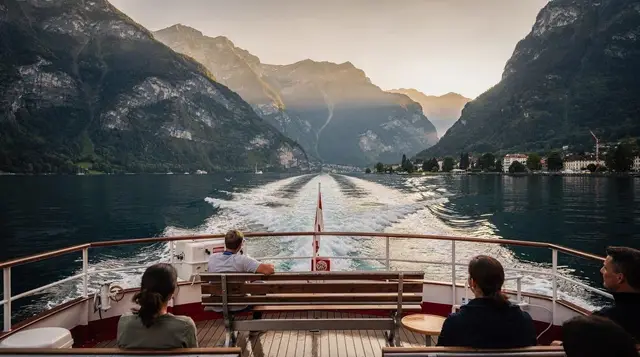
Lake cruises & boat tours on GetYourGuide
Verified deep-linked GetYourGuide tours. Book through these links and we earn a small commission at no cost to you.
GetYourGuide does not provide a product photo for this activity — the image shows the meeting point, photographed by us.