Gornergrat vs Matterhorn Glacier Paradise: Zermatt's two summits
Gornergrat or Matterhorn Glacier Paradise: which should I choose from Interlaken?
If you only have time for one, the Gornergrat rack railway (opened 1898) gives the classic Matterhorn view for around CHF 100-110 return from Zermatt, while Matterhorn Glacier Paradise climbs to 3,883m for roughly CHF 150-165 and adds a glacier viewing platform and ice cave. Doing both in a single day from Interlaken is possible but long: reckon on a 12-13 hour round trip and CHF 400 or more per person once the Interlaken-Zermatt train is added.
Two mountains, one village, one long day
Zermatt is not part of the Jungfrau region and it is not close to Interlaken: the journey from Interlaken Ost runs via Spiez and Visp and takes around 2 hours 15 minutes each way, longer than the trip to Jungfraujoch or the Schilthorn. What draws people down there anyway is the Matterhorn, a mountain the Bernese Oberland cannot show you, and the fact that Zermatt has built two separate ways to get close to it.
The Gornergrat rack railway, opened in 1898, climbs the opposite valley wall to a viewpoint facing the peak. The Matterhorn Glacier Paradise cable car goes the other direction, up the Klein Matterhorn to 3,883 metres, the highest cable car station in Europe. They point at the mountain from two different sides, they cost roughly the same to ride, and most visitors doing a day trip from Interlaken have to choose between them rather than doing both.
This guide sets out what each one actually gives you, what it costs on top of the train fare, and whether the combined day is worth attempting or better split across an overnight stay.
Gornergrat: the 1898 rack railway
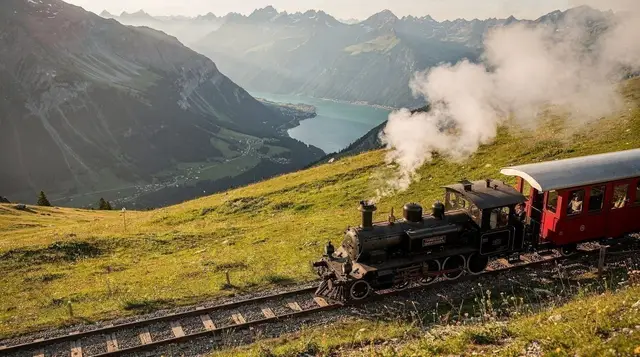
The Gornergrat Bahn is Switzerland’s oldest electric rack railway still running its original route, climbing from Zermatt station to 3,089 metres in around 33 minutes. It was built to move tourists, not freight, and it still does exactly that: open carriages in summer, big windows, and a ratchet gear under the floor that you can feel engage on the steepest sections.
The reward at the top is the view the postcards use — the Matterhorn’s east face across the valley, with the Gorner Glacier and a run of 4,000-metre peaks including Monte Rosa filling the rest of the panorama. There is a hotel, a restaurant, and an observatory at the summit station, plus several marked walking trails back down for anyone who wants to turn the ride into a half-day hike.
A return ticket from Zermatt runs to roughly CHF 100-110 in second class at full fare, with a meaningful discount for Half Fare Card and Swiss Travel Pass holders — figure on paying something in the CHF 50-80 range once a discount applies, though Zermatt Bergbahnen adjusts pricing by season and it is worth checking the current fare before you travel. The train runs year-round and rarely suspends for wind, which is its main practical advantage over the cable car.
a small-group day trip to the Gornergrat from Zurich bundles the train connection and the mountain ticket into one booking, which is worth considering if you are coming from further afield than Interlaken and would rather not manage the changes at Spiez and Visp yourself.
Matterhorn Glacier Paradise: Europe’s highest cable car station
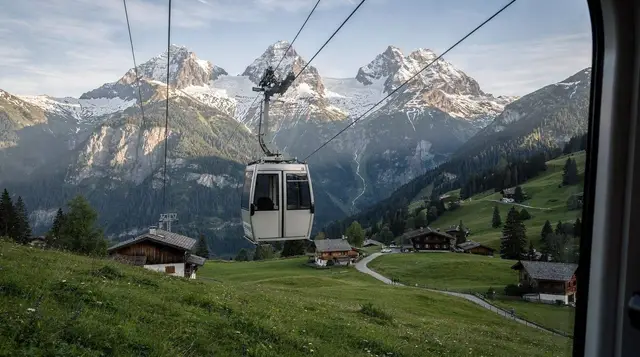
Matterhorn Glacier Paradise sits on the Klein Matterhorn at 3,883 metres, reached by a sequence of cable cars from Zermatt via Furi and Trockener Steg. The top station holds the highest cable car station in Europe, a viewing platform with a 360-degree panorama, and a short ice cave carved into the Theodul Glacier, included in the ticket.
On a clear day the view extends beyond the Matterhorn itself to Mont Blanc and, in the other direction, towards the Aletsch Glacier area — a genuinely wide sweep of the Alps rather than a single-mountain view. The cable car also connects through to Testa Grigia on the Italian side for anyone with a passport who fancies lunch in Italy and a return the same afternoon, though that adds time most day-trippers from Interlaken will not have.
A return ticket from Zermatt costs roughly CHF 150-165 at full fare, again with a partial discount for Swiss Travel Pass and Half Fare Card holders. That makes it noticeably more expensive than Gornergrat, and unlike the rack railway it does suspend in high wind, which happens often enough at this altitude that a wasted trip is a real risk rather than a theoretical one. Check the Zermatt Bergbahnen status page the evening before, particularly outside midsummer.
a guided visit to Matterhorn Glacier Paradise takes the guesswork out of the connection sequence through Furi and Trockener Steg, which has more changes than the single Gornergrat line.
Gornergrat vs Matterhorn Glacier Paradise at a glance
| Gornergrat | Matterhorn Glacier Paradise | |
|---|---|---|
| Altitude | 3,089 m | 3,883 m |
| Journey from Zermatt | ~33 min, rack railway | ~35-45 min, three cable car stages |
| Opened | 1898 | Current station opened 1979, upgraded since |
| Return ticket (full fare) | ~CHF 100-110 | ~CHF 150-165 |
| Wind closures | Rare | Occasional, check before travelling |
| Best for | The classic Matterhorn photograph, glacier panorama | Highest point reachable, glacier ice cave, wider Alpine panorama |
| Spring/autumn maintenance | Scheduled closures possible | Scheduled closures possible |
Prices move with the season and Zermatt Bergbahnen revises them periodically, so treat these as a planning range rather than a quote — confirm on the operator’s site before you commit a full day to the trip.
Getting there from Interlaken
The only realistic route from Interlaken Ost is by train via Spiez and Visp, changing at least once, for a total journey of around 2 hours 15 minutes each way. There is no direct service and no faster road alternative worth taking, since driving into the Zermatt valley is not possible in any case — cars stop at Täsch, several kilometres short of the village, where a shuttle train covers the final stretch. A same-day round trip from Interlaken means roughly 4.5 hours on trains alone, before any time on the mountain itself.
A Swiss Travel Pass covers the entire Interlaken-Zermatt train journey, which is the largest single cost in the day; the regional Jungfrau Travel Pass does not extend this far south, so it will not help with this particular trip. Neither pass covers the Gornergrat or Matterhorn Glacier Paradise tickets beyond a partial discount, so those go on top regardless of which pass you are carrying.
For travellers who would rather not manage the Spiez-Visp connection unassisted, a combined day trip covering both the Gornergrat and Klein Matterhorn handles the logistics from Zurich, which suits anyone routing through Zurich Airport before or after the Interlaken leg of a trip rather than doing it as a same-day return from Interlaken itself.
The cumulative cost of doing both
Adding it up for one adult travelling from Interlaken in second class, without discount cards: the Interlaken-Zermatt-Interlaken train runs to roughly CHF 150-160 at full fare (considerably less with a Half Fare Card or covered outright by a Swiss Travel Pass), the Gornergrat return adds another CHF 100-110, and Matterhorn Glacier Paradise adds a further CHF 150-165.
Doing everything in one day, with no discounts, lands close to CHF 400-430 per person before lunch is counted — Zermatt’s mountain restaurants are priced for a resort audience, so add another CHF 25-40 for a simple meal at altitude. A Swiss Travel Pass removes the train cost from that total and knocks a further chunk off both mountain tickets, which is the main way to bring the day back under CHF 250.
Time is the other constraint that a pass cannot fix. Leaving Interlaken Ost on an early train gets you into Zermatt by mid-morning; doing Gornergrat first, then descending to Zermatt for a quick changeover before the Matterhorn Glacier Paradise cable cars, leaves a workable but not relaxed afternoon, and the last train back into Interlaken Ost that still gets you home at a reasonable hour typically has you leaving Zermatt by late afternoon. Anyone who wants to walk one of the trails at the top of either mountain, rather than just riding up and down, should plan on one summit per day and treat the other as a reason to come back — or as grounds for an overnight in Zermatt, which turns a rushed single day into two unhurried half-days.
Choosing between them if you only have time for one
Photographers chasing the classic Matterhorn shot with the glacier in the foreground consistently prefer Gornergrat, and the rack railway’s lower closure risk makes it the safer choice on a day with any wind in the forecast. Matterhorn Glacier Paradise wins on sheer altitude and on the width of the panorama, and the ice cave gives children something tactile to do at the top beyond looking at a view — worth weighing if you are travelling as a family and comparing this trip against options closer to Interlaken, such as Harder Kulm or Grindelwald First, which cost a fraction of the price and the travel time.
For a broader read on whether Zermatt is worth the detour from the Bernese Oberland in the first place, see the comparison in Interlaken vs Zermatt, and for how this trip stacks up against the region’s other big-ticket excursions, Jungfraujoch vs Schilthorn covers the two that don’t require leaving the Jungfrau region at all.
Anyone weighing up a wider set of Alpine day trips, including Saas-Fee and the Aletsch Arena as alternative glacier viewpoints, will find both covered in Best mountain excursions from Interlaken.
Those travelling with a private guide rather than public transport might prefer a private tour to Zermatt and Matterhorn Glacier Paradise, which sets its own pace rather than working around train timetables — useful if you are trying to fit the trip around a tight multi-day itinerary that already includes other long excursions.
Practical notes before you go
Pack for altitude regardless of the weather in Interlaken: temperatures at 3,883 metres run well below freezing even in summer, and the guidance in Altitude, weather and what to pack applies here as much as it does to Jungfraujoch. Sunglasses and sunscreen matter more than most visitors expect, since UV exposure increases sharply with altitude and reflection off snow and ice adds to it. Bring a passport if there is any chance of continuing to Testa Grigia on the Italian side, and check the Zermatt Bergbahnen operating status the evening before travelling, since both installations run scheduled maintenance closures in spring and sometimes late autumn on top of occasional wind closures.
If the summit is in cloud when you check webcams that morning, it is usually a better use of the day to reroute to one of the closer mountains and peaks around Interlaken and save Zermatt for a clearer forecast, given how much of the day and budget this particular trip consumes.
For anyone wanting a taste of the same glacier scenery without the schwarzsee hike, the Matterhorn Glacier Paradise route via the Schwarzsee hike adds a walking option down through the Schwarzsee lake area for those with time for one more stop before the return train, and it is worth checking mountain hut and berghaus dining options if you want a proper meal at altitude rather than the standard summit-station café.
Gornergrat and Matterhorn Glacier Paradise: frequently asked questions
How do I get from Interlaken to Zermatt?
There is no direct line. From Interlaken Ost, trains run via Spiez and Visp, changing at least once, in around 2 hours 15 minutes. Zermatt itself is car-free, so the train from Visp or Täsch is the only way in unless you park at Täsch and take the shuttle train for the final few minutes.
Can I visit both Gornergrat and Matterhorn Glacier Paradise in one day from Interlaken?
It is physically possible but long. With an early departure from Interlaken Ost, roughly 4-5 hours in Zermatt covers both trips if you move promptly between them, and the last realistic return train gets you back to Interlaken around 8-9pm. It works better as a Zermatt overnight than a rushed single day.
Is the Matterhorn visible from Interlaken itself?
No. The Matterhorn is roughly 60 kilometres southwest of Interlaken, on the far side of several mountain ranges, and cannot be seen from the town, the Hoheweg, or the Bernese Oberland viewpoints. You have to travel to the Zermatt or Saas-Fee valleys to see it.
Does the Swiss Travel Pass cover Gornergrat and Matterhorn Glacier Paradise?
The Swiss Travel Pass covers the train journey from Interlaken to Zermatt in full. Both the Gornergrat Bahn and the Matterhorn Glacier Paradise cable car are only discounted, typically by around 25-50 percent depending on the season, not free, so budget for a separate ticket on the mountain itself.
What is the Matterhorn Glacier Paradise ice cave?
It is a tunnel cut into the Theodul glacier near the upper cable car station, with carved ice sculptures and lighting, included in the standard ticket price. It is a short, level walk rather than an attraction in its own right, and worth 10-15 minutes rather than building a visit around.
Is Zermatt car-free like Wengen and Mürren?
Yes. Zermatt bans private combustion cars; visitors park at Täsch and take a shuttle train for the last few minutes, or arrive by train from Visp. Electric taxis and hotel shuttles operate within the village itself.
When do the Gornergrat and Matterhorn Glacier Paradise close for maintenance?
Both installations schedule short maintenance closures, usually in spring and sometimes in late autumn, and the cable car can suspend running in high wind regardless of season. Check the Zermatt Bergbahnen operating status the evening before if you are travelling a long way for a single day.
Which has better views, Gornergrat or Matterhorn Glacier Paradise?
Gornergrat gives the classic postcard angle on the Matterhorn with the Gorner glacier in the foreground and is generally considered the better photograph. Matterhorn Glacier Paradise is higher and closer to the peak itself, with a 360-degree panorama that includes Mont Blanc and the Aletsch Glacier region on a clear day, but the Matterhorn appears more foreshortened from directly below.
Mountain excursions on GetYourGuide
Verified deep-linked GetYourGuide tours. Book through these links and we earn a small commission at no cost to you.
GetYourGuide does not provide a product photo for this activity — the image shows the meeting point, photographed by us.