Mountain hut and Berghaus dining near Interlaken
Is it worth eating at a mountain restaurant or Berghaus above Interlaken?
Yes for a proper sit-down rösti or älplermagronen with a view, but expect to pay 20-40% more than a valley restaurant because everything arrives by cable car, helicopter, or on someone's back. Book ahead if you want to sleep in an SAC hut, since the popular ones fill weeks in advance in July and August.
What “mountain restaurant” actually means here
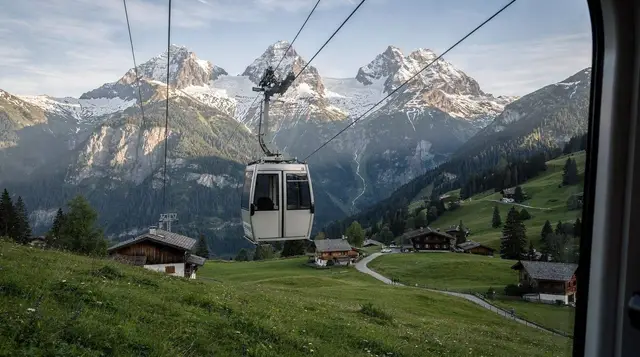
Every cable car and funicular station above Interlaken has a restaurant attached, and the quality, price, and character vary enormously. At one end you get a self-service cafeteria selling instant soup and a limp sandwich. At the other you get a proper Berghaus with a wood terrace, a menu that has not changed much in thirty years, and a kitchen turning out rösti that genuinely earns the trip. Knowing which is which before you commit to a summit saves both money and a disappointing lunch.
A Berghaus is the term for a mountain guesthouse or restaurant, usually with rooms as well as a dining room, reached by a lift or a manageable walk rather than a mountaineering route. Around Grindelwald and Grindelwald First, examples include the restaurant at First itself, Bussalp further down the valley road, and the historic Berghaus Faulhorn, one of the oldest mountain inns in the Alps, sitting above the Bachalpsee lake route.
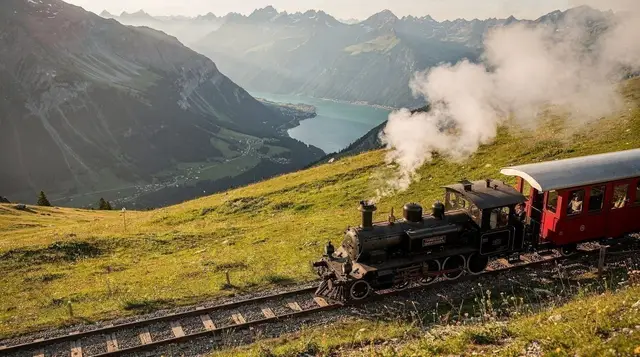
Further round at Schynige Platte, the hotel-restaurant by the cog railway terminus does the same job for that side of the valley, as does the restaurant at Niederhorn above Beatenberg.
An SAC hut is a different category entirely. Run by sections of the Swiss Alpine Club (Schweizer Alpen-Club), these are mountaineering refuges with dormitory beds, a communal dining table, and a fixed menu decided by whatever the hut warden could get up the mountain that week. They exist for hikers and climbers overnighting on longer routes, not day visitors arriving by cable car, and the ones near Interlaken sit on routes like the Hardergrat ridge or above the Faulhorn on the way toward Grindelwald’s higher terrain.
The maths of eating at altitude
Every gram of food, every crate of drinks, and every bottle of gas at a mountain restaurant arrived by cable car, cargo lift, tractor, or occasionally helicopter. Staff frequently live on-site for the season in cramped staff quarters, since there is no commuting up a mountain. None of that is optional overhead the restaurant can trim, and it shows directly in the bill.
| Item | Valley restaurant | Berghaus (2,000-2,500m) | Remote SAC hut |
|---|---|---|---|
| Rösti with topping | CHF 22-26 | CHF 26-34 | CHF 24-30 (half-board set menu) |
| Bowl of soup | CHF 12-16 | CHF 16-20 | Included in half-board |
| Coffee | CHF 4.50-5.50 | CHF 5.50-6.50 | CHF 5-6 |
| Small beer (3dl) | CHF 5.50-6.50 | CHF 7-9 | CHF 8-10 |
| Bottle of water (0.5l) | CHF 3-4 | CHF 5-7 | CHF 5-6 |
| Half-board (dinner, bed, breakfast) | n/a | n/a | CHF 80-120 |
Treat these as guide prices for 2026; a handful of francs either way is normal, and a summit with a genuinely spectacular view, like the terrace at Männlichen or the Piz Gloria complex on the Schilthorn, will sit at the top of these ranges. Nobody is being cheated here; it is simply the real cost of supplying a kitchen at 2,000 metres, and it is worth budgeting for rather than being annoyed by on the day.
Where the rösti is worth the climb
Rösti, the shredded and pan-fried potato dish, is the safest and often best order at almost any altitude restaurant in this region, because it travels well, keeps for a service, and every kitchen up here has made thousands of them. A few spots stand out:
- Berghaus Faulhorn, reached on the walk from First past the Bachalpsee or via the longer Faulhorn and Bussalp loop, does a simple rösti with a fried egg on a terrace that looks straight across at the Eiger, Mönch, and Jungfrau. It is one of the oldest hospitality buildings in the Alps and the setting does more work than the plate, but the food is honest and correctly priced for where it is.
- First mountain restaurant, at the top of the Grindelwald First gondola, has a bigger, more tourist-facing menu, including älplermagronen and a decent Rösti mit Speck. It is busy at midday in high season; arriving before noon or after 1.30pm avoids the worst of the queue.
- Schynige Platte hotel-restaurant, by the rack railway terminus, serves a full sit-down menu with Lake Thun and Lake Brienz both visible from the same terrace, which is unusual enough to be worth the extra francs on a clear day.
- Niederhorn restaurant, above Beatenberg, does a good-value set lunch and is markedly quieter than the Grindelwald-side summits, since most day-trippers head for First or the Jungfraujoch instead. See the Niederhorn guide for the cable car details.
- Männlichen has a self-service restaurant near the top station as well as a smaller kiosk; the cheese and chocolate tasting sold to visitors up here (bookable in advance) is a reasonable way to sample local produce without committing to a full meal.
For a cheaper base to compare against, the restaurant guide for Interlaken itself and the separate eating cheap in Interlaken guide both cover valley-level rösti at a third of the altitude price.
Booking a table, booking a bed
For a Berghaus reached by cable car, a table booking is rarely essential outside peak season, but it is worth the two-minute phone call for a clear-weather weekend lunch in July or August at First, the Schilthorn, or Männlichen, where coach groups and independent travellers can fill a terrace within minutes of a cable car arriving. Most Berghaus list a phone number on their own page rather than taking online bookings, and calling in German, French, or English all work fine.
Booking a bed in an SAC hut is a different process and matters more. Huts publish availability through the SAC’s own hut-booking system or by direct phone or email to the hut warden, and popular huts on routes near Grindelwald and the Hardergrat fill two to four weeks ahead in July and August. Half-board is standard: a bunk in a shared dormitory, a set two- or three-course dinner with no menu choice, and breakfast, usually CHF 80-120 per person depending on the hut and SAC membership status (members pay less). Bring a sleeping bag liner, since huts supply blankets but not sheets, and carry cash or have Twint ready, since a card terminal at 2,500 metres depends on a mobile signal that is not always there.
Weather, closures, and revision periods
The single biggest way a mountain meal near Interlaken goes wrong is arriving to find the restaurant shut. Nearly every lift-served summit restaurant closes for a spring revision period, typically April into May, and many close again in November before the winter season starts, mirroring the closure calendar for the railways and cable cars themselves. Wind closures compound the problem: a restaurant at the top of a gondola is only reachable if the gondola is running, and high-altitude stations like the Schilthorn or the Jungfraujoch close first when the wind picks up.
Check the specific lift’s operating status the morning of your visit rather than assuming a summer date guarantees service, and always have a valley-level backup plan, since a shut Berghaus with no alternative has cost more than one visitor an entire day’s itinerary. The best day hikes from Interlaken guide flags which routes have reliable trailside food and which do not.
Alpine dairy stops as a lower-cost alternative
Not every altitude food stop needs to be a sit-down Berghaus. Working alpine dairies (Alpkäserei) around the region sell their own cheese, sometimes with a simple terrace serving Alpkäse and bread rather than a full menu, usually at a noticeably lower price than a full-service restaurant. The cheese dairies of the Bernese Oberland guide lists which ones are open to visitors and when the alpine cheese season runs, typically late May to early October when the cattle are up on the high pastures.
For a tour built specifically around this, a guided cheese and chocolate tasting session at the top of the Männlichen cable car covers the tasting logistics without you needing to track down an alp dairy’s opening hours yourself. Combining a cheese stop with a walk works well: an evening sunset hike above Wengen that ends with a proper cheese fondue pairs the Berghaus-style meal with a shorter, easier walk than most day-hike options in the region.
Building altitude dining into a day trip
If a mountain meal is one part of a bigger day rather than the whole point of it, it is worth choosing the summit around the food stop rather than the other way round. A Grindelwald First mountain adventure day trip from Interlaken naturally includes time at the First restaurant terrace, while a longer combined tour taking in Grindelwald, Lauterbrunnen, and Mürren gives more flexibility to stop for lunch wherever the group happens to be around midday rather than committing to one specific Berghaus in advance.
For those planning independently rather than on a guided tour, pairing a restaurant stop with a walk keeps costs down and the day interesting: the Mannlichen to Kleine Scheidegg trail passes within reach of at least one mountain restaurant partway along, and the classic loop past the Bachalpsee to Faulhorn and back down through Bussalp turns lunch at Berghaus Faulhorn into the natural midpoint of a six-hour walk rather than a separate outing.
Practical notes before you go
Bring cash even where cards are accepted, since a queue at a small mountain till moves faster with notes and coins, and always keep enough for the return cable car or train if you are relying on a card that a remote terminal cannot read. Portions at Berghaus restaurants tend to be generous by Swiss standards, so sharing a starter between two is normal and not frowned upon. Dogs are usually welcome on the terrace, less often inside the dining room. Finally, tipping in Switzerland is not expected the way it is in some countries, since service is included in the price by law; rounding up to the next franc or two is the local norm, not a percentage calculation.
Frequently asked questions about mountain hut and Berghaus dining
What is the difference between a Berghaus and an SAC hut?
A Berghaus is a mountain restaurant, usually reachable by cable car, funicular, or an easy path, serving a normal menu with table service and often a terrace. An SAC hut (Swiss Alpine Club, Schweizer Alpen-Club) is a mountaineering refuge reached only on foot, with a fixed set menu, dormitory beds, and a hut warden (Hüttenwart) running the kitchen, often with produce brought up by helicopter once or twice a season.
Do I need to book a table at a Berghaus restaurant?
For lunch on a clear summer weekend at a popular spot like Bachalpsee or First, yes, or you will queue. Weekday lunches and shoulder-season visits rarely need a reservation. Most Berghaus take bookings by phone rather than online.
How much does a meal cost at altitude near Interlaken?
Budget CHF 26-34 for rösti with a topping, CHF 22-28 for soup and bread, and CHF 6-8 for a coffee or a small beer. A three-course meal with a drink at a scenic terrace like Männlichen or Schynige Platte typically runs CHF 45-60 per person.
Can I sleep overnight in a mountain hut around Interlaken?
Yes. Huts such as those near the Faulhorn, Schreckhorn, or on the Hardergrat ridge take overnight guests in shared dormitories, half-board included, typically CHF 80-120 per person. Booking is essential in July and August, ideally two to four weeks out, and most huts want payment in cash or by Twint on arrival.
Why are mountain restaurant prices so much higher than in Interlaken?
Supply logistics. Everything that is not milk or cheese from an alp above the restaurant has to travel up by cable car, cargo lift, or occasionally helicopter, and staff often live on-site for the season. A crate of beer that costs CHF 30 wholesale in the valley can cost several times that to land at 2,000 metres.
What should I order at a Berghaus for the best value?
Rösti with a fried egg or Speck (bacon), or älplermagronen (alpine macaroni with cheese, cream, and fried onions, served with apple sauce), both filling and among the cheaper items on most menus. A pot of tea or a hot chocolate is usually better value than a bottled soft drink at altitude.
Are mountain restaurants open all year?
No. Most close for spring revision in April-May and again in November, and several close entirely outside the main hiking and skiing seasons. Always check opening dates before planning a meal around a specific summit, since a shut restaurant with no backup plan has ruined more than one Interlaken day trip.
Can I pay by card at a mountain hut?
Increasingly yes at Berghaus restaurants reached by cable car, which take cards and Twint like any Swiss restaurant. Remote SAC huts are more likely to be cash-only or Twint-only, since card terminals need a data connection that is not guaranteed at 2,500 metres.
Mountain excursions on GetYourGuide
Verified deep-linked GetYourGuide tours. Book through these links and we earn a small commission at no cost to you.
GetYourGuide does not provide a product photo for this activity — the image shows the meeting point, photographed by us.