Schynige Platte: the 1893 railway and Interlaken's best view for the money
Is Schynige Platte worth visiting instead of the Jungfraujoch or Schilthorn?
Schynige Platte costs roughly a third of the Jungfraujoch and delivers a wider, more open panorama over Lake Brienz, Lake Thun and the Eiger, Monch and Jungfrau. It runs only from June to October, has no glacier or ice palace, and the journey itself, aboard century-old rack railway carriages, is part of the appeal.
Why Schynige Platte earns its ticket price
Every guidebook to the Bernese Oberland leads with the Jungfraujoch or the Schilthorn, and both are genuinely worth doing once. But if the question is which single mountain excursion gives you the most view for the least money, the honest answer is Schynige Platte, a 1,967-metre ridge above Wilderswil reached by a rack railway that has barely changed since 1893.
The maths is straightforward. A Jungfraujoch round trip from Interlaken runs well over 200 CHF at peak season. Schynige Platte, from Wilderswil, is closer to 75 CHF return, and the view it delivers, a full sweep from the Eiger, Monch and Jungfrau across Lake Brienz to Lake Thun, is not a lesser version of the high-altitude panorama. It is a different, arguably better composed one, because you are looking at the peaks from a distance rather than standing among them under a roof of ice.
Book the Schynige Platte round trip from Wilderswil and you can be on the summit within the hour, with the alpine garden and a two-hour ridge walk both included in the price of the ticket.
The railway itself
The Schynige Platte Bahn opened in 1893, making it one of the older rack railways in Switzerland, and it still runs a handful of its original wooden carriages alongside newer stock, painted in the same green and cream livery. The line covers 7.3 kilometres and climbs from 653 metres at Wilderswil to 1,967 metres at the summit station in about 55 minutes, using the Riggenbach rack system on the steepest sections, where gradients reach 25 percent.
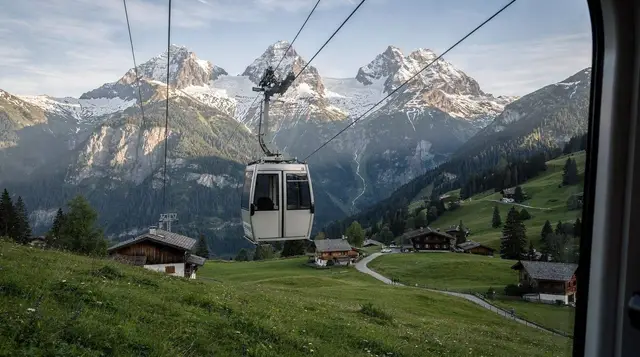
Unlike the covered, tunnel-heavy approach to the Jungfraujoch, almost the entire Schynige Platte line runs in the open, through meadow and forest before breaking onto bare rock near the top. Sit on the right-hand side going up for the best views over the Lutschine valley towards Interlaken and Lake Brienz; the left side faces mostly hillside for the first half of the climb. The carriages are narrow and unheated, which matters if you are travelling in early June or October, when it can be considerably colder at the top than it was at Wilderswil station.
Departures run roughly every 30 to 40 minutes through the day in peak season, thinning out earlier and later. There is no need to book a specific train; you buy a ticket and take the next departure. The trip down is the same 55 minutes, and the last train back to Wilderswil typically leaves the summit in the early evening, so check the timetable at the station rather than assume you can linger indefinitely.
When it runs, and when it does not
This is the detail that catches people out more than any other on this mountain: Schynige Platte is a seasonal railway. It typically opens in early June and closes in mid to late October, and the exact dates move by a week or two each year depending on how much snow needs clearing from the upper track. Outside that window, the line simply does not run, and there is no cable car alternative.
| Period | Typical status |
|---|---|
| November to May | Closed, no service |
| Early to mid June | Opening, weather dependent |
| Mid June to August | Full daily service, alpine garden at its peak |
| September to early October | Full service, best chance of clear autumn air |
| Mid to late October | Closing, reduced timetable |
Even within the open season, wind and low cloud can suspend the upper section or simply erase the view. A clear sky over Interlaken at breakfast does not guarantee a clear summit two hours later; check the live webcam and status page for Schynige Platte before you commit to the trip, particularly if you are travelling a long way to make it happen on one specific day.
The alpine garden
A short, flat walk from the summit station brings you to the Alpine Garden of Schynige Platte, first planted in 1927 and now home to roughly 600 species native to the Swiss Alps, arranged by the rock and soil conditions each plant favours rather than alphabetically or by family. Entry is free once you have paid for the railway ticket, and the garden is unstaffed beyond a small information hut, so you move through at your own pace on gravel paths.
The garden is at its most colourful from late June into August, when the alpine meadow flowers are out in full; by September it has thinned considerably, though the setting, framed by the Eiger, Monch and Jungfrau across the valley, does not depend on the flowers to be worth the ten-minute detour. Give it 20 to 30 minutes if you are also doing the longer walk, longer if botany is the actual point of the trip for you.
The Panoramaweg
The main walking route from the summit station, generally called the Panoramaweg locally, is a loop of roughly 2 hours at an easy, unhurried pace, covering around 5 to 6 kilometres with modest elevation change once you are up on the ridge itself. The path is well marked, mostly gravel and packed earth, with some rockier, uneven stretches, and benches placed at the better viewpoints.
The walk threads along the open ridge above the tree line, with the view alternating between the Bernese peaks to the south and Lake Brienz and Lake Thun to the north, a combination that very few walks in the region offer from a single path. Cows graze the higher pastures in summer, and marmots are common enough that a slow, quiet approach along the path edges will usually turn one up, particularly in the early morning or early evening.
This is not a technical hike. There is no scrambling, no exposure that would concern anyone with ordinary care, and no need for anything beyond sturdy shoes with grip, since the surface can be loose gravel in places. It is, however, a real walk rather than a stroll: allow the full two hours, wear layers, and do not attempt it in trainers with worn soles on a wet day.
For anyone wanting to extend the day, the ridge continues towards the Faulhorn, a considerably longer and higher route that should not be attempted as a casual add-on; treat Schynige Platte and the Faulhorn traverse as two separate trip decisions rather than one flexible day.
Getting there from Interlaken
The route is simple and does not involve either Interlaken station directly, since the railway starts from Wilderswil, one stop down the line.
- Take any train from Interlaken Ost or Interlaken West towards Wilderswil; the journey takes about 6 minutes and departures run at least twice an hour.
- At Wilderswil, the Schynige Platte platform is a short walk from the main station building, clearly signed.
- Buy your ticket at the counter or machine, or bring a pass that covers the line, and board the next departure.
- The climb takes about 55 minutes to the summit station at 1,967 metres.
Swiss Travel Pass holders and Half Fare Card holders get roughly 50 percent off the Schynige Platte fare rather than free travel, since it is a private mountain railway rather than a main-line SBB service. The Berner Oberland Pass and the Jungfrau Travel Pass, where valid for the relevant zone and season, typically include Schynige Platte at no extra cost, which is worth checking against your specific pass before buying a separate ticket.
Comparing Schynige Platte with the other summits
| Schynige Platte | Harder Kulm | Jungfraujoch | |
|---|---|---|---|
| Altitude | 1,967 m | 1,322 m | 3,454 m |
| Return fare from Interlaken (approx.) | ~75 CHF | ~36 CHF | 220 CHF+ |
| Journey time up | ~1 hour (via Wilderswil) | 8 minutes | ~2 hours |
| Season | June to October | Year-round | Year-round |
| Main draw | Alpine garden, ridge walk, wide panorama | Quick view over Interlaken and both lakes | Glacier, ice palace, highest station in Europe |
Harder Kulm is the better choice if you have an hour and want a view over Interlaken itself between the two lakes; it runs all year and the funicular takes 8 minutes from Interlaken Ost. Schynige Platte trades that convenience for a genuinely alpine setting and a proper walk, at a fraction of the Jungfraujoch’s price, but only in the warmer months. For a fuller side-by-side, see the comparison guide to Harder Kulm and Schynige Platte.
If the Jungfraujoch’s glacier and ice palace are what you are actually after, that is a different trip and a different budget; the self-guided Jungfraujoch day ticket covers that route via Lauterbrunnen and the Kleine Scheidegg. The two excursions answer different questions and are worth treating as separate decisions rather than a choice between “the same thing, cheaper.”
What to wear and bring
Temperatures at 1,967 metres run 8 to 12 degrees cooler than at lake level in Interlaken, and wind on the open ridge can make it feel colder still. Bring a proper layer even on a warm June day in town, sun protection, since the UV exposure at altitude is stronger than it feels, and footwear with actual grip if you plan to do the Panoramaweg rather than stay near the station. There is a restaurant and hotel at the summit for food and drink, and a shaded terrace, but no shop for last-minute layers, so pack before you leave Wilderswil.
Water is worth carrying rather than relying on buying it at the top, where prices, as with most Swiss mountain restaurants, run noticeably higher than in the valley. The alpine garden and the first stretch of the Panoramaweg are close enough to the station that a short visit needs almost no preparation; the full two-hour loop deserves the same basic kit as any half-day walk.
Combining Schynige Platte with the rest of the Bodeli
Because the outward journey passes through Wilderswil in any case, Schynige Platte pairs naturally with a broader day around the two lakes or with Unterseen and Matten, both a short walk or bus ride from Interlaken’s centre.
Travellers who prefer to cover ground by bike rather than train can also see the wider Bodeli, including Iseltwald and the Giessbach falls, on the guided e-bike route to Iseltwald and Giessbach, or explore Interlaken’s own lakes and viewpoints on the e-bike tour of Interlaken’s lakes, ruins and views before or after a Schynige Platte morning.
For a wider view of what else is reachable from the Wilderswil and Schynige Platte area, the round-up of the best mountain excursions from Interlaken puts Schynige Platte alongside Grindelwald First, Mannlichen and Niederhorn, all of which solve a similar problem, a big view without a big spend, in slightly different ways.
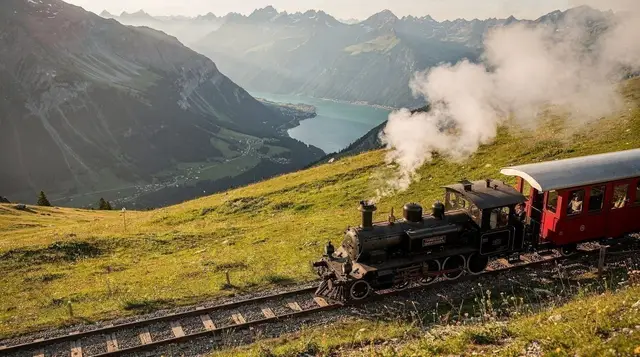
Anyone building out a longer stay should also check when the region’s mountain railways open and close, since Schynige Platte is one of the more seasonally restricted of the group, alongside the Brienzer Rothorn steam line.
Hikers who enjoy the Panoramaweg often ask what comes next; the answer, for anyone with a full day and proper boots, is usually the Bachalpsee hike or the wider round-up of the best day hikes from Interlaken, both a step up in length and effort from the Schynige Platte loop.
If Schynige Platte is one stop on a longer visit, it slots naturally into a two-day Interlaken itinerary alongside a lake or town day, and pass holders planning several mountain trips should read the Swiss Travel Pass guide and the Jungfrau and Berner Oberland Pass guide before buying individual tickets.
Schynige Platte questions people actually ask
How do I get to Schynige Platte from Interlaken?
Take any train from Interlaken Ost or Interlaken West to Wilderswil, one stop, about 6 minutes. The Schynige Platte rack railway departs from a separate platform next to Wilderswil station. The climb to the summit station takes about 55 minutes.
When is the Schynige Platte railway open?
Typically from early June to mid or late October, weather and snow clearance permitting. The exact opening date shifts by one to two weeks each year depending on how much snow lingers on the upper track, so check the current season before planning around it.
How much does the Schynige Platte train cost?
A standard adult return from Wilderswil is in the region of 72 to 78 CHF, with roughly half price for Swiss Travel Pass and Half Fare Card holders and the Berner Oberland Pass and Jungfrau Travel Pass covering it outright. Prices are unchanged from recent seasons but always confirm before travelling.
Is the alpine garden included in the ticket?
Yes. The alpine garden sits a short walk from the summit station and entry is free once you have paid for the railway. It holds around 600 species native to the Alps, labelled and grouped by habitat, and is at its fullest from late June through August.
How long is the Panoramaweg walk?
The main loop, often called the Panoramaweg or the Faulhorn approach path as far as the first viewpoints, takes about 2 hours at an easy pace with no technical difficulty, mostly on gravel path with some rougher sections. It gains and loses little height once you are up at the ridge.
Can you see the Eiger, Monch and Jungfrau from Schynige Platte?
Yes, and better than from almost anywhere else accessible by public transport. The three peaks line up across the valley beyond Lake Brienz, with Lake Thun visible in the other direction, which is the specific panorama Schynige Platte is known for.
Is Schynige Platte suitable for families and older visitors?
The railway itself needs no fitness at all. The Panoramaweg is manageable for most people with reasonable mobility, on a marked path with benches, though pushchairs will struggle with the gravel and occasional steps. There is a restaurant and a hotel terrace at the top for anyone who wants to skip the walk entirely.
Does Schynige Platte close in bad weather or wind?
The railway can suspend service in high wind or heavy snowfall on the upper section, and low cloud can erase the view entirely even when the train is running. Check the live status and the Wilderswil webcam on the day, since a clear morning in Interlaken does not guarantee a clear summit.
Mountain excursions on GetYourGuide
Verified deep-linked GetYourGuide tours. Book through these links and we earn a small commission at no cost to you.
GetYourGuide does not provide a product photo for this activity — the image shows the meeting point, photographed by us.