Driving and parking in the Jungfrau region
Do I need a car in the Jungfrau region?
No, and in the Lauterbrunnen valley a car is often a handicap rather than a help. Wengen, Mürren and Gimmelwald are car-free and reached only by train or cable car, so you leave the vehicle in a paid car park in Lauterbrunnen or Stechelberg. A car earns its keep for Lake Thun and Lake Brienz villages, the Grimsel and Susten passes, and Kandersteg, where trains are slower or don't go.
The short version: a car helps less here than you’d think
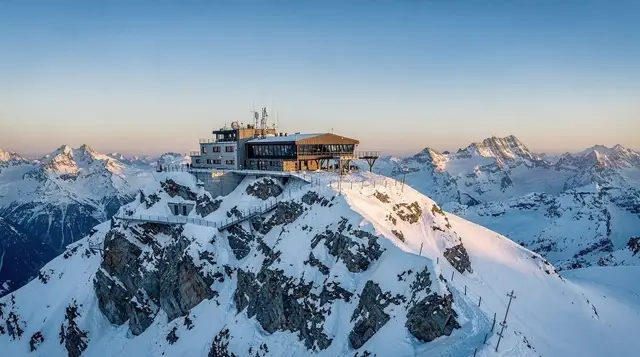
Interlaken sits between two lakes with a compact, walkable town centre and two railway stations, and every one of the region’s marquee sights — the Jungfraujoch, the Schilthorn, Grindelwald First, Harder Kulm, Schynige Platte — is reached exclusively by rail or cable car. No road climbs to any of them.
A car earns its cost for a handful of specific detours: the quieter shores of Lake Thun and Lake Brienz, the drive up to Kandersteg, and the high alpine roads over the Grimsel and Susten passes, which are only open roughly June to October and closed to trains altogether. Everywhere else, and above all in the Lauterbrunnen valley, a car is dead weight you have to park, insure and worry about while the trains do the actual work.
This guide sets out where driving genuinely helps, what parking costs in the two towns visitors actually drive to — Lauterbrunnen and Grindelwald — why three of the region’s best-known villages ban cars outright, and the vignette rule that catches out a surprising number of first-time renters.
Where a car actually helps
If your itinerary includes any of the following, hiring a car for those specific days is worth it:
- Lake Thun’s south shore and Lake Brienz’s back roads. Places like Oberhofen and Hilterfingen, Sigriswil and Merligen, and the lane along Lake Brienz towards Iseltwald and Giessbach are served by bus and boat, but at a fraction of the frequency of a car, and boat schedules thin out sharply outside May to September.
- Kandersteg. The village itself is on the rail line, but the Oeschinensee cable car base and the onward hiking trailheads are easier with your own wheels if you’re combining several stops in one day, especially outside peak timetable hours.
- The Grimsel and Susten passes. These are seasonal, spectacular driving roads with no rail equivalent; if that’s the point of your day, you need a car (or a scheduled postbus, which runs but far less often).
- Emmental and the villages beyond Bern. Once you’re outside the Bernese Oberland’s dense rail network, distances stretch and connections drop, and a car saves real time.
- Early starts before trains run, or late finishes after the last one. A 5 a.m. departure for sunrise photography, for example, is only realistic by car.
Outside these cases, the Berner Oberland Pass, Jungfrau Travel Pass or a Swiss Travel Pass will get you to more places, more reliably, without the parking questions below. See our Swiss Travel Pass guide for which pass fits which trip length.
Where a car becomes a handicap
The Lauterbrunnen valley is the clearest case. The valley floor has one narrow road in and out, past Lauterbrunnen village to a dead end at Stechelberg. Three of its most-visited settlements — Wengen, Mürren and Gimmelwald — are car-free by law, not by inconvenience, so driving up the valley gets you no closer to any of them than parking at the bottom and taking the train or cable car everyone else uses. On a high-season morning the single road backs up behind coaches and delivery vans, and every parking space in Lauterbrunnen fills before 10 a.m.
Grindelwald is only slightly better. The old village has narrow streets never designed for the coach and rental-car traffic the Eiger Express era has brought, and on-street spaces are metered and scarce. Most visitors now park once, at the purpose-built Grindelwald Terminal, and use gondolas and trains for the rest of the day.
Practically, that means: if your day’s plan is inside the Lauterbrunnen valley or up from Grindelwald, drive to one car park, leave the car, and don’t move it again until you leave. Trying to reposition a car mid-day between villages wastes far more time than it saves.
Parking in Lauterbrunnen
| Car park | Location | Typical rate | Notes |
|---|---|---|---|
| Bahnhofparkplatz (station car park) | Stutzli-Ey, beside Lauterbrunnen station | around CHF 2–3/hour, day rate roughly CHF 15–18 | Closest to the platforms and the Staubbachfall; fills first |
| Trümmelbach car park | Near the Trümmelbach Falls entrance, valley road | similar hourly rate, smaller | Useful only if the falls are your one stop |
| Stechelberg car park | End of the valley road, cable car base | flat day rate, roughly CHF 10–15 | Best if Mürren, Gimmelwald or the Schilthornbahn is your target |
Rates move year to year and by season; treat these as planning figures, not quotes. Pay-and-display machines accept cards and, increasingly, a parking app — keep the paper receipt on the dashboard as a backup. There’s no free grace period and no informal tolerance: a lapsed ticket gets a fine.
If you’re day-tripping into the valley without a car at all, the From Lauterbrunnen Roundtrip Train and Jungfraujoch Ticket removes the parking question entirely by bundling the rail journey with the summit ticket.
a roundtrip train and Jungfraujoch ticket that starts from Lauterbrunnen and skips the parking decision altogetherParking in Grindelwald
The Grindelwald Terminal, the base station for the Eiger Express to Eigergletscher and for onward connections towards the Jungfraujoch, has by far the largest and most straightforward car park in the valley: multi-storey, roughly CHF 15–20 for a full day, with rates lower for a couple of hours. It’s a five to ten minute walk, or a short shuttle, from the terminal building itself. See our guide to the Eiger Express and Grindelwald Terminal for how the connections fit together.
Parking for the Grindelwald First gondola sits at a separate, smaller car park closer to the village centre, and fills earlier on clear summer mornings because First’s queues build fast after 9 a.m. If you’re going to First specifically, arrive before 8.30 a.m. or expect to circle for a space.
Street parking in the old village itself is metered, time-limited (often two hours) and genuinely scarce in July and August. It isn’t worth the stress for a single overnight stay; use your accommodation’s parking if it has any, or the Terminal car park and walk in.
The three car-free villages, and why
Wengen, Mürren and Gimmelwald ban private cars, a rule that predates mass tourism and has stayed because it works: narrow terraces, steep access, and railways or cable cars already doing the job of moving people and goods.
- Wengen is reached by the Wengernalp cog railway from Lauterbrunnen, a roughly 15-minute climb. Hotel luggage transport exists; visitors otherwise walk or use the small electric taxis licensed to residents.
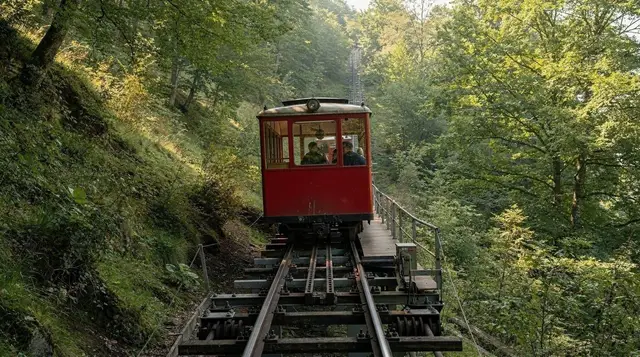
- Mürren is reached two ways: the cable car from Stechelberg via Gimmelwald, or the train from Lauterbrunnen to Grütschalp followed by a connecting rail line along the cliff edge. Both take around 30–40 minutes door to door.
- Gimmelwald, the smallest and least developed of the three, is the intermediate stop on the Stechelberg–Mürren cable car, a couple of minutes below Mürren itself.
None of this is a hardship — the connections are frequent and built into the regional pass network — but it does mean a rental car buys you nothing for these three destinations beyond a parking bill at Lauterbrunnen or Stechelberg. Our car-free villages guide covers the permit system and how locals actually move goods in and out.
For travellers who’d rather have someone else handle the logistics of Lauterbrunnen, Mürren and the Schilthorn in a single day, a private itinerary folds in the transport already:
a private day trip through Bern, Lauterbrunnen, Mürren and the Schilthorn that includes all the transfersThe Swiss vignette
Switzerland doesn’t charge motorway tolls per journey; instead every vehicle on the green-signed A-network needs a vignette, a windscreen sticker valid for one calendar year (mid-December to the following January), currently priced at CHF 40. It’s sold at border crossings, petrol stations, post offices and online as an e-vignette linked to your number plate. Most rental cars from Swiss agencies already carry one — confirm this at pickup rather than assuming it — but a car crossing in from Germany, France, Italy or Austria will not have one fitted.
The catch that trips people up: you need the vignette even for a short motorway stretch, such as the fast road between Bern and Spiez before you turn off for Interlaken. Police checks are not constant but are not rare either, and the fine for driving without one is many times the sticker’s cost. If your whole trip stays on cantonal roads (the ordinary blue-signed network) you can skip it, but most realistic routes into the Bernese Oberland touch at least one motorway section.
Renting a car for a Jungfrau region trip
If you do decide a car earns its place, a few practical points specific to this region:
- Rent from Bern, Zurich or Basel rather than Interlaken. Selection and rates are better at the larger stations, and you can return the car at Interlaken if your later days don’t need it, dropping the daily rental cost for the mountain-railway portion of the trip.
- Automatic transmission costs more and should be booked well ahead in summer; Switzerland’s fleet skews manual.
- Winter tyres are mandatory in practice from November to April even where not strictly required by date; reputable agencies fit them automatically for that period.
- Fuel is expensive by European standards, and diesel and petrol prices vary little between stations, so there’s no meaningful benefit to shopping around en route.
- Narrow village streets and old bridges in places like Unterseen catch unfamiliar drivers; go slowly and expect priority-to-the-right rules at unmarked junctions.
If your trip mixes some self-driving days with mountain-railway days, an e-quad tour is a middle option that gets you off the main road network without committing to a full rental:
a guided e-quad ride through the Jungfrau region’s back roads and farm tracksAnd for visitors arriving from Zurich who want the region’s highlights covered by someone else’s driving and train tickets in a single day, a guided option removes the whole car-versus-train decision:
a day trip from Zurich covering the Jungfrau region’s highlights with train travel includedGetting here without a car at all
For travellers arriving by air, the trains from both Zurich Airport and Geneva Airport run direct or with a single change to Interlaken Ost, and are genuinely competitive with driving once you factor in a rental pickup, motorway time and the parking problem described above. Once in Interlaken, the Bodeli guest card and regional passes cover local buses, and the trains, buses and boats guide lays out how the whole network connects without a car.
Bottom line
Bring or hire a car if your plan reaches Kandersteg, the high passes, or Lake Thun and Lake Brienz’s quieter back roads. Leave it at home, or park it once and forget it, for Lauterbrunnen, Wengen, Mürren, Gimmelwald and Grindelwald — the railways and cable cars are faster, cheaper once you count parking, and the only way up to the summits anyway. If you do drive, budget the vignette into your costs before you cross into Switzerland, not after a check-point conversation you didn’t want to have.
Driving and parking in the Jungfrau region: FAQ
Can I drive to Wengen, Mürren or Gimmelwald?
No. All three are car-free settlements. Wengen is reached by the Wengernalp cog railway from Lauterbrunnen, Mürren by cable car from Stechelberg or by train via Grütschalp, and Gimmelwald by the same cable car line one stop below Mürren. Residents and tradespeople hold permits for small electric vehicles; visitors’ cars stay below.
Where do I leave my car if I’m heading up the Lauterbrunnen valley?
The main public car park is beside Lauterbrunnen station on Stutzli-Ey, a short, flat walk to the platforms and to the Staubbachfall. A smaller car park exists at Stechelberg, at the very end of the road, useful if your target is the Mürren cable car or the Schilthornbahn rather than the village of Lauterbrunnen itself.
How much does parking cost in Grindelwald?
The Grindelwald Terminal car park, which serves the Eiger Express to the Jungfraujoch and the Grindelwald First gondola, charges by the hour with a daily cap, typically around CHF 15 to 20 for a full day depending on season. Street parking in the old village is limited, metered and best avoided with luggage.
Do I need the Swiss vignette to reach Interlaken?
Yes, if any part of your route uses a Swiss motorway (the green A-numbered roads, marked by green signs). The vignette is a calendar-year sticker costing CHF 40, sold at the border, at petrol stations and online as an e-vignette. Cars without it on a motorway section risk a fine well above the sticker’s price.
Is it worth hiring a car just for the Bernese Oberland?
Only if your plan includes places trains reach slowly or not at all: Kandersteg and the Oeschinensee cable car base, the Grimsel and Susten passes, or a loop around Lake Thun’s quieter shore villages. For Interlaken, Grindelwald, Lauterbrunnen and the mountain railways themselves, a Swiss Travel Pass or regional pass is cheaper and removes the parking problem entirely.
Can I take a rental car onto the mountain railways?
No. None of the routes to Kleine Scheidegg, the Jungfraujoch, the Schilthorn, Grindelwald First, Harder Kulm or Schynige Platte take road vehicles. Every one of them is train, cog railway, cable car or gondola only, which is precisely why the parking decision matters before you even reach the valley.
What happens if I park in Lauterbrunnen overnight without paying?
Swiss car parks are enforced consistently and a ticket machine failure is not an excuse locals or wardens accept kindly. Pay-and-display machines take cards and coins, and most now accept a parking app; keep the receipt visible on the dashboard. Overnight and multi-day rates step down per day, but there is no free grace period.
Transport passes & transfers on GetYourGuide
Verified deep-linked GetYourGuide tours. Book through these links and we earn a small commission at no cost to you.
GetYourGuide does not provide a product photo for this activity — the image shows the meeting point, photographed by us.