Mürren, Wengen and Gimmelwald: the car-free villages explained
How do you get to Mürren, Wengen or Gimmelwald if they don't allow cars?
You leave the car in Lauterbrunnen or Stechelberg and finish the journey by train or cable car. Wengen is reached by the Wengernalp Railway from Lauterbrunnen (around 20 minutes), Mürren by cable car from Stechelberg via Gimmelwald or by train and cable car via Grütschalp, and Gimmelwald by the same Stechelberg cable car, one stop before Mürren.
Three villages above the Lauterbrunnen valley have no road connection to the outside world, and never have. Mürren, Wengen and Gimmelwald sit on shelves and terraces cut into the valley’s flanks, reached only by rail and cable car, and the absence of cars is not a tourism gimmick but a plain fact of geography: nobody ever built a road up there. Visitors arriving from Interlaken by car need a clear plan for where the vehicle stops and how the rest of the day works, because getting this wrong wastes an hour and, more often, a parking fee paid twice.
Two valleys, two ways up
The three villages split across two access routes, and confusing them is the single most common mistake made by first-time visitors driving in from Interlaken.
Wengen: by rail from Lauterbrunnen
Wengen sits on the eastern side of the Lauterbrunnen valley, roughly 400 metres above the valley floor. The only way up is the Wengernalp Railway, a cog railway that leaves from a dedicated platform at Lauterbrunnen station and climbs through forest for about 20 minutes before the trees open onto the village and, beyond it, the north faces of the Eiger, Mönch and Jungfrau. Trains run at least twice an hour through the day, more often in peak season, and the last one back down leaves mid-evening — check the board on arrival, because missing it means either a taxi-priced electric cart or a long walk down a service track in the dark.
Mürren: cable car from Stechelberg, or train and cable car via Grütschalp
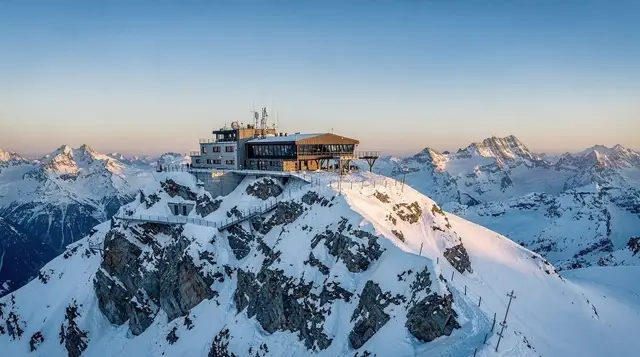
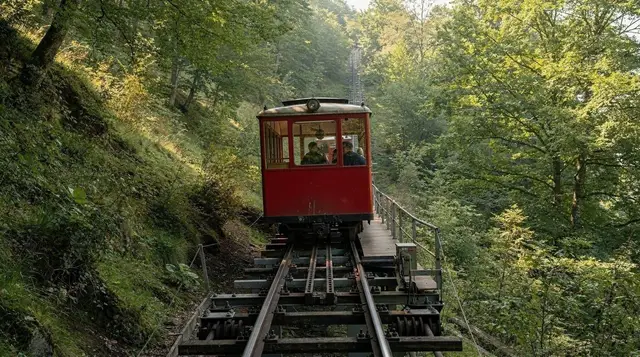
Mürren sits higher and further into the valley, on a ledge above Gimmelwald with clear views across to the Eiger and down onto the valley floor. There are two approaches. The first is the cable car from Stechelberg, at the head of the valley about 15 minutes’ drive past Lauterbrunnen, which climbs via Gimmelwald in a single run of roughly 15 minutes including the stop. The second is from Lauterbrunnen itself: a cable car up to Grütschalp, then a scenic narrow-gauge train along the clifftop to Mürren, about 30 minutes door to door. Both routes are covered by the same regional ticketing, so the choice comes down to whether the car is parked in Lauterbrunnen or driven on to Stechelberg.
Gimmelwald: the hamlet cars never reached
Gimmelwald is smaller again — a working farming hamlet of a few dozen buildings, one stop below Mürren on the Stechelberg cable car. It has never had so much as a proposal for a road, and that absence of infrastructure, rather than any conservation order, is what has kept it looking largely as it did decades ago. Most visitors reach it as a short add-on to a Mürren trip, riding the cable car down or walking the marked path along the hillside in about 45 minutes.
Where the car actually goes
The practical decision is simple: Lauterbrunnen or Stechelberg.
| Destination | Where to park | Approx. daily rate | Connection onward |
|---|---|---|---|
| Wengen | Lauterbrunnen station car park | CHF 12–15 | Wengernalp Railway, ~20 min |
| Mürren (via Grütschalp) | Lauterbrunnen station car park | CHF 12–15 | Cable car + train, ~30 min |
| Mürren (via Stechelberg) | Stechelberg cable car car park | CHF 12–15 | Cable car, ~15 min |
| Gimmelwald | Stechelberg cable car car park | CHF 12–15 | Cable car, one stop, ~8 min |
Stechelberg’s car park is smaller than Lauterbrunnen’s and fills by mid-morning on clear summer days and any day with fresh snow in winter; arriving before 9am or after the day-trip coach groups have gone up is the reliable way to get a space. Lauterbrunnen has more capacity spread across several car parks near the station, and multi-day rates suit anyone basing themselves in Wengen or Mürren for several nights and leaving the car below for the duration. Overnight guests in either village should confirm with their hotel whether the property has an arrangement with a specific car park, since some negotiate a discounted rate for guests.
Driving further up the valley than Stechelberg is not an option — the road simply ends at the cable car station, with a small hamlet and not much else beyond it. For a fuller look at where roads stop and start across the region, see the guide to driving and parking in the Jungfrau region.
How luggage gets there without you carrying it
Carrying suitcases through two changes — car park to train, train to cable car — is the part visitors dread most, and it is largely unnecessary. Three options cover most situations:
Hotel porter or cart pickup. Most hotels in Wengen and Mürren run a small electric cart or arrange a porter to meet guests at the top station and take luggage the final stretch to the door, usually for a modest fee or bundled into the room rate for longer stays. This needs to be arranged in advance, ideally when booking, since carts are limited in number and stretched thin on changeover days.
SBB door-to-door luggage service. Switzerland’s rail luggage service will collect a bag from a Swiss address, airport, or participating station and deliver it directly to a hotel in Wengen or Mürren the following day, for a per-piece fee. This is the option that removes the connections from the equation entirely — travellers arrive with just a day bag and their case appears at the hotel separately, though it needs booking at least a day ahead and does not help on the day of arrival itself.
Carrying it yourself. Both the Wengernalp Railway and the Stechelberg cable car are built for luggage — wide doors, no steps between platform and carriage on the newer stock — so a single large case is manageable for anyone reasonably mobile. The awkward case is multiple bags or a change of vehicle at Grütschalp, where a lift connects the cable car platform to the train platform but the transfer is tight when busy.
Practical notes on lockers and short-term storage for those breaking a journey partway are covered in the luggage and lockers guide.
What still moves on these streets
“Car-free” does not mean empty of wheels. Small electric vehicles are a constant, quiet presence in both Wengen and Mürren: hotel delivery carts, a handful of electric taxis in Wengen for guests with mobility needs or heavy loads, refuse and recycling collection, and building-supply trucks scaled down to fit village-width paths. In winter, piste groomers and snow-clearing machinery run early and late around both villages. None of this is loud or frequent enough to change the character of the place — footsteps and skis on snow remain the dominant sound — but visitors expecting total silence sometimes reset their expectations on the first morning cart delivery.
Gimmelwald has almost none of this. Its lack of any road-scale infrastructure — no wide paths for cart deliveries — means supplies mostly arrive by cable car in the same gondola as passengers, and there is very little machinery of any kind moving through the hamlet even in winter.
Farm vehicles are the other constant across all three villages: this is working alpine farmland as much as a resort, and small tractors moving hay, milk churns or firewood between barns are a normal summer sight, particularly around Gimmelwald and the lower slopes below Mürren.
Getting between the three villages
Mürren and Gimmelwald connect directly by the Stechelberg cable car, one stop apart, and by a marked hillside path that takes about 45 minutes on foot with a reasonable amount of ascent and descent.
Wengen sits on the opposite side of the valley from both, and there is no direct lift or path between them at valley level — the practical routes are either back down to Lauterbrunnen and up the other side, or over the ridge via Kleine Scheidegg and Männlichen on the Wengernalp Railway, which turns a short crow’s-flight distance into a half-day scenic journey with the Eiger’s north face for company most of the way. Travellers planning to see all three villages in one trip generally build in a full day rather than treating it as a quick loop.
Costs at a glance
| Item | Approx. cost (CHF) | Notes |
|---|---|---|
| Lauterbrunnen or Stechelberg parking, per day | 12–15 | Multi-day rates available at some Lauterbrunnen car parks |
| Lauterbrunnen–Wengen (Wengernalp Railway), one way | 6–7 | Covered by Swiss Travel Pass |
| Lauterbrunnen–Mürren (via Grütschalp), one way | 11–12 | Cable car + train combined fare, covered by Swiss Travel Pass |
| Stechelberg–Mürren (via Gimmelwald), one way | 9–10 | Cable car, covered by Swiss Travel Pass |
| SBB door-to-door luggage, per piece | 15–20 | Book at least one day ahead |
| Hotel porter/cart transfer | 0–10 | Varies by property; confirm when booking |
Prices move year to year and are worth checking against current SBB and Schilthornbahn fares before a trip; the figures above are for orientation, not for planning to the franc. Anyone holding a Swiss Travel Pass or the regional Jungfrau Travel Pass should check what is already included before paying separately for these connections — both typically cover the Wengernalp Railway and the Lauterbrunnen–Mürren line at no extra charge.
Practical notes and common mistakes
Parking at the wrong end of the valley. Drivers heading for Mürren sometimes park in Lauterbrunnen out of habit, then discover the Stechelberg cable car route would have been faster and involves a change fewer. If Mürren or Gimmelwald is the only stop planned, Stechelberg is usually the better base.
Missing the last connection down. Both the Wengernalp Railway and the Stechelberg cable car stop running mid-evening, earlier out of peak season. Overnight guests are unaffected, but day visitors staying for dinner should check the return timetable before ordering, not after.
Assuming a direct link between Wengen and Mürren. As above, there isn’t one at valley level — plan a full day if visiting both, not a quick hop.
Underestimating luggage logistics for a short stay. For one or two nights, carrying a single case on the train or cable car is usually simpler and cheaper than arranging porter or courier services designed more for longer stays.
Not checking whether lifts are running at all. Like the region’s other cable cars and trains, these routes close periodically for scheduled maintenance, mostly in spring and autumn, and can also pause in high wind. Checking the Schilthornbahn or Jungfrau Railways status page the morning of travel avoids a wasted drive to Stechelberg.
For visitors combining a car-free village with a mountain excursion, several operators run the whole loop — valley floor, cable car, village, and onward to the Schilthorn — as a single guided day. A tour such as the Mürren and Schilthorn small-group day trip from Interlaken handles the connections and parking question entirely, which suits anyone without a car or unwilling to navigate the Stechelberg car park on a peak-season morning.
Travellers based further afield can join a private tour to Mürren, Lauterbrunnen and Grindelwald from Zürich and skip the driving altogether, while a small-group day trip covering Lauterbrunnen and Mürren is a lower-cost option focused on the valley and the two connected villages without extending as far as the ridge lines above.
Where these villages fit in a longer visit
Mürren, Wengen and Gimmelwald each work as a base for several nights or as a single well-planned day from Interlaken. Anyone weighing overnight stays against a day trip should read how many days in Interlaken and where to stay in Interlaken alongside this guide, since a night in a car-free village changes both the pace of a trip and the parking calculation — a car left in Lauterbrunnen or Stechelberg for several days costs more than a single day’s rate and is worth weighing against a rental drop-off in Interlaken instead.
The Lauterbrunnen valley waterfall walk is an easy way to fill the hours around a train or cable car connection, and those planning a hiking-focused stay in Mürren should also look at the via ferrata route between Mürren and Gimmelwald and the Jungfrau region highlights itinerary for how the villages slot into a multi-day plan.
FAQ about the car-free villages of the Jungfrau region
Why don’t Mürren, Wengen and Gimmelwald allow cars?
There is no road. All three sit on shelves and terraces above the Lauterbrunnen valley with no vehicle connection to the valley floor, a status that predates the tourist era and has simply never been built over. Wengen and Mürren allow small electric utility vehicles for hotels, deliveries and the fire service; Gimmelwald has almost none of that.
Where do I leave my car to visit Mürren or Wengen?
For Wengen, park at Lauterbrunnen station and take the Wengernalp Railway up. For Mürren or Gimmelwald, either park at Lauterbrunnen and change to the Grütschalp cable car and Bergbahn Lauterbrunnen–Mürren train, or drive on to Stechelberg (about 15 minutes further up the valley, road ends there) and take the cable car directly.
How do I get luggage to a hotel in Mürren or Wengen?
Most hotels arrange porter or electric-cart transfer from the top station of the cable car or railway to the door, usually for a small fee or included in the room rate. SBB’s door-to-door luggage service will also collect a bag from a Swiss address or airport and deliver it to the hotel the next day, avoiding the need to carry it on the connections at all.
What vehicles are allowed in Mürren, Wengen and Gimmelwald?
Small electric vehicles owned by hotels, shops, farms and the municipality: delivery carts, snow groomers in winter, the odd electric taxi in Wengen, and agricultural machinery. Private cars, even electric ones, are not permitted regardless of ownership.
Can I drive to Gimmelwald?
No. There has never been a road to Gimmelwald. The only way in is the cable car from Stechelberg, which stops at Gimmelwald on its way up to Mürren, or on foot along the valley path from Stechelberg or down from Mürren.
Is Mürren connected to Wengen by cable car or train?
Not directly. The two villages sit on opposite sides of the Lauterbrunnen valley. The link between them runs via the ridge above: from Mürren up to the Schilthorn or across to Birg, or down to Lauterbrunnen and back up the other side to Wengen, or over the top via Männlichen and Kleine Scheidegg on the Wengernalp Railway, which is the scenic but longer option.
How much does parking cost in Lauterbrunnen or Stechelberg?
Expect roughly CHF 12 to 15 per day in Lauterbrunnen’s main car parks near the station, and a similar rate at Stechelberg’s cable car car park, which is smaller and fills up on clear days in July and August. Multi-day rates are available at some Lauterbrunnen car parks for stays of several nights.
Do I need the Swiss Travel Pass for these villages?
The Swiss Travel Pass covers the Wengernalp Railway and the Lauterbrunnen–Mürren train and cable cars at no extra cost, which makes day trips considerably cheaper if travel to the region is already pass-covered. Local passes such as the Jungfrau Travel Pass also include these connections; check which one already covers a Swiss Travel Pass discount before buying both.
Transport passes & transfers on GetYourGuide
Verified deep-linked GetYourGuide tours. Book through these links and we earn a small commission at no cost to you.
GetYourGuide does not provide a product photo for this activity — the image shows the meeting point, photographed by us.