Jungfrau region highlights: three days in the mountains
Most visitors do Jungfraujoch, Grindelwald First and the Schilthorn as three separate day trips from a hotel bed in Interlaken, which means three mornings of the same 30 to 50 minute run out to the mountains and back again in the evening. This itinerary does it differently: two nights spent up in the massif itself, in Wengen and then Mürren, with Interlaken used only as the start and end point. It costs a little more in lodging and loses the two-lakes view from the valley floor, but it buys back roughly two hours of travel time over the three days and a genuinely quiet first cable car each morning.
Why base yourself in the mountains for these three days
The Jungfrau region’s three headline excursions - Jungfraujoch, Grindelwald First and the Schilthorn - all sit well above Interlaken and are reached through different valleys: one via Grindelwald or Lauterbrunnen and the Kleine Scheidegg, one via Grindelwald directly, and one via Lauterbrunnen and Mürren.
Staying in Interlaken means retracing the same valley train each evening no matter which excursion you did that day. Staying in car-free Wengen or Mürren instead means you are already sitting inside the network the cable cars and rack railways serve, so the first departure of the day is minutes away rather than the better part of an hour.
The trade-off is real: rooms in Wengen and Mürren cost more than equivalent options in Interlaken, choice is more limited, and you will be carrying a bag up and down a couple of extra cable car rides. If your trip is broader than the Jungfrau massif, staying in Interlaken and reading our day trips from Interlaken guide instead makes more sense. This route is specifically for people who want the massif and nothing but the massif.
Day 1: Interlaken to Jungfraujoch, then up to Wengen
Start early. Trains from Interlaken Ost run via Lauterbrunnen and the Kleine Scheidegg, or via Grindelwald and the Eiger Express gondola, both converging at Kleine Scheidegg before the final climb through the tunnel bored into the Eiger. Either route to Kleine Scheidegg takes around an hour from Interlaken; the Eiger Express cuts the Grindelwald side down to about 15 minutes for that one leg.
a Jungfraujoch day pass bookable with a fixed morning departure is worth having sorted before you leave, since ticket booths at Interlaken Ost can queue up badly in high season. List price hovers around CHF 220 to 260 return from Interlaken, roughly halved with the Half Fare Card or under the Jungfrau Travel Pass, and reduced again with the “Good Morning Ticket” if you’re through the gate before about 9:20am.
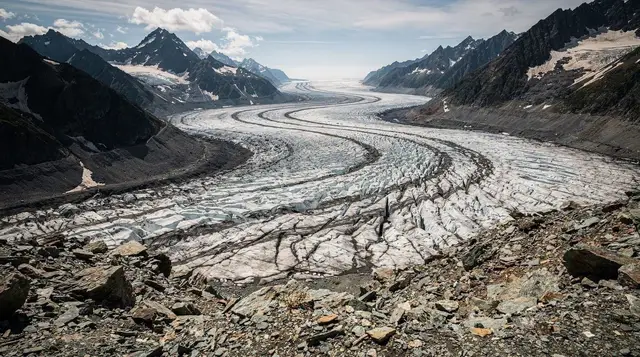
At Jungfraujoch itself, 3454 metres up and Europe’s highest railway station, budget two to three hours: the Sphinx observation terrace, the ice palace carved into the glacier, and the viewing platform onto the Aletsch glacier if visibility allows. It is genuinely cold even in summer, and the altitude is enough that some visitors feel it - see our notes on altitude, weather and what to pack before you go. Full background on the line itself, opened in 1912, is in the Jungfrau railway guide.
Coming back down, get off at Kleine Scheidegg and take the Wengernalp railway down to Wengen rather than continuing all the way to Interlaken. It’s a short, scenic drop and puts you in your bed for the next two nights well before dinner. Wengen is car-free, reached only by rail from Lauterbrunnen, and has a genuinely different feel once the day-trip trains have emptied out for the evening - full detail in the Wengernalp railway guide.
Day 2: Grindelwald First, the Bachalpsee, and down to Lauterbrunnen
From Wengen, drop down to Lauterbrunnen and take the connecting train and bus to Grindelwald for the gondola up to First at 2168 metres. This is a different valley system entirely from yesterday’s Jungfraujoch route, so budget around 45 to 60 minutes door to door from Wengen.
the First gondola and adventure activities package covers the cable car plus the cliff walk and the option of the mountain cart or zipline down, if that appeals; if you just want the lift itself, an attraction ticket for the gondola alone is the cheaper option. Full detail on both the ride and what’s up there is in the Grindelwald First guide.
The Bachalpsee itself is not included in the gondola ticket - it’s a separate walk of 45 to 60 minutes each way from the First station, on a mostly gentle path that can hold snow into June in a late year. The lake’s reflection of the Wetterhorn and Schreckhorn on a still morning is the actual point of the day trip up here, so don’t treat the gondola ride as the destination; see the Bachalpsee hike guide for timing and conditions.
By early-to-mid afternoon, head back down to Grindelwald and across to Lauterbrunnen, the valley of 72 waterfalls, where the 297-metre Staubbachfall is visible straight from the village street. If time allows before catching the connection up to Mürren, the Trümmelbach Falls - ten glacier-fed cascades running inside the mountain - are a short bus ride further up the valley, though they’re a genuine detour rather than a quick add-on; the waterfall walk guide lays out realistic timings. From Lauterbrunnen, the cable car up to Mürren takes under 15 minutes.
Day 3: Mürren and the Schilthorn, back down to Interlaken
Mürren, like Wengen, is car-free and reached only by cable car and rail. Sleeping there means the Schilthorn cable car station is a short walk from your hotel rather than a bus and cable car connection away, which matters on a day when the first cabin up often has the clearest air before cloud builds over the Eiger, Mönch and Jungfrau across the valley.
a small-group Schilthorn trip departing from the region is worth considering if you’d rather not manage the connections yourself, though independent travel here is straightforward. At 2970 metres, Piz Gloria’s revolving restaurant and the 360-degree platform are the draw, alongside the James Bond exhibition; full detail is in the Schilthorn and Piz Gloria guide. Compare it directly against yesterday’s Jungfraujoch trip in our Jungfraujoch vs Schilthorn breakdown if you’re deciding which one deserves more of your time, since both are expensive and neither is a repeat of the other’s view.
If your legs are up for it, the path down from Mürren toward Gimmelwald and the via ferrata route is one of the more serious add-ons in the region - see the via ferrata guide before committing, since it needs proper equipment and is not a casual afternoon stroll. Otherwise, take the cable car back down to Lauterbrunnen by mid-afternoon and the train on to Interlaken, roughly 20 minutes, closing the loop where you started.
If you’d rather approach the Jungfraujoch side and the Lauterbrunnen valley in one combined rail ticket instead of the routing above, a Lauterbrunnen-based roundtrip Jungfraujoch ticket is worth comparing against the Interlaken Ost fare, since starting points affect the price.
What three days like this cost
| Item | Approximate cost per person |
|---|---|
| Jungfraujoch return (list price) | CHF 220-260 |
| Grindelwald First gondola return | CHF 75-90 |
| Schilthorn cable car return from Lauterbrunnen | CHF 110-130 |
| Two nights in Wengen and Mürren, mid-range | CHF 260-380 |
| Meals, three days | CHF 150-220 |
Discounts change these numbers substantially. The Half Fare Card cuts most transport fares by half; the Jungfrau Travel Pass bundles the regional trains and several of the lifts for a flat multi-day rate, which tends to pay off if you’re doing all three excursions plus the connecting trains in the way this itinerary describes. Read the Swiss Travel Pass guide before booking anything, since which pass suits you depends on whether you’re arriving from outside the region or already based nearby.
Packing, weather and timing notes
Jungfraujoch and the Schilthorn both sit above 2900 metres, where temperatures run well below whatever Interlaken is reporting and wind chill on an exposed platform is not to be underestimated even in August. Layers, a windproof shell and proper footwear matter more than most first-time visitors expect - see altitude, weather and what to pack for specifics.
All three of the region’s headline lifts close for scheduled maintenance in short windows during spring and autumn, and some routes near the Schilthorn also close on high-wind days regardless of season - check the mountain railway opening and closing schedule before locking in dates, since a closure with no flexibility built into the trip is the single most common way this itinerary goes wrong. If you’re travelling in the shoulder seasons either side of summer, build in one buffer day if your schedule can absorb it.
Questions about this Jungfrau region base-in-the-mountains itinerary
Is it worth sleeping in Wengen or Mürren instead of Interlaken for this trip?
For three days focused entirely on the Jungfrau massif, yes. Interlaken sits at 568 metres, well outside the region the trains and gondolas actually serve. Basing in Wengen or Mürren for two nights cuts the daily approach down to a few minutes and lets you start before the crowds arriving from Interlaken, Grindelwald and Lauterbrunnen.
Can I do Jungfraujoch, First and the Schilthorn in three days without a car?
Yes, and a car adds nothing useful. Wengen, Mürren and Gimmelwald are car-free by design, reached only by train or cable car, so a rental car would simply sit parked in Lauterbrunnen or Stechelberg while you use the same rail and cableway network as everyone else.
How much does this three-day itinerary cost in total?
Budget roughly CHF 550 to 750 per person for transport and lift tickets alone, before food and lodging, since Jungfraujoch and the Schilthorn are the two most expensive excursions in the region. A Half Fare Card or the Jungfrau Travel Pass brings that down meaningfully if you are staying more than a couple of days.
What happens if the weather is bad on the day booked for Jungfraujoch?
Move it. Jungfraujoch above the cloud line on a grey Interlaken day is common, but a full whiteout at 3454 metres means zero view and a lot of money for a walk through an ice palace. Check the live webcams the night before and keep at least one buffer day, or one flexible ticket, if your schedule allows it.
Do the Jungfraujoch and Schilthorn tickets include the smaller lifts along the way?
No. The Jungfraujoch fare from Interlaken covers the rail journey to Kleine Scheidegg and on through the Eiger tunnel; getting to Grindelwald First or up to the Bachalpsee is a separate gondola and hike. Similarly, reaching Mürren and the Schilthorn from Lauterbrunnen involves its own cable car connections.
Is the Bachalpsee hike included in a Grindelwald First ticket?
The gondola ticket only gets you to First at 2168 metres. The lake itself is a further 45 to 60 minutes on foot along a well-marked, mostly gentle path, snow permitting, so it needs its own block of time and is not something to add on as an afterthought.
When do the mountain railways in this itinerary close for maintenance?
Cable cars and railways across the region close in short windows in spring and again in autumn for annual servicing, and some, including sections near the Schilthorn, close on high-wind days regardless of season. Confirm operating status for Jungfraujoch, First and the Schilthorn a day or two before travelling.
tours.3 days
Verified deep-linked GetYourGuide tours. Book through these links and we earn a small commission at no cost to you.
GetYourGuide does not provide a product photo for this activity — the image shows the meeting point, photographed by us.