What Interlaken really costs: three daily budgets
How much does a day in Interlaken actually cost?
A no-frills day (hostel dorm, self-catered meals, no mountain excursion) runs around CHF 90-110. A realistic mid-range day with a private room, restaurant meals and one cable car ticket lands between CHF 260 and CHF 340. Add a Jungfraujoch trip or a private activity and a comfortable day easily reaches CHF 450 or more.
Switzerland is expensive, and Interlaken doesn’t buck the trend. What catches people out isn’t the daily basics — a coffee or a bus ticket costs roughly what you’d expect for Western Europe — it’s the mountain railways, which are priced individually and can double a day’s spending in one ticket. Below are three real budgets built from current CHF prices, not rounded guesses, plus the costs that consistently surprise first-time visitors.
Three daily budgets, priced in CHF
These figures assume one adult, high season (July-August), and no discount card unless stated. Shoulder-season prices run 10-20% lower on accommodation.
| Category | Budget traveller | Mid-range | Comfortable |
|---|---|---|---|
| Accommodation | CHF 40-55 (hostel dorm bed) | CHF 140-180 (private double, per person) | CHF 220-320 (lakeside hotel, per person) |
| Breakfast | CHF 0-8 (self-catered) | CHF 15-20 (hotel or café) | CHF 20-30 (hotel buffet) |
| Lunch | CHF 10-15 (supermarket, bakery) | CHF 22-28 (café or pub lunch) | CHF 35-45 (restaurant) |
| Dinner | CHF 15-20 (self-catered or kebab) | CHF 30-40 (restaurant main) | CHF 55-75 (restaurant, wine included) |
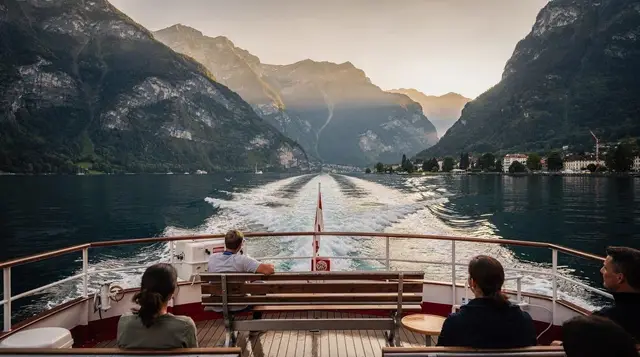
| Local transport | CHF 0-8 (walking, occasional bus) | CHF 15-25 (train or boat) | CHF 25-40 (train and boat) |
| One mountain or lake activity | CHF 0-20 (free viewpoint, e.g. Höhematte or a lakeshore walk) | CHF 70-100 (Harder Kulm or a lake cruise) | CHF 220-260 (Jungfraujoch return) |
| Extras (water, snacks, small purchases) | CHF 5 | CHF 10-15 | CHF 20-30 |
| Total per day | CHF 90-110 | CHF 260-340 | CHF 450-620 |
The gap between mid-range and comfortable is almost entirely the mountain excursion. Do the Jungfraujoch guide or the Schilthorn Piz Gloria guide reading before you commit a day’s budget to either — both are worthwhile, but neither is essential more than once.
Accommodation: what CHF actually buys
A hostel dorm bed in central Interlaken or nearby Unterseen typically runs CHF 38-55 depending on season and whether it’s a 4-bed or 8-bed room. Private rooms in budget guesthouses start around CHF 100-130 for two people. Standard three-star hotels along or near the Höheweg sit at CHF 180-260 for a double in summer, and the historic lakeside hotels — the ones with Jungfrau views from the terrace — start above CHF 350 and climb well past CHF 600 in peak weeks.
Unterseen and Matten, the two villages that form Interlaken’s wider Bödeli with the town itself, are usually 15-25% cheaper than staying directly on the Höheweg and are a 10-15 minute walk from either station. See where to stay in Interlaken for a street-by-street breakdown, and note that almost every hotel and guesthouse charges a separate visitor’s tax of roughly CHF 3-4 per person per night — small, but it’s rarely included in the headline room rate you see online.
Food and drink
Self-catering is the single biggest lever on a Swiss food budget. A loaf of bread, cheese and fruit from Migros or Coop costs a fraction of a restaurant breakfast, and both supermarkets have branches within a few minutes of Interlaken West. A takeaway kebab or döner runs CHF 12-16, a bakery sandwich CHF 6-9.
Sit-down restaurant prices in Interlaken:
| Item | Typical price (CHF) |
|---|---|
| Coffee | 4.50-5.50 |
| Beer (5 dl) | 6.50-8 |
| Bowl of soup | 12-16 |
| Rösti with egg | 18-24 |
| Cheese fondue (per person, shared pot) | 26-32 |
| Raclette (per person) | 28-35 |
| Restaurant main course, meat or fish | 32-45 |
| Bottle of house wine | 40-55 |
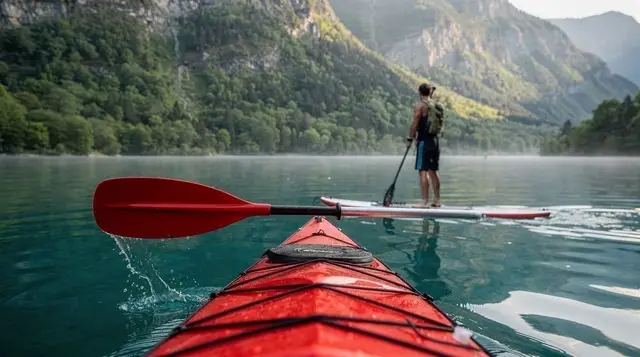
Fondue and raclette are the two dishes worth budgeting for specifically — see the fondue and raclette guide for where to get them without the tourist-menu markup. If you’d rather combine the dish with an activity, raclette after a paddle makes more sense than it sounds: a half-day rafting trip on the Lütschine finishing with a raclette meal bundles the two costs into one booking rather than paying separately for gear hire and a restaurant table. For the cheaper end of eating out generally, the eating cheap in Interlaken guide has specific addresses.
The mountain railways: the real budget decision
This is where Interlaken separates from most European town breaks. Return prices from Interlaken (high season, no discount):
| Summit or excursion | Approx. return price (CHF) |
|---|---|
| Harder Kulm (funicular from Interlaken Ost) | 36 |
| Schynige Platte | 72 |
| Niederhorn | 66 |
| Grindelwald First | 78 |
| Männlichen (gondola from Grindelwald) | 76 |
| Schilthorn (Piz Gloria) | 108-120 |
| Jungfraujoch | 220-260 |
| Brienzer Rothorn (steam train) | 96 |
The Half Fare Card (CHF 120, cuts most tickets by 50%, worth it for a stay of five days or more with multiple excursions) and the regional Berner Oberland Pass or Jungfrau Travel Pass can bring the total down meaningfully if you’re doing three or more summits. Work out which pass suits your itinerary before buying anything — the Swiss Travel Pass guide and the Jungfrau and Berner Oberland Pass guide both walk through the break-even maths, and cable cars and funiculars explained clarifies which lines each pass actually covers, since discounts vary line by line.
If a full-price Jungfraujoch ticket feels steep for what’s a half-day trip, it’s worth comparing against the Schilthorn or Glacier 3000, which cost less and still deliver a genuine alpine panorama. The Glacier 3000 return cable car ticket from Col du Pillon is a different excursion (it’s a day trip beyond the immediate region, reached via Gstaad rather than from Interlaken directly), but it’s a useful price comparison when you’re deciding whether one big-ticket summit per trip is the right call.
Getting there and getting around
Train travel in Switzerland is priced by distance, and Interlaken Ost and Interlaken West are the two hubs for everything. A standard second-class fare from Zurich Airport runs around CHF 68-75 one way without a discount; from Geneva around CHF 75-85; from Bern about CHF 30-35. Local boats on Lake Thun and Lake Brienz cost roughly CHF 20-40 return depending on the route, and the Interlaken hotel visitor’s card covers local Bödeli buses for most guests, which removes small transport costs day to day.
If your itinerary includes a lot of point-to-point movement — Bern, Lucerne or Zurich as day trips, plus a summit or two — a multi-day pass usually wins on cost. If you’re mostly staying within the Bödeli and doing one or two big excursions, paying per ticket can work out cheaper. The trains, buses and boats guide has the specific fare comparisons.
Activities beyond the summits
Interlaken’s adventure sports scene is a real cost category of its own, not an afterthought. Typical prices: paragliding tandem flight CHF 170-220, canyoning half-day CHF 130-160, whitewater rafting CHF 95-120, e-bike rental CHF 45-65 per day, skydiving CHF 420-480. These are priced per activity and add up fast if you’re doing more than one.
An e-bike is one of the better value-for-money options on this list, since it also functions as transport for the day rather than a one-off thrill: a full-day e-bike rental lets you reach Lake Brienz or the villages around Lake Thun independently, which can replace a couple of train or boat fares. At the other end of the price scale, if you’ve budgeted for one genuine splurge on the trip, a skydive over the Bernese Oberland is the most expensive single activity most visitors will consider here — worth knowing that going in, so it doesn’t blow the day’s budget by accident.
The costs people always underestimate
A few line items rarely make it into pre-trip planning:
- Visitor’s tax. CHF 3-4 per person per night, charged separately by almost every hotel and guesthouse, on top of the room rate you booked.
- Paid attractions inside “free” destinations. The Trümmelbach Falls (CHF 14) and Ballenberg open-air museum (CHF 32) are the two most commonly missed entrance fees when people plan around “free things to do.”
- Water and snacks at altitude. A bottle of water on a summit terrace can cost CHF 5-6, more than double the town price — worth carrying a refillable bottle, since Swiss tap water is safe and excellent everywhere.
- Cash for mountain huts. Card payment is now standard almost everywhere in Interlaken itself, but some smaller berghaus restaurants on the trails still prefer cash or have unreliable card readers — worth carrying CHF 40-60 in notes for a hiking day.
- The gap between “from” prices and the real fare. A cable car advertised “from CHF 34” is often the one-way, single-segment fare; the return trip with a connecting train frequently runs CHF 70-100 higher than the number on the poster.
- Luggage storage. Lockers at both stations cost CHF 5-9 depending on size, easy to forget when planning a same-day changeover between accommodation.
Tipping isn’t one of these hidden costs — service is included by law, so a tip is a bonus rather than an expectation.
Bringing the total down without a miserable trip
The cheapest realistic version of an Interlaken visit still lets you see a real summit, just fewer of them. Practical ways to cut cost without cutting the trip short:
- Pick one big summit (Jungfraujoch or Schilthorn), not two — they cover similar ground at similar altitude, and doing both rarely adds much beyond the second big receipt.
- Self-cater breakfast and lunch from Migros or Coop; save restaurant meals for dinner.
- Stay in Unterseen or Matten rather than directly on the Höheweg.
- Buy transport passes only after mapping out the actual itinerary — see the pass guides linked above before assuming one is automatically worth it.
- Use free viewpoints (the Höhematte, the lake promenades, Harder Kulm’s lower approach paths) to fill days that don’t need a paid excursion.
- Travel in the shoulder seasons (May-June, September-October) when hotel prices drop 10-20%, though check the when mountain railways open and close guide first, since some lines run reduced schedules or close entirely for maintenance in exactly those windows.
For a fuller version of this approach mapped across several days, see the Interlaken on a budget guide and the 4-day budget itinerary. And before booking anything, it’s worth reading tourist traps and overpriced things and common mistakes first-time visitors make — several of the priciest mistakes in Interlaken are avoidable rather than unavoidable, and knowing how many days in Interlaken actually makes sense for your interests stops you paying for excursions you won’t have time to enjoy properly.
Interlaken costs: common questions
Is Interlaken more expensive than the rest of Switzerland?
Not really — Interlaken’s hotel and restaurant prices sit close to the Swiss national average, which is already high by European standards. What pushes total spend up here specifically is the mountain excursions: Jungfraujoch, Schilthorn and the other summits cost more per person than almost anything else you’ll do in the country.
What is the single biggest expense in Interlaken?
For most visitors it’s the Jungfraujoch, at roughly CHF 220-260 return from Interlaken depending on the season and any discount card. It’s often more than a night’s accommodation, which is why deciding whether to go before you book anything else makes sense.
Can I do Interlaken on a tight budget?
Yes, but it changes the trip. Skip the highest summits, use free viewpoints and lake shores, self-cater breakfasts and lunches from a supermarket, and buy a regional transport pass instead of single tickets. A frugal but comfortable day is achievable around CHF 100-130.
Does the Swiss Travel Pass pay for itself?
It depends on how much you move around. It covers most trains, buses and boats, plus museum entry, and gives 50% off most mountain railways. If you’re doing Bern, Lucerne or Zurich as day trips and one or two summits, it usually saves money. If you’re staying put in Interlaken and doing only local sights, a regional pass is often cheaper.
Is tipping expected in Interlaken?
No. Service is included by law in every restaurant and hotel bill, so a tip is a bonus, not an obligation. Rounding up the bill or leaving small change for good service is normal; nobody expects the 15-20% common elsewhere.
Why do hotel prices swing so much through the year?
Summer (July-August) and the winter skiing weeks (late December to March) are peak season, when Interlaken hotels fill with hikers, climbers and skiers and prices climb accordingly. Late spring and October-November are noticeably cheaper, though some mountain railways close for maintenance in those shoulder windows.
Are there hidden costs people don’t plan for?
The recurring ones are the Trümmelbach Falls or Ballenberg entrance fees, card surcharges at small mountain restaurants that still prefer cash, bottled water on summit terraces, and the gap between a “from” price advertised for a cable car and the actual return fare once you add the connecting train.
Lake cruises & boat tours on GetYourGuide
Verified deep-linked GetYourGuide tours. Book through these links and we earn a small commission at no cost to you.
GetYourGuide does not provide a product photo for this activity — the image shows the meeting point, photographed by us.