Interlaken in 4 days on a budget
What “budget” actually means here
Switzerland does not have a cheap version of itself. What it has is a lot of things that cost nothing: the lakes, the valleys, the footpaths, the view from a bench on the Hoheweg. This itinerary uses those, and spends money on exactly one lift ticket in four days.
It will not feel like a stripped-down trip — you still see the Jungfrau massif from below, walk into the Lauterbrunnen valley, and swim in Lake Brienz — but the Jungfraujoch itself, the Schilthorn, and the cable cars into the car-free villages are left out. Read Interlaken on a budget for the reasoning behind these cuts before you commit to them.
The base is a hostel dorm with a self-catering kitchen, not a hotel. Balmers Hostel and the Backpackers Villa Sonnenhof in Unterseen both have kitchens guests actually use — a real saving once you’ve priced a CHF 28 rösti in town. See eating cheap in Interlaken for where the Migros and Coop are and what a supermarket dinner costs.
Day 1: Interlaken, on foot, for nothing
Arrive into Interlaken Ost — check the timetable against Interlaken West before you book anything, since half the town’s addresses sit closer to one station than the other, and the wrong one means an extra ten-minute walk with a bag. Drop your things at the hostel and start walking: the whole of Interlaken is covered on foot in an afternoon, from the Hoheweg grand hotels to the 14 hectares of the Höhematte, the protected meadow where the paragliders land.
Watching them come down costs nothing and takes up as much of an hour as you let it. Interlaken’s free things to do covers the rest: the old town of Unterseen across the river, with its own church tower and none of the tourist shops, and the riverside path along the Aare where the water runs a colour that looks corrected until you’ve seen it in person.
This is also the day for the one paid ascent. The Harder Kulm funicular leaves from right by Interlaken Ost, takes eight minutes, and puts you at 1,322 m looking down the length of both lakes at once — the view the postcards use. A return ticket runs around CHF 38 for an adult without a discount card, closer to CHF 19 with the Half Fare Card, so buy the card first if you’re staying more than a couple of days and doing any other rail travel.
Go up in the last two hours before sunset if the weather allows it; the funicular does close for scheduled maintenance in spring and for high wind at any time of year, so check before you plan the whole evening around it. Full detail on timing and photography spots is in the Harder Kulm guide. If you’d rather have someone else handle the logistics and add Grindelwald to the same day, a private day trip covering Harder Kulm and Grindelwald exists, though it costs a good deal more than the funicular alone.
Dinner: whatever the hostel kitchen and a Migros bag can produce. Budget CHF 8-12 for groceries for one person, against CHF 25-35 for the cheapest sit-down meal in town.
Day 1 spend: CHF 45-70 (funicular + groceries + dorm bed, no lunch out)
Day 2: The Lauterbrunnen valley on foot
Skip the train up to Wengen or Mürren. Take the regional train or bus to Lauterbrunnen — about 20 minutes from Interlaken and covered by a single fare of a few francs, or free on the Interlaken guest card’s local network if your accommodation issues one — and walk the valley floor instead of riding above it.
The Staubbachfall, dropping 297 m almost directly over the village, is visible and free from the road; you do not need to pay for the Trümmelbach Falls to understand why this valley is famous, though they’re a legitimate splurge if the budget stretches (around CHF 14, and worth reading up on first: the Lauterbrunnen valley waterfall walk lays out both the free viewpoints and the paid ones so you can choose deliberately rather than by default).
From the village, the flat path up the valley toward Stechelberg passes several more waterfalls with nobody charging admission, and gives a clear look up at the cliffs that close the valley in on both sides — the same cliffs the car-free villages of Wengen, Mürren and Gimmelwald sit above, reachable only by lift or on foot, which is exactly why this trip doesn’t go up to them. An out-and-back walk of two to three hours covers the best of it without spending a franc on transport once you’re off the train.
Pack lunch from the hostel kitchen rather than buying in Lauterbrunnen, where prices run tourist-village high. Bring a filled water bottle — Swiss tap water is safe everywhere and refilling from a village fountain is normal, not eccentric.
Day 2 spend: CHF 15-20 (return transport + no restaurant meals)
Day 3: Lake Brienz, and swimming that costs nothing
Lake Brienz is glacier-fed and a colour that looks artificial in photographs — an actual explanation exists if you want it, but the short version is rock flour suspended in meltwater.
Walk or bus to Bönigen at the lake’s near end and follow the lakeside path toward Iseltwald; public lakeside access points along the way are free, and the water is cold enough in early season that a swim is more a dare than a pleasure, warming up through July and August. The guide to swimming in Lake Thun and Lake Brienz lists which access points have grass to sit on and which are gravel only.
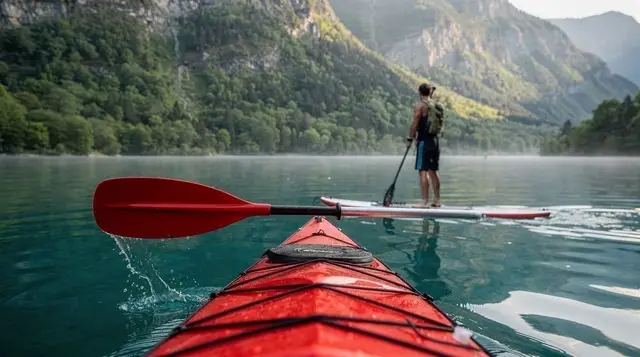
Iseltwald itself has become disproportionately busy for a village of a few hundred people, mostly for one photogenic pier — worth seeing, worth not lingering at if a coach tour has just arrived. If you want the lake from the water rather than the shore without paying for the scheduled boat, a full-day kayak rental on Lake Brienz is one of the few paid options here that’s arguably worth the trade against a free afternoon on the shore, since it gets you onto water the ferry only skirts. For most budget days, the shore path and a free swim are enough. The walk back into Interlaken or the bus, whichever your legs and the weather decide.
Cook again at the hostel. By day three the kitchen routine has usually found its rhythm — one supermarket run every two days keeps costs down without repeat meals every night.
Day 3 spend: CHF 8-12 (groceries only, if you skip the kayak)
Day 4: Loose ends, viewpoints, departure
A last morning for whatever the first three days didn’t fit: the walk up to Unterseen’s church tower, a slower pass through Interlaken’s free things to do, or one of the easy flat walks around town if legs are tired from Lauterbrunnen. The easy flat walks around Interlaken guide has routes under two hours that don’t require a lift ticket. If you’ve got a train later in the day and want a last look at the massif without the Jungfraujoch price tag, the free viewpoints covered in Interlaken’s viewpoints guide are worth the last hour.
If you do decide, on the ground, that four days without the Jungfraujoch left something unfinished, the honest answer is to come back and add a fifth day rather than compromise the budget of this one — a return train and Jungfraujoch ticket from Lauterbrunnen runs to roughly CHF 200 return per adult even with a Half Fare discount, which is more than this entire four-day budget put together. It belongs in its own trip, not squeezed into this one. See how many days in Interlaken if you’re weighing that trade-off before you book.
Check out, and confirm which station your onward train leaves from — Ost or West — before you walk there with your bag.
The total, chiffré
| Item | Cost (CHF, per person) |
|---|---|
| Hostel dorm bed, 3 nights | 105-135 |
| Harder Kulm funicular return | 19-38 |
| Local transport (bus/train, 4 days) | 25-35 |
| Groceries, self-catered | 45-60 |
| One restaurant meal (fallback) | 25-35 |
| Miscellaneous (fountain refills, small extras) | 10-20 |
| Total, 4 days | CHF 230-320 |
That’s transport and food; it excludes the journey to and from Switzerland and assumes no Trümmelbach Falls, no kayak, and the Half Fare Card price on the funicular. Add CHF 30 for the Half Fare Card itself if you don’t already have one and are travelling on to another Swiss city afterwards, where it pays for itself quickly. For the fuller breakdown of what things cost across the region, see Interlaken travel costs.
Questions about a budget Interlaken trip
Is four days enough to see Interlaken without spending a lot?
Four days is enough to walk the town, do one valley on foot, spend a day at the lake, and go up one viewpoint. It is not enough to also do the Jungfraujoch, the Schilthorn, and a village stay in Mürren or Wengen without the budget collapsing — those need their own trip and their own line in the budget.
Which single paid activity gives the best value in Interlaken?
The Harder Kulm funicular, on cost per view. Eight minutes each way, under CHF 40 full price and under CHF 20 with the Half Fare Card, for a panorama over both lakes that on the Jungfraujoch or Schilthorn would cost five to eight times as much.
Can you skip the Jungfraujoch entirely and still feel like you’ve seen the region?
Yes, if you accept it as a genuine trade-off rather than pretend it doesn’t matter. You see the Jungfrau massif from Harder Kulm and from the Lauterbrunnen valley floor either way; what you don’t get is standing on the glacier itself or the highest railway station in Europe. Decide before you arrive, not while standing at the ticket counter.
Is the hostel kitchen actually usable, or is that optimistic?
At the larger Interlaken hostels, yes — Balmers and the Backpackers Villa Sonnenhof both run kitchens that see heavy daily use, with basic pans and hobs provided. Bring your own tea towel and expect to wash up promptly; space at peak times (July, August) is contested.
Is Swiss tap water really free to drink everywhere?
Yes. Tap water in Interlaken and across Switzerland is treated to a higher standard than most bottled water and safe straight from the tap, including the public fountains scattered through the old towns — refilling a bottle there is normal practice, not something that draws a look.
Do lift and rail passes make sense for a four-day budget trip?
The Half Fare Card is worth it if you’re doing more than the Harder Kulm funicular and one or two bus rides — it roughly halves the price of everything on this itinerary and on any onward Swiss travel. A full Swiss Travel Pass, which also covers many attractions free, rarely pays for itself on a trip built around skipping most paid attractions; see the Swiss Travel Pass guide to run the numbers for your own plan.
What’s the cheapest way to eat in Interlaken beyond hostel cooking?
Bakeries for lunch (a sandwich and pastry for CHF 8-10 beats any sit-down lunch menu), and the Migros or Coop for a hot self-serve counter in the early evening, which runs noticeably cheaper than a restaurant plate of the same food. Full detail in eating cheap in Interlaken.
Does this itinerary work outside summer?
The walking days hold up in shoulder season, though Lake Brienz swimming becomes unrealistic outside June to September and the Harder Kulm funicular is more likely to be closed for scheduled maintenance in spring and autumn — check the operator’s calendar before you build a day around it, and see when mountain railways open and close for the pattern across the region.
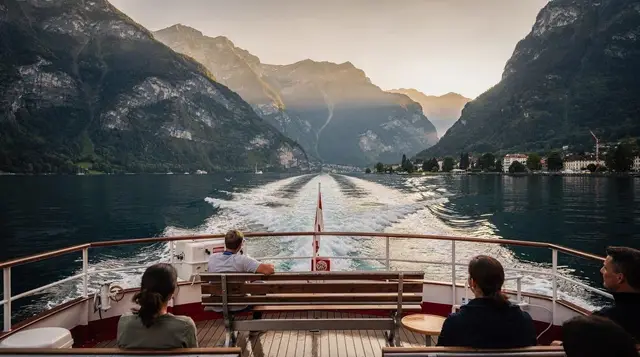
Lake cruises & boat tours on GetYourGuide
Verified deep-linked GetYourGuide tours. Book through these links and we earn a small commission at no cost to you.
GetYourGuide does not provide a product photo for this activity — the image shows the meeting point, photographed by us.