Brienz woodcarving and violin making
What can you actually see and buy in Brienz's woodcarving village?
Brienz has a woodcarving school, a violin-making school, several open workshops and a small museum, most within walking distance of the station. Genuine hand-carved pieces start around CHF 40 for small figures and run to several thousand for large sculptures; most souvenir-shop stock is machine-assisted and priced far lower.
A working craft village, not a themed one
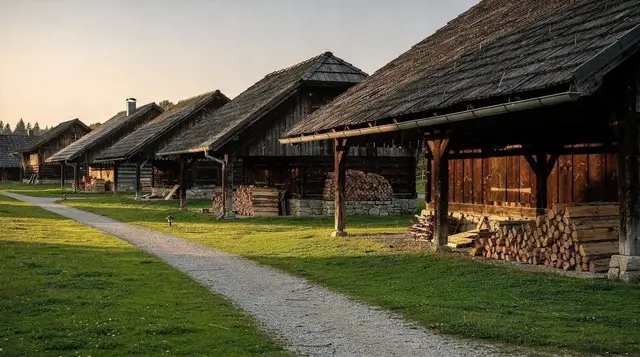
Brienz sits on the northern shore of Lake Brienz, about 20 minutes from Interlaken Ost by train, and it has been Switzerland’s centre for wood carving for well over a century. That matters for how you should visit it.
This is not a reconstructed craft village built for tourists; it is a small town where a genuine vocational school still trains carvers and violin makers, where family workshops that have operated for three or four generations still cut and finish wood by hand, and where a museum documents how the whole trade developed. Some of what’s on sale is aimed squarely at coach parties and priced to match. Some of it is exceptional, hand-finished work sold at a fair price by the people who made it. Telling the two apart is most of what this guide is for.
Plan on two to three hours for a proper visit: enough time to walk Hauptstrasse past the open workshops, look round the woodcarving museum, see the outside of the two schools, and still catch a train or boat back with time to spare. Combine it with the Brienzer Rothorn steam railway, a stop at Ballenberg open-air museum, or a longer loop around Lake Brienz and it becomes a full day out from Interlaken.
Why Brienz became Switzerland’s woodcarving town
Wood carving in Brienz grew out of necessity rather than tourism. In the poor farming valleys of the Bernese Oberland, carving small household objects and figures during the long winters gave families a way to earn cash, and by the mid-19th century Brienz carvers were already selling work to visitors passing through on the early Alpine tourist routes. The trade became organised rather than casual in 1884, when the Schnitzlerschule Brienz was founded as a proper training school, standardising techniques and giving carvers a formal qualification rather than an apprenticeship picked up informally at a family bench.
The violin-making side of Brienz’s reputation is younger and more specific. The Geigenbauschule Brienz opened in 1944, training luthiers to build and repair violins, violas, cellos and double basses to a standard recognised well beyond Switzerland. The two schools sit close together in the town and, between them, explain why Brienz rather than any other Oberland village became the region’s centre for skilled woodwork.
The Schnitzlerschule Brienz woodcarving school
The Schnitzlerschule is a working vocational school with a three-year training programme, not a visitor attraction, so there’s no general public access to classrooms or teaching workshops on a normal day. What you can see is the building itself on Poststrasse, close to the museum, and its ground-floor areas, which sometimes display current students’ work. The school occasionally opens for public events, including graduation exhibitions where finished pieces by graduating students are shown and sometimes sold; timing varies by year, so check locally if that’s a specific reason for visiting.
The more reliable way to see the craft in progress is through the independent workshops along Hauptstrasse rather than the school itself, several of which carve where customers can watch.
The Geigenbauschule Brienz violin-making school
The violin-making school occupies a separate building and trains a small number of students each year in building and repairing string instruments from raw wood, a process that from first cut to finished varnish can take several hundred hours for a single violin. As with the woodcarving school, day-to-day teaching isn’t open to drop-in visitors, but the school has an entrance area with information on the trade, and instruments made or restored there occasionally go on display.
Anyone seriously interested in buying an instrument, rather than just seeing where they’re made, should treat it as a specialist purchase: contact a workshop directly, expect to discuss the instrument’s origin and setup in detail, and expect prices that reflect hundreds of hours of skilled labour rather than a souvenir budget.
Workshops you can actually walk into
This is the most rewarding part of a Brienz visit for most people, and it costs nothing. Several family-run carving workshops along and just off Hauptstrasse have street-level windows or open workshop doors where you can watch carvers roughing out and finishing pieces, often working from both hand tools and a semi-automatic copying lathe that reproduces a master shape before hand-finishing takes over. Jobin, one of the longest-established names in Brienz carving, runs both a shop and visible workshop space and is a reasonable first stop for getting a sense of scale and quality across the trade.
Hours vary workshop by workshop and shrink outside the main April-to-October season, so a January afternoon visit may find several closed with carving happening only behind the scenes. Weekday mornings in summer are the most reliable time to see people actually working rather than just browsing finished stock.
| What to see | Access | Typical cost | Time needed |
|---|---|---|---|
| Open carving workshops on Hauptstrasse | Walk-in, no booking | Free | 20–40 minutes |
| Museum für Holzbildhauerei | Walk-in | Under CHF 10 | 45–60 minutes |
| Schnitzlerschule Brienz building | Exterior/entrance only, events vary | Free | 10 minutes |
| Geigenbauschule Brienz building | Exterior/entrance only, events vary | Free | 10 minutes |
| Private introductory carving course | Advance booking, local studios | From around CHF 80 for a half day | Half day+ |
The woodcarving museum
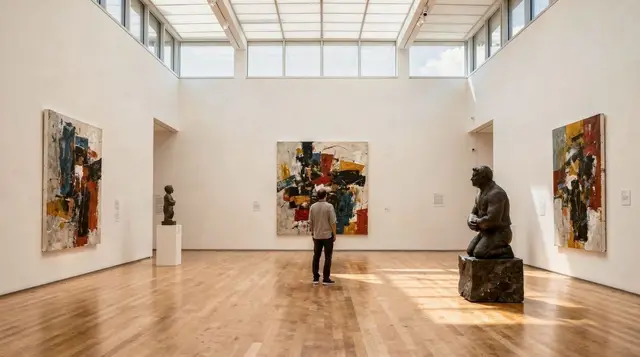
The Museum für Holzbildhauerei (Swiss Woodcarving Museum) is housed in part of the historic carving school complex and is the best single stop for understanding how the trade developed, since none of the working schools themselves offer a general tour. Displays cover the tools used across different periods, historic carved pieces ranging from devotional figures to elaborate Black Forest-style clocks and animal groups, and photographs documenting the town’s carving families over generations. It’s a small museum, comfortably covered in under an hour, and works well paired with a walk past the open workshops immediately afterwards so the historical context is still fresh.
Labelling is mainly in German, with some English information available; it’s not a barrier to enjoying the collection, but anyone wanting detailed reading in English should factor in a bit less depth than the German-language material offers.
What’s genuinely worth buying, and what isn’t
Brienz carving ranges from small, inexpensive figures to serious, expensive sculpture, and the price generally does track the amount of hand work involved.
- Small carved animals, chalets and figures (roughly CHF 40–150) are the accessible end of the trade and a reasonable souvenir if bought from a workshop that carves on site rather than a general gift shop.
- Nativity sets, larger animal groups and carved clock cases (several hundred to a few thousand CHF) represent serious skilled labour and are priced accordingly; these are the pieces worth asking about provenance for.
- Cheap “Swiss” carved souvenirs sold in some shops, particularly near the station, are often machine-produced imports with no connection to Brienz workshops at all, and the price reflects that; they’re not fraudulent, just not what they’re implicitly trading on.
- A violin, viola or cello from a Brienz maker is a specialist instrument purchase running into the thousands of francs, bought directly from a workshop rather than off a shelf, and worth approaching the same way you would any serious instrument purchase, with time to discuss setup and provenance.
If a piece matters to you, ask the shop plainly whether it was carved in Brienz and by whom; established workshops are generally happy to say so, because it’s the whole basis of their reputation.
Combining Brienz with the rest of the lake
Brienz is also the base for the Brienzer Rothorn steam railway, Europe’s last regularly operating steam-hauled rack railway, which climbs from the town to 2,350 metres in about an hour. Pairing a woodcarving visit with the Rothorn ascent makes a natural full day, and if a return by train doesn’t appeal, the aerial cableway offers an alternative way up and down.
a return trip by aerial cableway up to the RothornAlong the lakeshore towards Iseltwald and Giessbach, the Giessbach Falls and its historic funicular are another easy add-on, especially by boat.
a guided boat tour taking in Iseltwald and the Giessbach FallsFor a more active few hours in the same area, there’s a signed walking route from Hofstetten, just outside Brienz, up to the regional wildlife park, which suits anyone wanting to stretch their legs after a morning spent looking at workshop windows.
a guided hike from Hofstetten up to the wildlife parkAnyone based in Interlaken without a car can also reach Brienz and see the lake itself from the water on a faster, less structured outing than the historic paddle steamers.
a scenic jetboat ride across Lake BrienzGetting to Brienz and planning your visit
Trains from Interlaken Ost to Brienz run roughly twice an hour and take about 20 minutes, making it one of the easiest half-day trips from base. The boat crossing takes close to an hour each way but gives proper views of the lake’s turquoise water, particularly worthwhile on a clear morning; a one-way boat and one-way train is a reasonable way to combine both without spending the whole day travelling. Once in Brienz, everything described here sits within a 15-minute walk of the station along the lakeshore road, so there’s no need for local transport.
Late spring through early autumn is when the most workshops are reliably open and carving is most likely to be visible in progress; winter visits are still worthwhile for the museum and the shops, but expect some workshops closed or running reduced hours, and check specific opening times before making a special trip. Brienz works well as one stop on a wider loop of the lake, alongside Ballenberg and the villages around Unterseen and Matten, rather than as a destination that needs a whole day to itself unless the Rothorn railway is part of the plan.
For a broader look at how Brienz fits into a Lake Brienz itinerary, see the guide to day trips from Interlaken, or for a slower two-lake pace, the two lakes and villages three-day itinerary. Anyone building a shopping list for the whole region can also check the wider guide to Swiss souvenirs worth buying, and pair a Brienz visit with dairy tastings covered in the cheese dairies of the Bernese Oberland guide, or with the history covered at the Touristik-Museum in Interlaken.
Brienz woodcarving and violin making: frequently asked questions
Can visitors actually watch the woodcarvers and violin makers at work?
Yes, at several points. Some workshops along Hauptstrasse have street-facing windows or open doors where carvers work in view of passers-by, free of charge. The woodcarving school and violin-making school are training institutions rather than visitor attractions, so access to classrooms is limited, but both have entrance areas or display cases open to the public and occasionally hold open days.
Is the Museum für Holzbildhauerei in Brienz worth the entry fee?
For anyone with even mild interest in the craft, yes. It occupies part of the old carving school building, covers roughly 150 years of Brienz woodcarving with tools, historic pieces and photographs, and takes about 45 minutes to an hour. Entry is modest, typically under CHF 10, which makes it an easy add-on to a visit rather than a destination in its own right.
What’s the difference between hand-carved and machine-made pieces sold in Brienz?
Genuine Brienz carving is finished by hand with knives and gouges, even when a copying machine or CNC router has roughed out the basic shape first, which is now standard practice even in serious workshops. Fully machine-made imports, often from outside Switzerland, are sold in some souvenir shops alongside real Brienz work at a fraction of the price. Weight, sharp tool marks under the varnish and a workshop name on the base are the practical tells; if in doubt, ask the shop directly which pieces are made on site.
Can I take a woodcarving or violin-making course in Brienz?
The Schnitzlerschule and Geigenbauschule are full-time vocational schools, not tourist workshops, so there is no drop-in lesson on offer through them. A handful of private studios in the region run short introductory carving courses for visitors, usually booked in advance and lasting half a day to a full day; availability changes from year to year, so check locally rather than assuming a course will be running.
How do I get from Interlaken to Brienz, and is it walkable once there?
Trains run from Interlaken Ost roughly every half hour and take about 20 minutes; the boat from Interlaken Ost across Lake Brienz takes closer to an hour but is a more scenic option in summer. Brienz itself is compact and flat along the lakeshore, so the station, the main carving workshops, the museum and the violin school are all within a 10 to 15 minute walk of each other.
Are the woodcarving workshops and shops open on Sundays?
Some are, but far from all. Family-run workshops with an attached shop frequently close on Sundays or open shorter hours, particularly outside the summer season, while a few of the larger shops aimed at tour groups stay open daily. If a Sunday visit matters, it is worth checking an individual workshop’s hours before travelling out from Interlaken.
What’s worth buying in Brienz if I want something genuine?
Small carved animals, chalets and religious figures from an established Brienz workshop are the classic buy and start around CHF 40 to 60. Larger sculptural pieces, nativity sets and carved clock cases run into the hundreds or low thousands of francs. A violin, viola or cello made or restored in Brienz is a serious instrument purchase rather than a souvenir, and buying one means dealing directly with a workshop rather than a shop.
Museum & art tours on GetYourGuide
Verified deep-linked GetYourGuide tours. Book through these links and we earn a small commission at no cost to you.
GetYourGuide does not provide a product photo for this activity — the image shows the meeting point, photographed by us.