Swiss souvenirs worth buying, and what to skip
What Swiss souvenirs are actually worth buying in Interlaken?
A genuine Victorinox knife with on-the-spot engraving, vacuum-packed Gruyère or Emmentaler from a dairy or supermarket, and a small hand-carved piece from Brienz hold their value and pack well. Skip mass-produced cowbells, cuckoo clocks (a German tradition, not a Swiss one) and airport-price chocolate bars, which cost the same or less at home.
What actually says Switzerland, and what just says tourist
Most of what fills the souvenir racks along the Hoheweg is made for a single sale, not for lasting value: printed T-shirts, plastic edelweiss keychains, tin cowbells that ring flat. A smaller set of things sold in and around Interlaken is genuinely worth the suitcase space, either because it’s made where you’re standing, or because it’s priced fairly enough that buying it here beats buying it at an airport.
This guide sorts one from the other, with real prices in Swiss francs and the reasons behind each recommendation. For the practical side of finding these shops, see the Interlaken shopping guide; for the day-to-day cost of being here, Interlaken travel costs covers the wider picture.
| Souvenir | Realistic price (CHF) | Worth it? |
|---|---|---|
| Victorinox pocket knife, engraved | 35–120 | Yes |
| Vacuum-packed Gruyère or Emmentaler AOP, 500 g | 12–20 | Yes |
| Small hand-carved figure, Brienz | 25–80 | Yes, if genuinely handmade |
| Large carved sculpture or clock, Brienz | 300–3,000+ | Yes, as a considered purchase |
| Fresh chocolate by weight (Frisch-Schoggi) | 8–15 per 100 g | Yes |
| Branded chocolate bars (Lindt, Toblerone) | 3–6 each | Marginal, same price at the airport |
| Tin or painted cowbell | 15–40 | No |
| Cuckoo clock | 60–400 | No, wrong country |
| Printed T-shirt or plastic edelweiss keyring | 10–25 | No |
The knife, and why the engraving matters
A Swiss Army knife is the one souvenir almost nobody regrets. Victorinox, the Ibach-based maker that has held the Swiss Army contract since 1891, sells everything from the basic Classic (a few blades and scissors, around CHF 30) to multi-tool Huntsman and SwissChamp models running past CHF 100. Interlaken’s better gift shops and the sports outfitters along the Hoheweg stock a decent range, and several offer engraving on the spot: a name, a date, a short phrase lasered onto the scale, usually finished within 30 minutes to a few hours depending on how busy the counter is.
Two things are worth checking before you pay. First, look for the Victorinox name and the Swiss cross shield stamped clearly on the blade or the scale; counterfeit “Swiss Army” knives circulate in tourist areas worldwide and Interlaken is no exception, usually identifiable by soft, poorly finished blades and misspelled branding. Second, if you’re travelling by air afterwards, remember any knife with a locking or fixed blade has to go in checked luggage, not your carry-on — an easy way to lose a good knife to airport security on the way home.
If cheese-making and dairy life interest you as much as the knife counter does, a half-day farm visit with a Swiss breakfast and hands-on cheese-making near Interlaken puts the whole dairy chain in front of you before you buy the finished product in town.
Cheese that survives the flight home
Vacuum-packed hard cheese is one of the few Swiss foods that travels well and clears customs in most destinations without drama, because it’s solid, not a liquid or a soft paste. Gruyère AOP and Emmentaler AOP are the two names to look for on the label — both are protected designations tied to defined production regions and methods, which is a guarantee real Kraft-style processed cheese doesn’t carry. A 500 g vacuum-packed block runs roughly CHF 12 to 20 depending on age and where you buy it.
Where you buy it changes the price more than what you buy. Tourist-facing shops along the Hoheweg mark up cheese noticeably; a Migros or Coop supermarket, both a short walk from either Interlaken station, sells the same AOP cheeses at close to local retail price, just without the gift wrapping.
For a more considered purchase — an aged Alpkäse from a specific mountain dairy, or a chance to taste before you buy — the region’s smaller producers are covered in cheese dairies of the Bernese Oberland, and a day trip to Gruyères pairs the cheese with its chocolate counterpart on a single outing, detailed in Gruyères cheese and chocolate day.
One practical note: cheese has a smell, and a warm suitcase in transit will not improve it. Double-bag vacuum-packed cheese if you’re not flying home within a day or two, and keep it away from anything absorbent.
Brienz: the town that actually carves the wood
Twenty minutes from Interlaken Ost by train along Lake Brienz, the town of Brienz has been the centre of Swiss wood carving since well before tourism arrived to buy the results. The Swiss school of wood carving (Schweizerische Schnitzlerschule) was established there in 1884 and still trains carvers today, and the town is equally known for handmade violins and other stringed instruments — a tradition covered in full in Brienz woodcarving and violin making.
Prices scale with the work involved. A small carved figure — a marmot, a chalet, a chamois — runs CHF 25 to 80 depending on detail and the wood used, usually limewood or pine. Larger pieces, carved clocks, or full sculptures move into the hundreds and can run past CHF 3,000 for a substantial commissioned work. The gap between a genuine Brienz carving and a machine-routed import from Asia is usually visible up close: hand tool marks are slightly irregular, machine work is uniformly smooth, and a legitimate workshop will say so plainly rather than dodge the question. Buying directly from a Brienz workshop rather than an Interlaken gift shop cuts out a markup layer and gets you a clearer answer about where the piece was actually made.
An e-bike route around the lakes and villages near Interlaken is a reasonable way to combine the ride to Brienz with stops at the shoreline villages along the way, rather than treating it as a single there-and-back train trip.
Chocolate you can’t buy at the airport
This is the category where most visitors overspend on the wrong thing. Branded bars — Lindt, Toblerone, Cailler — cost roughly the same in an Interlaken supermarket, a Hoheweg gift shop, and Zurich or Geneva airport duty-free, typically CHF 3 to 6 per bar. Buying them “because you’re in Switzerland” doesn’t actually save money; you could buy the identical bar on the way out of the country with the same result.
What’s worth buying locally is fresh chocolate sold by weight at a confiserie counter — Frisch-Schoggi, made in small batches without the shelf-stable additives that let branded bars survive months in transit. It costs more per gram, roughly CHF 8 to 15 per 100 g, and it doesn’t keep as long, but it tastes noticeably different and it isn’t sold in airport shops at all, which is the actual point of buying a souvenir.
Interlaken has a handful of confiseries along the Hoheweg and in Unterseen worth checking for a fresh case rather than a packaged shelf. For the fuller picture of chocolate experiences in the region, including factory visits, see Swiss chocolate experiences near Interlaken; Cailler’s factory near Gruyères, reachable on the same day trip as the cheese dairies, is the most substantial single chocolate outing from Interlaken.
If your itinerary stretches to Zurich, the walking tour of Bahnhofstrasse and Zurich’s luxury shopping district is a better fit for high-end chocolate houses and watch boutiques than anything in Interlaken itself — worth knowing before you assume everything Swiss and expensive is sold at altitude.
Textiles, watches, and the quieter souvenirs
A few categories sit outside food and carving. St. Gallen embroidery and lace, made in the canton north of Zurich, has a genuine centuries-old reputation, though it has nothing to do with the Bernese Oberland specifically and is priced accordingly — expect CHF 40 upward for anything substantial. Swiss watches at the Rolex or Omega level aren’t really souvenirs in the price-and-pack sense; if that’s the purchase you’re planning, Zurich in one day from Interlaken or the Bern old town walking guide are better hunting grounds than Interlaken’s smaller boutiques, which carry a narrower range at similar prices.
Music boxes and small alphorns fall into a grey zone: genuine Swiss-made versions exist and cost accordingly, while cheap imported look-alikes are common in the same shop windows. As with wood carving, ask where a piece was actually produced before paying a premium for the idea of Swiss craftsmanship rather than the fact of it.
A comparison of Interlaken markets and where to find them is useful if you’d rather buy from a producer directly at a weekly market than a permanent shop — prices are often more honest and the seller can usually tell you exactly where something was made.
What to skip entirely
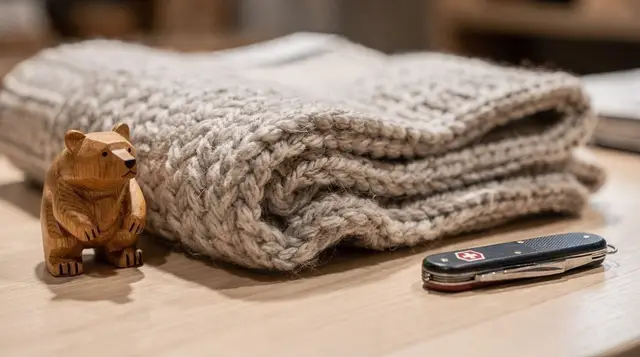
Some souvenirs sold in Interlaken don’t represent Switzerland at all, or represent it so loosely that the money is better spent elsewhere. The cuckoo clock is the clearest example: it’s a Black Forest tradition from Germany, not a Swiss one, and its presence in Alpine gift shops across the region is a tourism-driven habit rather than a factual claim. A carved wooden bear, a Victorinox knife, or a piece of Brienz work represents the country you’re actually visiting; a cuckoo clock doesn’t.
Beyond that, watch for plastic edelweiss keychains and miniature alphorns stamped “Swiss made” that were manufactured overseas — a look at the packaging or a low price (under CHF 10 for anything claiming to be handcrafted) is usually the giveaway. Printed T-shirts with generic Alpine graphics, tinny cowbells with no bronze content, and snow globes assembled from imported plastic parts round out the list of purchases priced for a one-time tourist sale rather than a fair market rate. The fuller pattern of overpriced or misleading purchases in the region, souvenirs included, is covered in tourist traps and overpriced things.
Where to shop, by what you’re after
| Looking for | Best area | Why |
|---|---|---|
| Victorinox knife with engraving | Hoheweg shops, Interlaken | Widest selection, on-site engraving |
| Vacuum-packed cheese | Migros or Coop, either station | Local retail price, not tourist markup |
| Hand-carved wood | Brienz workshops directly | Cuts the resale markup, clearer provenance |
| Fresh chocolate by weight | Confiserie counters, Hoheweg or Unterseen | Not sold at airports; tastes different from bars |
| Watches, luxury textiles | Zurich or Bern old towns | Wider range, comparable or better prices |
| Market-direct produce and crafts | Weekly markets, Bernese Oberland towns | Producer prices, honest provenance |
For a wider regional shopping day beyond souvenirs, a full-day tour through Bern, Interlaken, and Grindelwald — such as the day tour from Zurich through Bern, Interlaken, and Grindelwald — passes through several towns’ old-town shopping streets in a single outing, useful if you’re based in Zurich rather than staying overnight in the Bernese Oberland. Closer to home, Thun’s old town is a 25-minute train ride from Interlaken and has a quieter, less tourist-priced shopping street than the Hoheweg, worth the detour if you’re there anyway to see Thun castle.
Shipping, customs, and getting it all home
If you’ve bought more than fits in a suitcase — a large Brienz carving is the usual culprit — Swiss Post ships internationally from any post office, and shops selling substantial pieces will often arrange this for you directly, sometimes with a customs form already filled in. Budget CHF 30 to 80 for shipping a bulky item to most of Europe, more for intercontinental addresses, and ask about insurance for anything over a few hundred francs.
For cheese and chocolate, check your destination country’s import rules before you fly rather than after; most EU countries and the UK allow reasonable personal quantities of vacuum-packed hard cheese and commercially wrapped chocolate, but rules on dairy and meat products do vary and change. If you’re building a longer stay around Interlaken and want to plan shopping alongside sightseeing rather than as an afterthought, the three-day Interlaken itinerary leaves a reasonable window for a Brienz visit and a market day without crowding out the mountain excursions.
Frequently asked: buying souvenirs in Interlaken
Is it cheaper to buy a Victorinox knife in Switzerland than at home?
Sometimes, but not dramatically. A basic Victorinox Classic or Huntsman costs roughly the same in Interlaken, at the Ibach factory outlet, or in a well-stocked shop abroad once you account for VAT refunds. The real advantage of buying locally is the engraving service and the certainty you’re not getting a counterfeit.
Can I bring vacuum-packed Swiss cheese home on a flight?
Yes. Vacuum-sealed hard cheese such as Gruyère AOP or Emmentaler AOP is solid, not a liquid or gel, so it’s fine in checked luggage and usually in cabin baggage too. Check your destination country’s customs rules on dairy imports before you fly, since some countries restrict it.
Are Brienz wood carvings really handmade?
The genuine ones are. Brienz has run a state-recognised carving school since 1884, and workshops there still produce pieces by hand, which is why prices for anything larger than a small figure start in the hundreds of francs. Cheaper carvings sold in Interlaken souvenir shops are frequently machine-cut or imported from Asia; look for a workshop name or a handmade label.
Why are cuckoo clocks sold in Interlaken if they’re not Swiss?
The cuckoo clock originates in Germany’s Black Forest, not Switzerland, but decades of tourist demand have made it a fixture of Alpine souvenir shops across the region, Interlaken included. It’s not a fraud exactly, just a mismatched souvenir; a carved wooden bear or a Victorinox knife represents the country you’re actually in.
Is chocolate cheaper in Interlaken than at the airport?
For the mainstream brands, no, prices at Zurich and Geneva airport duty-free are usually within a franc or two of what you’d pay in town. The chocolate worth buying in Interlaken is the fresh, unbranded stuff sold by weight at a confiserie counter, which airports don’t stock at all.
What souvenirs should I avoid buying in Interlaken?
Skip plastic edelweiss keychains and miniature alphorns stamped “Swiss made” but manufactured overseas, tinny cowbells with no bronze content, printed T-shirts, and any cuckoo clock sold as a Swiss item. None of these hold up to scrutiny once you’re home, and all are priced for a one-time tourist purchase rather than a fair market rate.
Shopping & market tours on GetYourGuide
Verified deep-linked GetYourGuide tours. Book through these links and we earn a small commission at no cost to you.
GetYourGuide does not provide a product photo for this activity — the image shows the meeting point, photographed by us.