Two resorts, one very different day than the Jungfrau region
Verbier and Crans-Montana sit on opposite sides of the upper Rhone valley in Valais, roughly 90 minutes apart by car and considerably more by public transport. They do not belong to the same lift network as Interlaken and the Jungfrau region, and getting to either from Interlaken is a proper journey, not a side trip. What you get for the effort is different terrain: Verbier’s steep, snow-sure Four Valleys with the Mont Fort glacier, and Crans-Montana’s sunnier, gentler plateau with its own glacier excursion up to Plaine Morte.
This page treats them as a pair because they are the two big Valais names people ask about after they have already done Zermatt or the Gornergrat, and because comparing them is more useful than describing either in isolation. If your trip is centred on Interlaken and you only have one spare day, be honest with yourself about the transit time before booking anything.
Getting there from Interlaken
Neither resort has a direct rail line from Interlaken. Both routes go via Spiez and then follow the Rhone valley south-west, which is the same corridor used for Zermatt day trips.
| Route | Via | Approx. one-way time | Notes |
|---|---|---|---|
| Interlaken to Verbier | Spiez, Visp or Martigny | 2h30-3h | Change to bus or regional train at Le Chable for the Verbier cable car |
| Interlaken to Crans-Montana | Spiez, Visp, Sierre | 2h30-3h | Funicular from Sierre station up to Crans-Montana |
| Verbier to Crans-Montana (by road) | Martigny, Sierre | About 1h | Impractical by train and bus in a single day alongside a resort visit |
A car cuts the Verbier leg to around 2 hours and Crans-Montana to about 2h15 from Interlaken, mostly motorway. If you are relying on the Swiss Travel Pass, both journeys are covered on the train and postbus sections, though the final cable cars and funiculars are usually only discounted, not free. Given the distances involved, treat either resort as a standalone excursion or an overnight stop within a longer Valais loop that also takes in Sion or Montreux, rather than squeezing one into a single Interlaken-based day.
Verbier and the Four Valleys
Verbier is a purpose-built resort at 1,500 m, the anchor of the Four Valleys ski domain, one of the larger connected lift networks in the Alps with well over 400 km of marked runs when Nendaz, Veysonnaz, Thyon and La Tzoumaz are included. The town itself has no historic core to speak of; people come for the terrain and, in winter, the nightlife.
The signature feature is the Mont Fort glacier at 3,330 m, reached by cable car from Les Ruinettes and Gentianes. It holds snow reliably into spring and is the starting point for some of the resort’s steepest lift-served skiing, including the well-known Tortin and Gentianes off-piste sectors. This is a domain built for confident intermediates and above; beginners have options lower down around Savoleyres, but Verbier’s reputation and its terrain are aimed squarely at stronger skiers and boarders.
a guided skiing and snowboarding day in the Swiss Alps is one way to get local knowledge of the Four Valleys’ off-piste lines rather than guessing at them from a piste map, which matters here more than at gentler resorts.
Outside winter, Verbier’s summer lift network is smaller and changes from year to year, so do not assume every winter lift runs in July. Les Ruinettes and La Chaux are the usual summer targets for views over the Grand Combin and the glaciers to the south; the top Mont Fort section is often ski-lift infrastructure only and does not reliably run for summer sightseers, so check current schedules before building a day around reaching the very top.
a guided photography walk around Verbier’s alpine viewpoints is a low-key way to see the resort without committing to a full lift pass, useful if you are here mainly to look rather than ski.
A day lift pass at Verbier for the full Four Valleys area runs into the CHF 80-90 range in a recent season, more at peak weeks; a half-day or Verbier-only pass is cheaper. Lunch at a mid-mountain restaurant is CHF 25-40 for a main course, similar to other premium Swiss resorts and noticeably above what you would pay in Interlaken itself.
Crans-Montana and the sunny plateau
Crans-Montana sits on a broad, south-facing terrace above the Rhone valley at around 1,500 m, actually two adjoining villages (Crans and Montana) that function as one resort. The plateau gets more sun than most Alpine resorts thanks to its orientation, and the skiing is generally gentler and wider than Verbier’s, which makes it a better fit for intermediates, families and anyone who prefers cruising to steep bumps.
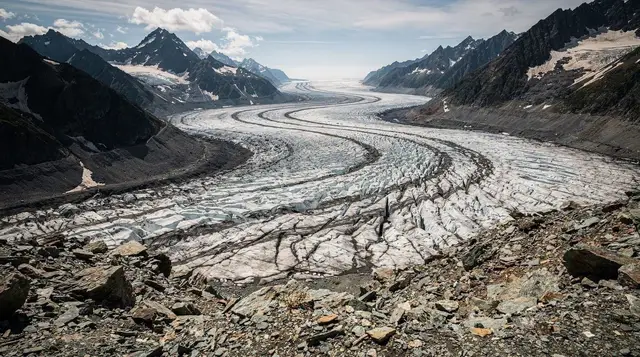
The ski area’s high point is the Plaine Morte glacier at around 3,000 m, a large, flat icefield reached by cable car from the Violettes mid-station. Because it is broad and flat rather than a narrow ridge, it is one of the more approachable glacier viewpoints in the Alps for non-skiers in season, comparable in spirit to a trip up to Glacier 3000 above Gstaad, though smaller and warmer-facing, which is also why it is retreating faster than some of its neighbours. Access to the glacier lift can be limited or closed outside the main ski season, so this is not a reliable year-round excursion the way the Jungfraujoch is.
a guided nature and mindfulness session on the Crans-Montana plateau gives a sense of why the resort’s slower pace and views appeal to people who are not there to ski, in a way a straight lift-pass day does not.
Crans-Montana’s golf courses, several lakes on the plateau (Lac Grenon, Lac de la Moubra) and flatter walking trails make it noticeably more of a summer destination than Verbier, which leans harder into winter sport and skews younger and steeper.
Verbier versus Crans-Montana at a glance
| Verbier | Crans-Montana | |
|---|---|---|
| Terrain style | Steep, off-piste reputation, Four Valleys network | Wide, sunny, gentler cruising |
| Best suited to | Strong skiers and boarders | Intermediates, families, mixed groups |
| Signature high point | Mont Fort glacier (3,330 m) | Plaine Morte glacier (about 3,000 m) |
| Summer appeal | Hiking, mountain biking, quieter than in winter | Golf, lakes, walking, generally sunnier |
| Nightlife | Livelier, younger crowd in winter | Quieter, more family-oriented |
| Typical day-pass cost | CHF 80-90 in peak season | CHF 70-80 in peak season |
Neither figure is fixed; both resorts adjust pricing by season and demand, and multi-day passes bring the per-day cost down noticeably. Treat these as a starting point for budgeting, not a quote.
Reaching the wider region
If a Verbier or Crans-Montana trip is part of a longer Valais itinerary rather than an Interlaken day trip, a natural pairing is Sion, the cantonal capital roughly between the two, with its two hilltop castles and old town.
a local-led walking tour of Sion’s old town and castles fills a couple of hours well if you are passing through by train between the two resorts, and it costs far less than a lift pass on a day you are not skiing anyway.
Travellers extending into the Zermatt side of Valais can also look at the Gornergrat rack railway or the Testa Grigia cable car link toward Italy, which sit in the same region key on this site but are a further train change away via Visp.
Who should actually make this trip
Verbier and Crans-Montana reward skiers most directly: strong intermediates and experts get more out of Verbier’s terrain and Mont Fort access, while families and cautious intermediates will feel more comfortable on Crans-Montana’s plateau. Summer hikers with a car and an extra day can justify either, especially for the Plaine Morte glacier or the Grand Combin views above Verbier.
What does not make sense is treating either as a casual add-on to an Interlaken-based itinerary that is otherwise built around the Jungfrau region. If your priority list already includes the Jungfraujoch, Schilthorn and a lake cruise, adding a 5-6 hour round trip to Valais for one afternoon on a glacier is a poor use of a short stay. It fits far better into a two-week Switzerland trip with a dedicated Valais leg, or a ski-focused holiday that starts from Geneva or Sierre rather than Interlaken.
For comparison, closer and less time-consuming alternatives from Interlaken with a similar glacier-and-views appeal include Glacier 3000 above Gstaad, the Aletsch glacier, and Kandersteg and the Oeschinensee, all reachable in a shorter single day than either Verbier or Crans-Montana.
Practical notes and common mistakes
Booking a Verbier or Crans-Montana day trip around a single train connection is the most common way to lose two hours. The Rhone valley line changes trains at least once (Spiez, then Visp or Martigny/Sierre), and a missed connection at any of these adds 30-60 minutes waiting for the next service. Build in slack, especially outside the core tourist season when frequencies drop.
Lift schedules for both resorts’ higher cable cars follow the same pattern as the rest of the Bernese Oberland: spring and autumn bring maintenance closures, and wind can close the top sections even in season. Confirm the Mont Fort and Plaine Morte lifts are running before you commit a whole day to reaching them, the same way you would check before heading up to the Schilthorn or Niederhorn from Interlaken.
Both resorts are noticeably more expensive than Interlaken for lift passes, lunch and lodging, closer to Zermatt-level pricing than to the Bernese Oberland’s. If cost is the deciding factor, weigh a Verbier or Crans-Montana day against a Swiss Travel Pass-covered alternative closer to base before booking transport that alone can run to CHF 100 or more return per person.
Questions about visiting Verbier and Crans-Montana
Are Verbier and Crans-Montana worth a day trip from Interlaken?
Both are doable in a long day if you drive, but by train and bus each leg runs 2h30-3h30 one way, so you spend more time travelling than skiing or hiking. They suit an overnight stay or a stop on a wider Valais trip rather than a bolt-on from Interlaken.
Which is better for skiing, Verbier or Crans-Montana?
Verbier and the Four Valleys have steeper, more varied terrain and a stronger off-piste reputation, including the Mont Fort glacier runs. Crans-Montana is gentler and sunnier, with wide cruising pistes better suited to intermediates and families.
How do I get from Interlaken to Verbier by public transport?
Take the train from Interlaken Ost or West to Spiez, change for Visp or continue to Martigny, then a regional train or bus up to Verbier. Journey time is roughly 2h30-3h with a good connection, longer if you miss one.
How do I get from Interlaken to Crans-Montana by public transport?
Train from Interlaken to Sierre via Spiez and Visp, then the funicular up to Crans-Montana. Budget around 2h30-3h door to door, plus the funicular ride itself.
What is the Plaine Morte glacier and can I visit it easily?
It is a broad, flat icefield above Crans-Montana, reached by cable car from the Violettes mid-station. It is one of the easier glacier viewpoints in Switzerland to reach without technical gear, though it is retreating and the operator sometimes limits access outside the ski season.
Is Mont Fort accessible to non-skiers?
In summer the top cable car section to Mont Fort itself typically does not run for sightseers the way the Jungfraujoch or Schilthorn lifts do; most non-skier visits stop at Les Ruinettes or La Chaux for glacier and valley views instead. Check current lift schedules before planning around it, since Verbier’s summer lift network changes year to year.
Can I combine Verbier and Crans-Montana in one trip?
Yes, by road it is about an hour between them via Martigny and Sierre, making a two- or three-day Valais loop realistic. By train and bus you would backtrack through the Rhone valley, which eats a lot of the day.
Is Crans-Montana expensive compared to Verbier?
Both are pricier than the Bernese Oberland resorts. Verbier’s reputation and off-piste terrain push its day passes and dining slightly above Crans-Montana’s, but neither is a budget destination, and both sit well above Interlaken’s own price level.