Two hills, one canton capital
Sion is the capital of Valais canton and looks the part from a distance: two rocky hills rise straight out of the Rhône valley floor, each crowned with stone. One carries a working church that has been fortified since the Middle Ages; the other carries the burnt-out shell of a castle. Between them and around them sits a town of around 35,000 people, small enough to cover on foot in an afternoon, old enough that its street pattern still follows the medieval one.
This is not an Interlaken-style base for glaciers and cable cars. Valais does plenty of that further up its side valleys — Zermatt and the Matterhorn are the obvious example, covered separately in the Zermatt destination guide and the Zermatt day trip guide — but Sion itself is about castles, wine and Roman-to-medieval history, in a valley dry and sunny enough to grow grapes on terraces that would look more at home in Italy than in Switzerland.
Château de Valère and the world’s oldest playable organ
The taller of Sion’s two hills carries the Château de Valère, and “château” undersells it: this is a fortified hilltop church, the Basilique de Valère, ringed by defensive walls and towers that protected the canons who lived up here through centuries of valley conflicts. The climb from the old town takes 15 to 20 minutes on cobbled paths and stone steps, steeper than it looks from below.
Inside the basilica is the reason organists specifically make the trip: a pipe organ with sections dating to around 1435, generally cited as the oldest playable organ in the world still used for its original purpose. It is not a museum piece kept silent — a short summer concert series puts it to use, and hearing 15th-century pipework in a 13th-century church is a different experience from reading about it. Check current concert dates before you go, since they run on a limited summer schedule rather than daily.
The complex also houses the Musée d’histoire du Valais, covering the canton’s history from prehistory through the medieval period, with the fortified church itself as the largest exhibit. A combined ticket usually covers museum and basilica access; castle grounds and views are free to walk even outside opening hours for the interiors.
Château de Tourbillon: the ruin on the other hill
Across a short saddle from Valère sits Château de Tourbillon, a 13th-century bishop’s castle that burned in 1788 and was never rebuilt. What is left is a genuine ruin rather than a restoration: roofless walls, a keep you can climb inside, and views back across to Valère’s church tower that make the two-hill walk worth doing as a pair.
Entry is free. The trade-off is a short season: Tourbillon typically opens from late March or early April through early November, and closes on days with strong wind or ice on the approach paths, since the final stretch runs along an exposed rock edge. This is exactly the kind of detail that ruins a day when missed — turning up in December, or on a windy March afternoon, means the gate stays shut. If Tourbillon is the main reason for your trip, confirm it is open before travelling.
Walking both hills back to back — Valère then the short connecting path to Tourbillon, or the reverse — takes 2 to 3 hours including time inside the basilica, longer if the organ is playing or a museum exhibition holds your attention.
The old town below
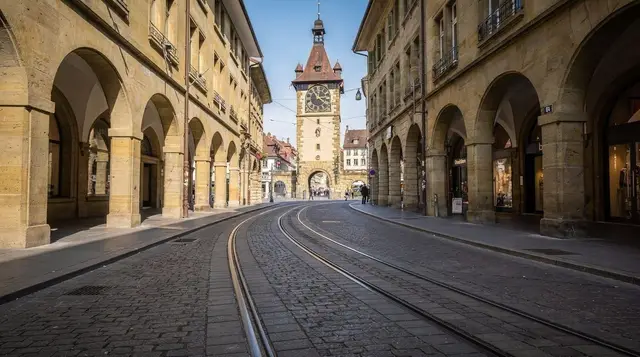
Sion’s Vieille Ville sits in the flat ground between the two hills and the modern town, a compact grid of stone buildings, the Hôtel de Ville with its 17th-century facade, and the Cathédrale Notre-Dame-du-Glarier with a Romanesque bell tower older than the rest of the building around it. None of this takes more than an hour or two to walk, and it connects directly to the base of the Valère climb, so the two halve into one continuous visit rather than two separate trips.
A local-led walking tour is a reasonable way to get the history in order rather than reading plaques as you go — a guided walk through Sion’s old town and highlights covers the cathedral, main squares and approach to the hills with someone who can answer the questions a signboard can’t.
Bisses: irrigation channels turned footpaths
Valais is one of the driest parts of Switzerland — the Alps to the south block rain that reaches the northern side of the country, leaving the Rhône valley in a partial rain shadow. Farmers solved that centuries ago with bisses: open channels, some carved into rock faces, that carry meltwater from high streams and glaciers down to fields and vineyards that would otherwise be too dry to farm.
Many bisses are still working irrigation infrastructure; others have been retired and turned into walking paths, since a channel built to hold a gentle, constant gradient makes a naturally easy trail, often clinging to a hillside with a drop on one side. Villages above Sion, particularly around Savièse, have some of the more accessible bisse paths, reachable by bus or a short drive from the town and walkable in a couple of hours without serious elevation gain once you’ve climbed to the channel’s level. This is a different kind of Alpine walk from anything around Interlaken — flat, contour-hugging, and about water engineering as much as scenery.
Terraced vines and the Valais wine route
Valais is Switzerland’s largest wine-producing canton, and the vineyards start almost at Sion’s doorstep: terraces climb the slopes below and beside Valère hill itself, planted mostly with Fendant (the local name for Chasselas) alongside Petite Arvine, Cornalin and other grapes rarely seen outside the region. The steepness of the terracing is the giveaway that this land wasn’t chosen for convenience — the same sun exposure and drainage that grow good grapes also make the slopes hard to farm any other way, which is part of why the wine here carries a premium at the cellar door.
A signed vineyard path, the Chemin du vignoble, runs from Sion towards Sierre through this terraced landscape, walkable in sections rather than end to end unless you have most of a day free. For visitors who want the wine without the full walk, tasting cellars operate directly in and around Sion’s old town. A guided option pairs the two — a walking tour of Sion combined with a Valais wine tasting covers the town’s history and finishes with several local wines explained by someone who actually makes or sells them, which is a faster way into the region’s grape varieties than working it out from a shop shelf.
Compare this to the Vaud’s Lavaux terraces on Lake Geneva — different canton, different lake, similar terraced-vine logic — covered in the Lavaux and Lake Geneva wine guide and the Lavaux destination page, if a single trip stretches to both regions.
Martigny and the Fondation Gianadda
Martigny sits about 20 minutes by train further down the valley from Sion, at the point where the road to the Great St Bernard Pass branches off towards Italy — a position that made it a Roman town, Forum Claudii Vallensium, with an amphitheatre still used for events today.
The modern reason to detour here is the Fondation Pierre Gianadda, a private art foundation that punches well above its small-town setting: it brings in major loan exhibitions of international artists, alongside a permanent Gallo-Roman archaeology collection recovered from the site during construction, and a museum of vintage automobiles collected by the foundation’s founder. Exhibition programming changes through the year, so what’s showing when you visit matters more than the venue itself — check the current show before deciding whether Martigny earns the extra half-day.
Away from the museum, Martigny is also a starting point for guided outings into the surrounding Alpine terrain — a private tour from Martigny to see the Alpine monastery dogs is a specific, local option built around the St Bernard tradition rather than the town itself, worth considering if you have a free afternoon and an interest in the region beyond its galleries.
Shaping the day: a sensible order
The order in which you take Sion’s pieces matters more than it seems. Arriving by train from the Oberland, most visitors are tempted to head straight for the hills, but the old town makes a gentler start: walk through it first, get your bearings, and then climb to Valère while you still have energy for the steps. Tourbillon follows naturally across the saddle, and the descent back towards the centre leaves you close to the cellars and cafés for a late lunch or an early tasting.
If the weather turns, the plan bends easily. The museum and basilica at Valère are indoors, the old town has plenty of covered corners, and a tasting cellar is a fine place to wait out a shower. Anyone who prefers a fallback built around rainy weather will find more ideas in the guide to Interlaken in bad weather, and the things to do in Interlaken when it rains guide is a reminder that the home base has its own options if you would rather not travel on a grey morning.
Keep in mind that a trip to the Valais is a long out-and-back from the Bernese Oberland. The return journey is easy to underestimate after a day of climbing and tasting, so build in a comfortable margin before the last connection you want to catch, and avoid packing every cellar and museum into the same afternoon.
Who this trip suits, and who should skip it
Sion rewards travellers who enjoy slow, layered places: a church fortified against its own valley, a ruin that nobody tried to tidy up, vineyards that shape the whole landscape. It suits couples, solo visitors and anyone on a second or third visit to Switzerland who has already done the headline summits. For first-time visitors with only a few days, the best mountain excursions from Interlaken will probably give a more typical Swiss experience, and the Jungfraujoch destination page covers the obvious high-altitude alternative.
Families can make it work, particularly with children who like castles, but the climb up to Valère and the exposed edge near Tourbillon call for some care with small ones. The Interlaken with kids guide gives a better sense of what suits younger travellers on a regular day, and it is worth comparing before you commit to a long train day.
Travellers who like the sound of a wine-focused day but want something closer to home can read the guide to Swiss wine around Lavaux and the Oberland, which helps decide whether Valais or Lake Geneva is the better fit. And if you are still choosing a base for the rest of your stay, the Interlaken destination page and the where to stay in Interlaken guide explain how the town works as a hub for trips like this one.
Practical habits for a good day
A few small habits make the day smoother. Carry water for the hill climbs, since the paths are exposed and the sun can be strong in a dry valley. Wear shoes with proper grip, because cobbles and worn stone steps are slippery when wet. Check the opening details for the castle interiors and the concert programme on the day of travel rather than relying on memory, and treat any tasting as part of the schedule rather than an afterthought, so you are not rushing the last cellar before the train.
For a longer stay in the region, a guided multi-day outing is another way to see the high country behind the vineyards — a guided four-day Haute Route trek through the Alps is a serious undertaking aimed at experienced walkers, and not something to bolt onto a casual day in Sion, but it shows how much more the canton offers beyond its capital.
Getting to Sion from Interlaken
| From | Route | Approx. time |
|---|---|---|
| Interlaken Ost | Change at Spiez, BLS line towards Brig | ~1h45 |
| Interlaken Ost to Sierre | Same route, one stop past Sion | ~2h |
| Interlaken Ost to Martigny | Change at Spiez and Sion, or via Visp | ~2h15-2h30 |
| Interlaken Ost to Zermatt | Change at Spiez and Visp | ~2h15 |
Trains run roughly hourly and the whole route is covered by a Swiss Travel Pass or discounted with a Half Fare Card — see the Swiss Travel Pass guide for whether it’s worth buying for a trip that includes a Valais day out. There is no meaningful time saving by driving instead; parking in Sion’s old town is limited and the train drops you within walking distance of both hills.
A day’s budget in Sion
| Item | Typical cost (CHF) |
|---|---|
| Return train, Interlaken-Sion | 70-90 (less with a pass or Half Fare Card) |
| Valère basilica and museum entry | 8-13 |
| Château de Tourbillon | Free |
| Lunch, café or casual restaurant | 22-35 |
| Wine tasting, 3-4 wines at a cellar | 15-25 |
| Coffee, snacks | 8-12 |
A full day, trains included, lands most visitors around CHF 130-180. Skip the wine tasting and eat cheaply and it drops closer to CHF 90-110. None of this is a bargain by European standards — Valais is not a discount alternative to the Bernese Oberland — but the castles and organ concert, where the schedule lines up, cost little beyond the entry fee.
Where this fits into a longer trip
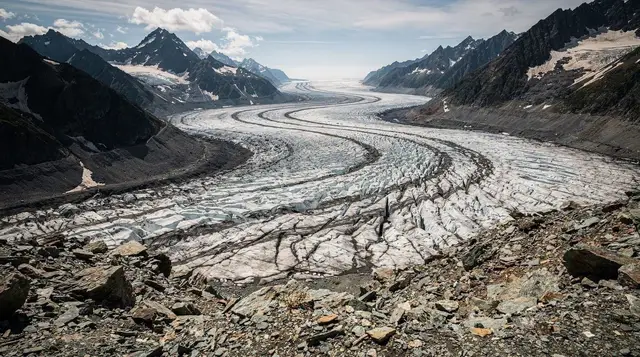
Sion works well slotted into a wider Valais or western Switzerland loop rather than as an isolated out-and-back. Combine it with Gruyères and its cheese and chocolate day or the Gruyères destination page, with Montreux and the Château de Chillon and the Montreux destination page on the way back towards Lake Geneva, or push further to the Aletsch Arena and its glacier day trip for the mountain side of the same canton.
Anyone building a full circuit of the country will find Sion sits naturally on the Grand Tour of Switzerland from Interlaken, 7 days itinerary, roughly midway between the Bernese Oberland and Lake Geneva.
For a broader look at what else counts as a worthwhile day out from base, the general day trips from Interlaken guide puts Sion alongside the more mountain-focused options, and the museums and art category lists the Fondation Gianadda among the region’s stronger indoor options for a wet or off-season day. If mountain trains and cable cars are still the priority, the Zermatt day trip guide and Zermatt destination page sit further along the same rail line and can be combined with a Sion stop on a long, single-day push.