Engelberg: a monastery valley on the way up
Engelberg sits at 1,000 metres in a valley of its own, south of Lucerne and outside the Jungfrau region entirely — which is the first thing to understand about Mount Titlis. It is not a Bernese Oberland peak reached by adding a train change to a Jungfraujoch or Schilthorn day; it belongs to central Switzerland, in the canton of Obwalden, and getting there from Interlaken means routing via Lucerne rather than via Lauterbrunnen or Grindelwald.
The name gives away what built the place: Engelberg means “angel mountain,” and the valley has been a Benedictine monastery site since 1120. The abbey came first, tourism followed centuries later once the railway reached the valley in 1898, and the two still share the same short main street today. It is worth knowing this before you arrive, because most visitors walk straight past the monastery on their way to the cable car, and it is genuinely one of the better free things to see in the area.
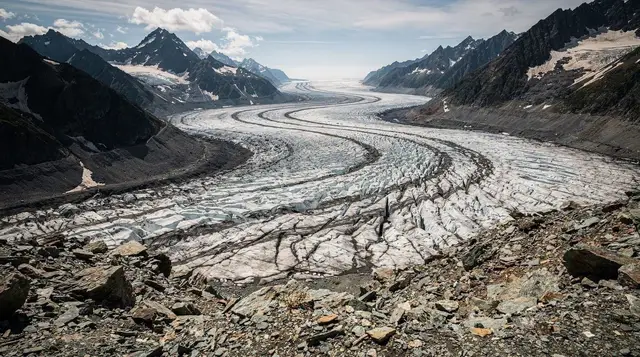
Mount Titlis itself rises to 3,020 metres above the head of the valley, permanently glaciated at the summit, and reached in three cable car stages that end with the Rotair — the reason most people make the trip at all.
Getting from Interlaken to Engelberg and Mount Titlis
From Interlaken Ost, the route runs to Lucerne on the Brunig line (about 1 hour 50 minutes, with a change at Meiringen or Giswil), then onto the Luzern-Engelberg-Bahn for the final 45-minute climb into the Engelberg valley. Add the walk from Engelberg station to the Titlis Xpress valley station and you are looking at roughly 2 hours 45 minutes door to door, each way — a five-and-a-half-hour round trip before you have gone up the mountain at all.
That makes Titlis a full-day commitment rather than a half-day add-on. A Swiss Travel Pass or a regional pass covers the train legs and gives 50 percent off the cable car itself; without one, factor the extra rail fare into your daily travel costs.
If you would rather not manage three separate trains and a connection with a tight timetable, an organised day tour handles the routing and usually adds Lucerne’s old town on the way — the From Lucerne Engelberg Mount Titlis Brunni Day Tour starts from Lucerne rather than Interlaken, which suits anyone stopping there anyway on a Lucerne day trip.
Drivers can park at Engelberg’s station car park, but there is no advantage to bringing a car up the valley itself — the cable car base station is a short walk from the train, and Engelberg’s own streets are narrow.
The Rotair: the world’s first rotating cable car
The ascent happens in three stages. From Engelberg, a gondola climbs to Trubsee at 1,796 metres, a genuinely pretty spot with a small lake and a restaurant terrace that is worth a stop even if you are not continuing up. From Trubsee, a second cabin runs to Stand at 2,428 metres. The final stage, from Stand to the summit at 3,020 metres, is the Rotair — a cabin that rotates a full 360 degrees during the four-minute ride.
It opened in 1992 as the first rotating aerial cableway of its kind anywhere, engineered specifically to give every passenger the same view over the course of the ride rather than leaving half the cabin facing the rock face. The rotation is slow and mechanical rather than gimmicky, driven by a motor in the cabin floor, and it does the job: on a clear day you get a full circuit of glacier, the Titlis massif, and — south — a first glimpse of higher Alpine peaks beyond the immediate Central Switzerland ridge. It remains the system’s headline feature over 30 years later, and one that cable car enthusiasts specifically travel to central Switzerland to ride.
Titlis Cliff Walk: Europe’s highest suspension bridge
At the summit, a walkway leads out along the ridge to the Titlis Cliff Walk, a suspension bridge 100 metres long, one metre wide, at 3,041 metres — making it, at the time of writing, the highest suspension bridge in Europe. It opened in 2012, hangs from steel cables either side of a mesh floor and railing, and crosses a genuine drop rather than a landscaped gap.
It sways. That is the design, not a fault, and the movement is more noticeable in wind, which is also when the operator is most likely to close it. The views from the middle of the span run down toward Engelberg on one side and across glacier and rock on the other; it takes two or three minutes to cross at a normal walking pace, longer if you stop for photos, which almost everyone does. There is no separate charge — it is included in the summit cable car ticket — but access is closed in bad weather without much notice, so treat it as a bonus rather than a guaranteed part of the day.
Into the glacier: the ice cave
Beneath the summit station, a tunnel cut directly into the glacier ice — the Titlis Glacier Cave — runs for about 150 metres, lit and kept at a constant few degrees below freezing regardless of the season outside. It was first excavated in the 1980s and is recut periodically as the glacier itself moves, since ice caves in a living glacier are not permanent structures.
It is a short visit, ten to fifteen minutes at most, but it is one of the few places in the region where you can walk inside glacier ice rather than just look at it from a viewing platform, and it is included in the same summit ticket as the Cliff Walk and the Rotair. Bring a layer even in summer — the temperature drop from the plateau outside to inside the tunnel is sharp.
Snow every month of the year
The upper glacier plateau at Titlis holds snow cover in every month, which is the practical reason the mountain markets itself as a year-round snow destination. The Glacier Park, an area of groomed snow just below the summit station, runs sledging, snow tubing and a small ski lift through the summer as well as the winter season — genuinely unusual for the region, where most snow activities close by April or May.
In winter proper, Titlis becomes a modest ski area in its own right, connected into the wider Engelberg-Titlis skiing zone that draws its own dedicated crowd rather than day-trippers, and it is one of the better options in the region for a first attempt on snow — the Lucerne: Mount Titlis First Time Ski Experience is built specifically around that, with equipment and a guide included. It sits alongside the Jungfrau region’s own skiing as one of the two realistic ski day trips from an Interlaken base, though Titlis requires the longer journey.
Titlis cable car prices and what they include
| Ticket | Approximate price (CHF) | Notes |
|---|---|---|
| Adult return, Engelberg to Titlis | ~96 | Includes Cliff Walk and Glacier Cave |
| Half Fare Card holder | ~48 | 50% discount |
| Swiss Travel Pass holder | ~48 | 50% discount, train legs also covered |
| Child (6–15) | ~24 | Free under 6 with an adult |
| Glacier Park activities (sledging, tubing) | Extra, paid on-site | Priced per activity or session |
Prices move most years and this table is a guide rather than a quote — check the operator’s current tariff before you travel, particularly if you are combining it with a rail pass that already gives a discount, since stacking two reductions is not always possible.
Weather, wind closures and when to go
Titlis is more weather-dependent than the Bernese Oberland’s own high points. The Rotair and the top cable car section close in sustained high wind more readily than the Jungfraujoch line, partly because the final approach is more exposed, and cloud tends to build up over the Lucerne basin through the afternoon even on days that start clear. The practical fix is the same one that applies across the region generally: go early, and check the live webcam and status page on the morning of your visit rather than the night before.
The whole system also closes for scheduled maintenance, typically for a few weeks each in spring and autumn — the same pattern that affects most mountain railways here, and worth confirming before you build a day around it, since a wasted train fare to Engelberg on a closure day is an expensive mistake. If the summit is closed, Trubsee at the middle station is still open, still has a restaurant and a short lakeside walk, and is a reasonable fallback rather than a wasted trip.
Engelberg village and the Benedictine abbey
Engelberg’s own monastery, Kloster Engelberg, has stood in the valley since 1120 and still functions as a working Benedictine community — not a museum piece, though parts of the abbey church and cheese cellar are open to visitors. The current baroque church dates from a rebuild after a 1729 fire, and the monastery also runs its own dairy, producing a cheese sold locally and in Lucerne under the Engelberg name.
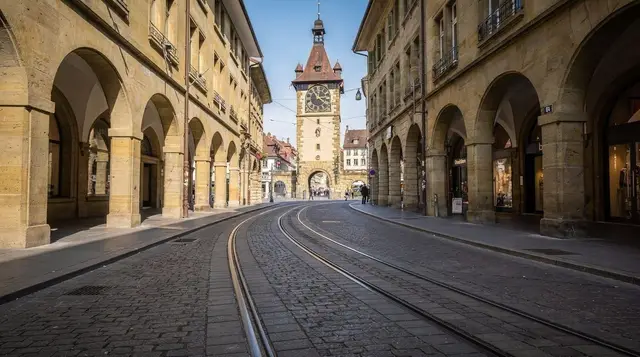
The village itself is small enough to see on foot in an hour: one main street, a scattering of hotels built for the same 19th-century tourism boom that brought the railway, and a boarding school that has occupied part of the monastery buildings since the 1800s. It is a reasonable place to eat before or after the cable car rather than doing it from the summit restaurant, which is priced for a captive audience at 3,020 metres.
Anyone extending the day rather than doing a straight there-and-back from Interlaken can pair Engelberg with Lucerne itself, or fold both into a wider central Switzerland loop — the Engelberg: Lucerne and Mount Pilatus Private Day Trip covers Titlis alongside Pilatus in a single guided day for anyone who wants both summits without managing the logistics themselves.
Titlis versus Schilthorn and the Jungfraujoch
The comparison comes up constantly, since all three sit in the same price bracket and none of them is a short trip from an Interlaken base.
| Mount Titlis | Schilthorn | Jungfraujoch | |
|---|---|---|---|
| Altitude | 3,020m | 2,970m | 3,454m |
| Travel from Interlaken | ~2h45 via Lucerne | ~1h15 via Lauterbrunnen or Stechelberg | ~2h15 via Grindelwald or Lauterbrunnen |
| Signature feature | Rotating cable car, suspension bridge | Revolving restaurant, Bond history | Highest railway station in Europe |
| Best for | A genuinely different day away from the Oberland | Panorama of Eiger, Monch, Jungfrau | The single highest point reachable by rail |
None of them is objectively “better” — they solve different days. If you are staying in Interlaken for under a week, the Bernese Oberland pair is the more efficient use of time. Titlis earns its place on a longer stay, or for anyone specifically drawn to the rotating cable car and the glacier cave, which neither of the other two has.
Booking a tour instead of doing it yourself
The self-guided route via Lucerne is straightforward with a Swiss Travel Pass and a bit of timetable planning, but it does mean three trains and a connection each way with no margin for a missed link. A guided day tour removes that risk and typically bundles Lucerne’s old town, Titlis, and sometimes a third stop into one fixed-departure day. Options worth comparing before you book your own train tickets include the Lucerne: Etuktuk City Tour as a short add-on if you are already spending time in Lucerne before or after Titlis, and the Lucerne: Cliff Path Private Guided Trip for a smaller, private alternative to the standard coach groups.
Whichever way you go, this is not a trip to squeeze into a spare afternoon. Treat it as its own day, keep an eye on the wind forecast, and have Trubsee as your fallback plan if the summit is closed when you arrive.
Engelberg and Mount Titlis: your questions answered
How do you get from Interlaken to Mount Titlis?
There is no direct train. Take the train from Interlaken Ost to Lucerne (about 1 hour 50 minutes via the Brunig line, changing at Meiringen or Giswil), then the Luzern-Engelberg-Bahn to Engelberg (around 45 minutes). From Engelberg station it is a 10-minute walk to the Titlis Xpress valley station — close to 2 hours 45 minutes each way in total.
How much does the Titlis cable car cost?
The return trip from Engelberg to the summit costs around CHF 96 for an adult, about CHF 48 with a Half Fare Card, and roughly CHF 24 for children aged 6 to 15. Swiss Travel Pass holders get 50 percent off. Check the current fare before travelling, since prices are revised most years.
Is the Titlis Cliff Walk safe?
Yes. It is built to Swiss safety standards, fenced with steel mesh on both sides, and the operator closes it in high wind rather than leaving it open with a warning. It does sway underfoot by design, and it is genuinely uncomfortable for anyone with a serious fear of heights.
Does Mount Titlis have snow all year?
The glacier plateau around the summit keeps snow cover year-round, which is why the Glacier Park runs sledging and tubing through July and August as well as winter. Lower down at Trubsee and in Engelberg village, snow is a winter-only affair, roughly December to April.
Can you visit Engelberg without going up Titlis?
Yes. Engelberg is a working village with a Benedictine monastery, a cheese dairy, and valley walks that need no cable car ticket at all. Many visitors see the abbey and village first, then decide about the mountain once they can see the weather.
Is Mount Titlis better than Schilthorn or the Jungfraujoch?
They solve different days rather than competing directly. The Jungfraujoch is higher and more famous, the Schilthorn gives a closer panorama of the Eiger, Monch and Jungfrau along with the Bond history, and Titlis has the rotating cable car, ice cave and suspension bridge. On a short Interlaken stay, the Bernese Oberland pair is the more time-efficient choice; Titlis suits a longer stay or a specific interest in what makes it different.
What happens if the cable car is closed for wind or maintenance?
The Rotair and Titlis Xpress close in sustained high wind, and the whole system typically shuts for a few weeks of scheduled maintenance each spring and autumn. Check the operator’s website on the morning of your visit. If the summit is closed, Trubsee at the middle station still has a lake, walking trails and a restaurant with views, and is a reasonable fallback for the day.