A different lake, a different mood
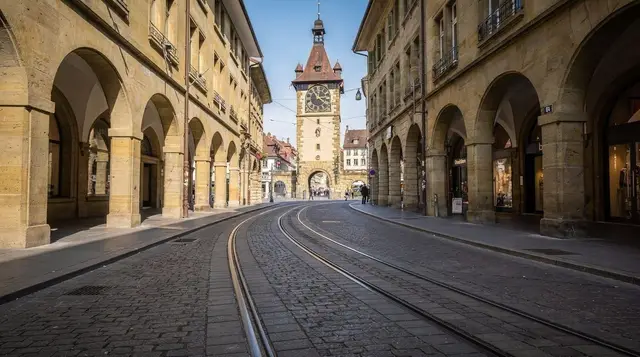
Lake Lucerne is not part of the Bernese Oberland the way Lake Thun or Lake Brienz are — it sits on the other side of the Brünig pass, in central Switzerland, and the two clock towers of Lucerne’s old town belong to a different canton and a different history. What draws people over from Interlaken is not scenery alone (the Jungfrau region wins that contest easily) but a lake shaped like a jagged cross, its arms named separately by locals — the Urnersee, the Vitznauerstock, the Bay of Alpnach — and a shoreline that carries the founding story of the Swiss Confederation.
The lake is also, unusually for Switzerland, still worked by five historic paddle steamers, a UNESCO-recognised Swiss Path along its remotest arm, and a private funicular-and-lift combination up the Bürgenstock that most day-trippers have never heard of. None of this is a quick add-on to a trip to Mount Pilatus or Mount Rigi — it deserves its own day.
Getting there from Interlaken
There is no direct route to the lakeshore towns; every visit starts in Lucerne itself.
| From | To | Journey | Notes |
|---|---|---|---|
| Interlaken Ost | Lucerne | About 1h50 | Brünig line, mostly scenic, one change is common |
| Interlaken Ost | Lucerne | About 1h10 | Luzern–Interlaken Express, panoramic carriages, reservation recommended in summer |
| Lucerne station | Vitznau | 30–40 min by boat | Slower, more scenic than the train |
| Lucerne | Weggis | 15 min by boat from Vitznau, or a direct bus from Lucerne | |
| Lucerne | Flüelen (for the Swiss Path/Rütli) | About 1h20 by boat one way | Full traverse of the lake |
The Luzern–Interlaken Express is the faster and more comfortable option and is covered by the same passes as the ordinary Brünig service, so book the panoramic carriage ahead in July and August rather than assuming a seat. Once in Lucerne, the boat piers sit two minutes from the station, directly below the covered wooden Chapel Bridge.
The paddle steamers of the Vierwaldstättersee
Lake Lucerne’s local name is the Vierwaldstättersee, “the lake of the four forest cantons” — Lucerne, Uri, Schwyz and Unterwalden, the founding cantons of the Confederation. Five original paddle steamers still work the lake on the regular timetable: the Stadt Luzern (1928), Schiller (1906), Unterwalden (1902), Uri (1901) and Gallia (1913), the oldest working paddle steamer on the lake and among the oldest in the world still in scheduled service.
They are slower than the modern motor vessels the same company runs, and that is the point — a full lake traverse by paddle steamer from Lucerne to Flüelen takes roughly the same time as driving, but you spend it on a teak deck watching the shoreline change from lakeside villas to the sheer cliffs of the Axenstrasse. First class buys a seat in the restored saloon with the original panelling; second class is the open deck, which most people prefer when the weather holds. For a fuller rundown of routes, timetables and where each vessel is currently deployed, see the dedicated paddle steamers guide and the general Lake Lucerne boat trips guide.
a round-trip cruise on the Lake Uri arm between Brunnen and Flüelen covers the most dramatic and least developed stretch of shoreline, past the Rütli and the Axenstrasse cliffs, without committing to the full-day Lucerne–Flüelen traverse.
Tickets are not cheap: a single Lucerne–Flüelen leg in second class runs to roughly CHF 40–50 depending on the vessel, and first class adds a premium of about a third. Swiss Travel Pass holders travel free on all scheduled boats, which changes the maths considerably if you already hold one — see the Swiss Travel Pass guide for whether it pays off on your itinerary.
The Rütli meadow and the 1291 oath
The Rütli is a sloping alpine meadow on the lake’s Uri arm, reachable only by boat or on foot, with no road access — deliberately, since the site’s symbolism depends on its isolation. Tradition holds that in 1291 representatives of Uri, Schwyz and Unterwalden met here and swore a mutual-defence oath, the event now treated as the founding moment of the Swiss Confederation. The document itself, the Bundesbrief, predates any written record of the meeting, and historians treat the Rütli oath as founding myth rather than verified fact — but the meadow has been used for national ceremony since the nineteenth century regardless, most visibly every 1 August, the Swiss national day, when it draws official speeches and crowds.
On an ordinary day it is quiet: a flagpole, a small chapel-like meeting hut (the Rütlihaus, not always open), footpaths through the grass, and views straight down the Urnersee to Flüelen. Steamers stop at the Rütli landing on request or on published schedules in summer; check the timetable before planning a stop, since not every sailing calls there. There is no admission charge to the meadow itself.
Weggis and Vitznau: the mild-climate shore
The northern shore between Weggis and Vitznau sits in the lee of the Rigi massif and has one of the mildest microclimates in Switzerland — palm trees, fig trees and even the odd olive tree grow in gardens here, a genuine oddity this far from the Mediterranean. Both villages are lakeside resort towns rather than working ports, with promenades, lidos, and hotels dating from the belle-époque tourism boom of the 1870s–1900s.
Vitznau is the more useful base for onward travel: it is the starting station for the Rigi Bahn, Europe’s oldest mountain rack railway (opened 1871), which climbs to Rigi Kulm. Weggis has the better beach and lido, plus a cable car of its own up to Rigi Kaltbad partway up the mountain. A guided hike from Weggis up to Rigi Kaltbad, returning by train to the summit is a reasonable way to combine the lakeside villages with the mountain in a single day, and the full Mount Rigi guide covers the summit itself in detail.
Both villages are a comfortable half-day if you are not continuing to the summit: walk the lakeside promenade, stop for lunch, and take the boat back. Neither has the crowds of Lucerne’s old town.
The Bürgenstock and the Hammetschwand Lift
The Bürgenstock is a wooded ridge on a peninsula on the lake’s southern shore, reached from the village of Stansstad or by boat to the Bürgenstock landing followed by a short funicular. The peninsula has been a resort since the 1870s and today centres on the Bürgenstock Resort, a large hotel complex with public-access terraces, walking paths and a spa — you do not need to be a guest to walk the Felsenweg, a cliff-edge path with unbroken views down the lake.
At the end of that path stands the Hammetschwand Lift, an open-frame exterior elevator built into the rock face in 1905 and still, by some measures, the fastest exterior lift in Europe — it climbs 153 metres in under a minute. It runs from the Felsenweg path up to the Hammetschwand viewpoint at the top of the ridge, and the ride itself, exposed on three sides as the cliff face drops away, is more memorable than the summit platform it reaches.
It operates seasonally (typically April to November, weather permitting) and closes in high wind, the same caveat that applies to most exposed lifts in this region. A private guided outing to the Bürgenstock cliff path and lift is worth considering if you would rather not work out the boat-funicular-lift connections yourself.
Getting to the Bürgenstock without a guide means: boat from Lucerne to the Bürgenstock landing (about 30 minutes), then the funicular up to resort level, then a 30–45 minute walk along the Felsenweg to the lift itself. Allow half a day round trip from Lucerne.
The Swiss Path along Lake Uri
The Weg der Schweiz (Swiss Path) is a 35-kilometre walking route built in 1991 for the 700th anniversary of the Rütli oath, running along the lake’s southern Uri-arm shore from Rütli to Brunnen. It is divided into sections proportional to each canton’s population at the time, so the length of “your” stretch of path depends on which canton built it — a curious piece of civic symbolism rather than a hiking gimmick. Few visitors walk the whole route in a day; most do a short section near Sisikon or Flüelen, or treat it as scenery to view from the boat deck rather than underfoot.
The path runs close to the Axenstrasse, a dramatic cliffside road (and older rail tunnel) blasted into the rock in the nineteenth century, so parts of the walk have road and rail noise below — it is not a wilderness trail, more a historical one.
Combining Lake Lucerne with a mountain excursion
Most visitors from Interlaken pair the lake with one summit rather than attempting both Rigi and Pilatus in a day — the boat and rail connections do not favour combining them.
| Combination | Roughly | Notes |
|---|---|---|
| Lucerne + Rigi via Vitznau | Full day | Boat to Vitznau, rack railway to the summit, return by boat or cable car via Weggis |
| Lucerne + Rigi via Weggis | Full day | A Rigi day trip from Lucerne combining cruise and cable car covers this route without self-booking each leg |
| Lucerne + Bürgenstock | Half day | Boat, funicular, Felsenweg walk, lift; doable before an afternoon in Lucerne’s old town |
| Full lake traverse to Flüelen + Rütli stop | Full day | Slowest option, best steamer experience, least time for anything else |
If your priority is the mountain rather than the lake, the Mount Pilatus guide and Mount Rigi guide go into more detail on each summit’s own transport options, most of which start from Lucerne rather than the lakeside villages.
What a day actually costs
Prices below are per adult, in Swiss francs, without a rail or travel pass.
| Item | Cost (CHF) |
|---|---|
| Return train Interlaken Ost–Lucerne | 60–70 |
| Boat Lucerne–Vitznau (one way) | 25–30 |
| Rigi Bahn Vitznau–Kulm return | 78 |
| Bürgenstock funicular return | 30 |
| Hammetschwand Lift (included in Bürgenstock ticket) | — |
| Lunch, lakeside restaurant | 25–40 |
A day combining the lake and one summit runs to roughly CHF 150–200 without a pass, which is why Swiss Travel Pass holders — who get the boats and most mountain railways free or at 50% — tend to find Lake Lucerne one of the better-value days on their itinerary. The Swiss Travel Pass covering unlimited train, bus and boat travel is worth pricing against your planned itinerary before you buy individual tickets; the full Swiss Travel Pass guide breaks down when it and when it doesn’t pay for itself.
Practical notes
- Wind closes the lift. The Hammetschwand Lift, being fully exposed, closes in strong wind exactly like the Schilthorn and Jungfraujoch cable cars back in the Bernese Oberland — check the operator’s status page on a blustery day rather than travelling on the assumption it will run.
- Steamers are seasonal in frequency, not existence. The boats run year-round, but the full five-vessel summer timetable thins out considerably from November to March, with fewer sailings to the Rütli and Flüelen.
- The Rütli has almost nothing to buy or eat. Bring water and a snack if you plan to linger; it is a meadow with a chapel, not a visitor centre.
- Lucerne station is the hub for everything. Every route in this guide starts or ends there, so build in the roughly 1h50–2h10 each way from Interlaken when you plan your day — see day trips from Interlaken for how this compares with other options.
- This is a full day, not an add-on. Trying to combine Lake Lucerne with anything else from Interlaken on the same day (a Jungfraujoch morning, say) is not realistic given the travel time; treat it as a discrete day within a longer stay, as in the Grand Tour of Switzerland from Interlaken itinerary.
Lake Lucerne, Rütli and Bürgenstock: your questions answered
How do I get from Interlaken to Lake Lucerne?
Take the train from Interlaken Ost to Lucerne, either the ordinary Brünig-line service (about 1h50) or the panoramic Luzern–Interlaken Express (about 1h10). From Lucerne station, the boat piers for all lake destinations are a two-minute walk away.
Is the Rütli meadow open to the public?
Yes, and there is no admission charge. It is reachable only by boat (scheduled steamers call there in summer, sometimes on request) or on foot along the Swiss Path. There are no shops or cafés on site.
What’s the practical difference between Weggis and Vitznau?
Vitznau is the departure point for the Rigi Bahn rack railway to the summit and has the more workaday, transport-focused waterfront. Weggis has a better lido and lakeside promenade and a cable car of its own partway up Rigi, making it the better choice if the lake and villages matter more to you than reaching the summit quickly.
Does the Hammetschwand Lift cost extra on top of the Bürgenstock funicular?
The lift ride itself has traditionally been included with access to the Bürgenstock resort area and its Felsenweg path; check current pricing before travelling, since operators do periodically restructure combined tickets.
Is Lake Lucerne covered by the Swiss Travel Pass?
Yes. Scheduled boats on the Vierwaldstättersee are free with the Swiss Travel Pass, and the Rigi Bahn and most other regional mountain railways are discounted by 50%, which noticeably changes the cost of a Lake Lucerne day compared with buying single tickets.
Can I do Lake Lucerne and Mount Rigi in one day from Interlaken?
Yes, but it makes for a long day: allow roughly 1h50 each way to and from Lucerne, plus the boat to Vitznau or Weggis and the rack railway or cable car to the Rigi summit and back. Starting on the first train from Interlaken Ost is close to essential if you want unhurried time at the top.
When do the paddle steamers run?
The five historic paddle steamers operate on the regular Lake Lucerne timetable year-round, but sailings are far more frequent from around May to September; in winter, expect a reduced service with fewer departures to the more distant piers such as Flüelen and the Rütli.
Is a day trip to Lake Lucerne worth it compared with staying closer to Interlaken?
If you have already covered the Jungfrau region’s main excursions, yes — the paddle steamers, the Rütli’s historical weight and the Bürgenstock’s cliff path and lift offer a genuinely different experience from the glacier and alpine-meadow scenery around Interlaken itself. As a first or only excursion from Interlaken, Lucerne’s old town on its own is a simpler and shorter alternative.