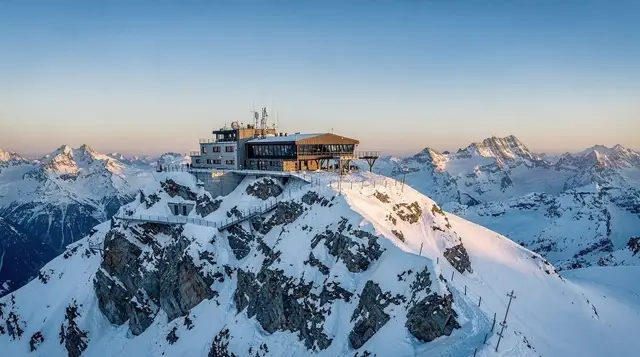
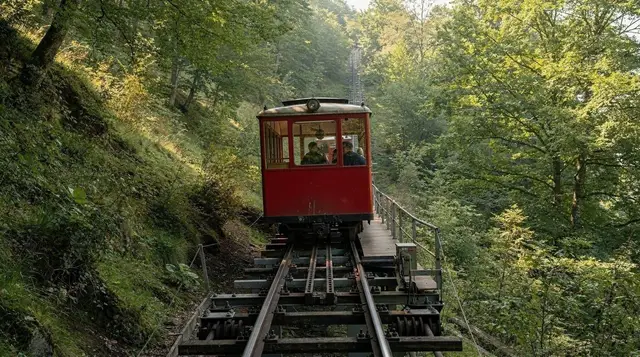
Most visitors heading south from Interlaken follow the railway towards Lauterbrunnen or Grindelwald and never notice the side valley that opens up past Frutigen. Adelboden sits at the end of it, a farming village turned ski resort at 1,353 metres, built almost entirely around one slope: the Chuenisbärgli, which hosts a men’s World Cup ski race every January and has done since 1954. That single fact shapes the whole place — the infrastructure, the hotel stock, the January crowds — more than any other Bernese Oberland resort of comparable size.
Adelboden suits travellers who like a village that still works as a village: farms on the slopes, a main street with bakeries and shops, and mountain lifts that start almost from the doorstep. If you are weighing it against the better-known resorts, the guides to Grindelwald versus Lauterbrunnen and Wengen versus Mürren show how differently the Jungfrau villages feel, and Adelboden sits at the calmer end of that spectrum.
Getting to Adelboden from Interlaken
There’s no direct train. From Interlaken Ost or Interlaken West, take a train to Spiez, change onto the Frutigen line, then pick up the PostBus that climbs the Engstligen valley into the village. The whole journey takes roughly an hour to an hour and fifteen minutes depending on the connection, and both a Swiss Travel Pass and a Half Fare Card cover it in full.
| From | Route | Approx. time |
|---|---|---|
| Interlaken Ost | Train to Spiez, train to Frutigen, PostBus | 1h–1h15 |
| Interlaken West | Train to Spiez, train to Frutigen, PostBus | 1h05–1h20 |
| Frutigen | PostBus direct | 30–35 min |
| Lenk (in season) | Ski bus / lift-linked pistes | 20–40 min |
Drivers should know the Hahnenmoos pass road towards Lenk closes in winter — the two villages are connected on skis, not by car, from roughly November to May. For details on regional transport and passes, see the guide to driving and parking in the Jungfrau region and the wider explanation of how the area’s lifts and cable cars connect up.
Because the route involves two changes, it pays to check the timetable the evening before and to avoid planning a tight return. The guide to trains, buses and boats around Interlaken and the page on Bernese Oberland railways explained give a clearer picture of how the regional lines fit together, and the Swiss Travel Pass guide helps you decide whether a pass is worth carrying for a trip like this.
The Chuenisbärgli and the World Cup
The Chuenisbärgli piste starts right above the village centre — you can watch training runs from a café terrace, which is unusual for a World Cup venue. The men’s giant slalom and slalom take place here every January, usually the second weekend of the month, and the race has run since 1954, making it one of the longest-standing fixtures on the alpine skiing calendar. The slope’s steep, technical finish and reliably cold January temperatures are why it has stuck around while venues elsewhere have dropped off the circuit.
For anyone visiting outside race week, the Chuenisbärgli is simply Adelboden’s main north-facing piste, floodlit for night skiing on selected evenings and steep enough that it’s used for training by clubs well beyond race season. If you’re coming specifically for the World Cup, book accommodation in Adelboden or nearby Frutigen months in advance — rooms sell out and prices roughly double for race weekend. Expect a standing spot near the finish area to cost nothing beyond a day pass if you’re not skiing, though grandstand seating is ticketed and sells out early. Details on the wider calendar of alpine events sit in the guide to festivals and events across the Bernese Oberland.
If you are not skiing, race week is still a lively time to be in the village, but it is a poor choice for a quiet day out. Visitors who prefer calm should pick another week, and those who want the atmosphere should treat the trip as an event rather than a sightseeing day. The wider winter itinerary and the skiing in the Jungfrau region guide help you compare Adelboden with the bigger areas.
Engstligen Falls: the second-highest in Switzerland
Below the Engstligenalp plateau, the Engstligenfälle drop around 620 metres in a broken series of cascades, making them the second-highest waterfall system in the country — behind only the Rhine Falls in raw scale of drop, though the Rhine Falls are wide and low by comparison rather than a long vertical fall. They’re visible from the valley floor near Unter dem Berg, a short walk or drive from Adelboden village, and again from above once you’ve ridden the cable car up to Engstligenalp itself.
The cable car from Unter dem Berg to Engstligenalp runs year-round conditions permitting, climbing over the steepest section of the falls in about eight minutes. From the top station, the Engstligenalp is a flat, glacially carved bowl at around 1,960 metres, genuinely unusual terrain for the region — it looks more like a highland plateau than a typical Alpine cirque, ringed by the Wildstrubel massif. It’s popular with families in summer for the easy walking and with ski tourers in winter, since lift-served skiing on the plateau itself is limited compared with the main Adelboden-Lenk pistes.
a return ticket on the Engstligenalp aerial tramway covers the ride up past the falls; buying ahead avoids queueing at the valley station on clear-weather weekends, when it’s the busiest single attraction in the valley. Bring proper shoes if you plan to walk beyond the top station — the plateau paths cross streams and can be muddy well into June from snowmelt.
Weather decides how good this outing is. The falls and the plateau reward a clear day, and the cable car ride is much less satisfying in low cloud, so it helps to look at the forecast before you leave Interlaken. On a grey day the guide to Interlaken in bad weather offers better ideas, and the altitude, weather and what to pack page explains why layers matter on the plateau even in summer.
Tschentenalp: the village’s other cable car
A second cable car, this one from the centre of Adelboden village, climbs to the Tschentenalp in about 12 minutes. It’s a gentler, more family-oriented outing than Engstligenalp: a marmot observation trail, a summer toboggan run (the Adelboden Rodelbahn), playgrounds, and restaurant terraces with a clear view back down over the village and across to the Wildstrubel. In winter it serves the resort’s beginner and intermediate pistes and a toboggan run down to the valley.
a guided ascent of the Tschentenalp with a Swiss triathlete turns the same cable car trip into a longer active outing, running or hiking a route on top rather than just riding up and down — worth it if you want more than the viewpoint, less useful if you’re travelling with young children who’ll want the marmot trail and playgrounds instead. For gentler alpine walks in the same style, the guide to the best day hikes from Interlaken and the dedicated Oeschinensee hiking guide cover comparable terrain a valley over.
Families will find the pace here forgiving: there is room to wander, places to sit down, and nothing that needs to be rushed. For pushchairs and very small children, the mountain trips with a pushchair and playgrounds and adventure parks guides are useful companions, and the wildlife and marmots page prepares children for what they might spot on the marmot trail.
Linked to Lenk: one ski area, two villages
Adelboden and Lenk share a single ski pass and a single connected piste network of around 210 kilometres, joined by lifts over the Bühlberg and the Hahnenmoos saddle. It’s one of the larger linked areas in the Bernese Oberland, though less internationally known than Wengen-Grindelwald or the Jungfrau ski region, which keeps lift queues shorter on all but the busiest Saturdays.
Skiers based in Adelboden can cross to Lenk’s slopes for the afternoon and back without changing accommodation, and vice versa; see the Adelboden-Lenk ski guide for piste breakdowns and pass pricing, and the neighbouring Lenk and Simmental destination page for what the other side of the link looks like.
The road over the Hahnenmoos closes to cars for winter, so outside the ski season the two villages are a 30–40 minute drive around via Boltigen and the Simmental rather than the direct pass route. In summer the pass road reopens and cuts the drive to well under half that.
| Area | Approx. pistes | Character |
|---|---|---|
| Adelboden (Chuenisbärgli, Silleren, Hahnenmoos) | ~100 km | Steeper, race-oriented, village-centre access |
| Lenk (Betelberg, Metsch) | ~110 km | Family-friendly, sunnier aspect, wider blues |
| Combined pass | ~210 km | One ticket covers both sides |
For non-skiing winter options nearby, the guides to sledging and toboggan runs and snowshoeing and winter hiking both list routes accessible from the Adelboden side of the valley.
Summer in Adelboden with children
Outside the ski season, Adelboden runs a straightforwardly family-oriented programme: the Tschentenalp’s marmot trail and summer toboggan run, a handful of playgrounds in the village centre, an outdoor pool open in the warmer months, and easy valley-floor walking along the Engstligen river that doesn’t require a lift ticket at all. It’s a lower-key alternative to Interlaken’s more built-up family offering — see the guide to Interlaken with kids for a direct comparison of what each place suits.
Meal options lean towards mountain restaurants and traditional Bernese cooking rather than international menus — cheese and meat dishes dominate, and prices at altitude restaurants on the Tschentenalp or Engstligenalp run noticeably higher than in the village itself, in line with mountain-hut pricing generally covered in the guide to mountain hut and berghaus dining. Budget CHF 25–35 for a main course at altitude, CHF 18–28 in the village.
If Adelboden is one stop on a longer regional trip rather than a single day out, it fits naturally alongside Kandersteg and the Oeschinensee, Frutigen and the Blausee, and Gstaad, all within the same Kandertal-Simmental corridor and reachable without backtracking through Spiez each time.
A structured route through all of them sits in the four-day Interlaken winter itinerary, or you could build a fondue stop into the same trip with a Blausee lake visit paired with a Swiss fondue experience.
A sensible plan for a single summer day is to take the valley path or the cable car to the falls in the morning, eat a simple lunch, and keep the afternoon free for the Tschentenalp or a stroll through the village. Trying to fit both cable cars, the falls and a long hike into one day leaves little time to enjoy any of them, especially with the transfers back to Interlaken. If the day goes well, the two lakes and villages itinerary and the Interlaken day trips guide show where to go next, and Interlaken itself makes a convenient base for all of it.
Practicalities
Adelboden is a real Swiss village rather than a purpose-built resort, so prices sit closer to Kandersteg or Frutigen than to the more expensive end of Grindelwald or Wengen. A day out — cable car ticket, one meal, a coffee stop — runs CHF 90–140 per person outside race week; a day-only lift pass without any cable car outing costs less, and skiing the linked Adelboden-Lenk area adds a day pass on top of accommodation and food.
There is no reason to rent a car for a straightforward day trip from Interlaken: train and PostBus cover it, and parking in the village centre is limited and metered. A car earns its keep only if you’re combining Adelboden with Lenk, Gstaad or the Simmental villages over several days and want to avoid returning to Frutigen between each stop.
Adelboden: frequently asked questions
Is Adelboden worth a day trip from Interlaken?
Yes, for the Engstligen Falls, the Tschentenalp viewpoint or a ski day, all reachable by train and PostBus in about an hour. It suits people who want an alpine village without the crowds of Grindelwald, though the connection means allowing more transfer time than for destinations right on the Jungfrau railway.
How do I get from Interlaken to Adelboden?
Take the train from Interlaken Ost or West to Spiez, change for Frutigen, then a PostBus up the Engstligen valley to Adelboden. The whole journey runs roughly an hour to an hour and fifteen minutes, and a Swiss Travel Pass or Half Fare Card covers the full route.
When is the Adelboden Ski World Cup?
The men’s giant slalom and slalom on the Chuenisbärgli run in early-to-mid January each year, typically the second weekend of the month. It draws large crowds, so book accommodation in Adelboden or Frutigen well ahead if you want to watch in person.
How high are the Engstligen Falls?
The Engstligenfälle drop around 620 metres in a series of cascades below the Engstligenalp, making them the second-highest waterfall system in Switzerland after the Rhine Falls’ wider but shorter drop, and among the highest true cascades in the country. They are best seen from the valley path or from the cable car up to Engstligenalp.
Can you ski between Adelboden and Lenk?
Yes. Adelboden-Lenk forms one linked ski area of around 210 kilometres of pistes, connected by lifts over the Bühlberg and Hahnenmoos. A single regional pass covers both sides, so skiers based in either village can cross for the day.
Is Adelboden good for families in summer?
The Tschentenalp plateau above the village has a marmot trail, a summer toboggan run, playgrounds and gentle paths, all reachable by cable car in about 12 minutes, making it one of the easier alpine outings with young children in the region.
Do I need a car to visit Adelboden?
No. Trains and PostBuses reach Adelboden directly from Frutigen, and the village itself is compact and walkable. A car is only useful if you plan to continue over the Hahnenmoos pass towards Lenk, which closes in winter.