Adelboden-Lenk ski guide
Is Adelboden-Lenk worth skiing instead of the Jungfrau region?
Adelboden-Lenk is a genuinely connected ski area of around 185 km of piste across four sectors, usually cheaper than a Jungfrau day pass, but it takes a train and a bus from Interlaken rather than a direct line. It suits skiers prioritising piste variety and price over convenience or high-altitude glacier views.
Adelboden-Lenk is the ski area most Interlaken-based skiers never quite get round to, mostly because it sits in the wrong valley. Where Grindelwald, Wengen and Mürren all connect back to Interlaken by direct train, Adelboden and Lenk sit over the Frutigen side, reached by a change of train and then a bus. That extra step is the whole reason the pass is cheaper and the queues are shorter than in the Jungfrau ski region. This guide covers the lift network, the January World Cup weekend that puts Adelboden on television once a year, how to get there from Interlaken without a car, and a straight price comparison with the pistes closer to town.
What the Adelboden-Lenk pass actually covers
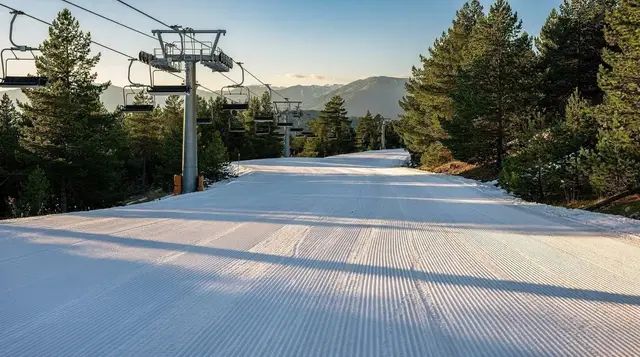
Adelboden-Lenk is sold as one ski area, but it is really four adjoining sectors stitched together by connecting runs and a shared pass, not one continuous mountain the way Mürren-Schilthorn is.
| Sector | Base village | Character | Top altitude |
|---|---|---|---|
| Silleren-Hahnenmoos | Adelboden | Wide, gentle, best for beginners and intermediates | 2,067 m |
| Chuenisbärgli-Höchsthorn | Adelboden | Home of the World Cup slope; steeper, more exposed | 1,957 m |
| Betelberg | Lenk | Sunnier aspect, quieter, good tree-lined runs | 2,033 m |
| Elsigen-Metsch | Between the two | Smaller, connects the sectors, easy cruising | 2,043 m |
Total piste length across the four sectors is usually quoted at around 185 km, with roughly 60 lifts. That is comparable in scale to the whole Jungfrau region, but spread lower and wider rather than climbing to a single dramatic summit — nothing here matches the exposure of the Schilthorn or the glacier scenery near the Jungfraujoch. What Adelboden-Lenk offers instead is volume of intermediate and beginner terrain, tree-lined runs that stay skiable in flat light, and a lower price for a full day.
The sectors connect on skis, weather permitting, so a competent intermediate can genuinely ski from Adelboden to Lenk and back within a day rather than needing to bus between bases. Anyone renting equipment locally should ask which sector their hotel or apartment sits closest to, since gear returned to the wrong valley means an extra bus trip.
The Chuenisbärgli and the January World Cup
The Chuenisbärgli run above Adelboden village is one of the fixtures of the Alpine skiing calendar: a men’s slalom and giant slalom World Cup weekend, held annually, typically on the second weekend of January. Adelboden has hosted a World Cup race on this slope since the 1950s, which makes it one of the longer-running stops on the circuit, and the village takes it seriously — flags, temporary grandstands, and a finish area a short walk from the centre.
Two things matter if this is on your radar. First, the exact date shifts each season with the FIS World Cup calendar, so check before booking accommodation for that week specifically — rooms in Adelboden sell out well in advance of race weekend and prices rise accordingly. Second, the Chuenisbärgli run itself is closed to the public for course preparation for several days before the race and through the event, along with some of the surrounding lifts used for course access. It is not the whole ski area: Silleren-Hahnenmoos, the Betelberg sector above Lenk, and Elsigen-Metsch keep running as normal, so a skiing holiday timed around the World Cup is entirely workable — you simply won’t get a run down the race piste itself that week.
Watching the race is free from most vantage points along the course, though the finish area and grandstands are ticketed. If skiing is the priority rather than spectating, most visitors are better off avoiding race week altogether: lodging costs spike, the village is busier than usual, and part of the terrain is off-limits regardless of ticket status.
Getting there from Interlaken
There is no direct train. The route from either Interlaken Ost or Interlaken West runs via Spiez, and then splits depending on which end of Adelboden-Lenk you are heading to.
| Destination | Route | Approximate time |
|---|---|---|
| Adelboden | Interlaken → Spiez → Frutigen (train), then Postbus to Adelboden | 60–75 min |
| Lenk | Interlaken → Spiez → Zweisimmen (train), then Postbus to Lenk | 75–90 min |
| Kandersteg (different valley, not part of the ski pass) | Interlaken → Spiez → Kandersteg (direct train) | 45–55 min |
The Frutigen and Zweisimmen legs run on the BLS network covered by the Swiss Travel Pass, and Postbus connections are timed to meet incoming trains rather than running to a separate clock, which is standard for Swiss public transport generally. Driving cuts this to roughly 45 minutes to Adelboden via the Frutigen road, longer to Lenk, and longer still on a snowy morning when the road over to the Simmental gets busy with day-trip traffic from the Bern side.
There is no cross-valley train or gondola linking Adelboden-Lenk to the Jungfrau region’s own lift network — the two ski areas are entirely separate systems that happen to be an hour or so apart by public transport, which is the main reason most Interlaken visitors default to Wengen or Grindelwald instead and treat Adelboden-Lenk as a deliberate day trip rather than a default choice.
Note that Kandersteg, reached directly from Interlaken via Spiez without a bus change, is not part of the Adelboden-Lenk ski pass — it has its own small local lift and is better known for the frozen Oeschinensee and cross-country trails than for downhill skiing.
Adelboden-Lenk versus the Jungfrau ski region
This is the comparison most Interlaken-based visitors actually want answered, since it decides whether the extra travel time is worth it.
| Adelboden-Lenk | Jungfrau ski region | |
|---|---|---|
| Piste length | ~185 km | ~206 km |
| Travel time from Interlaken | 60–90 min, one bus change | 20–40 min, direct train |
| Typical adult day pass | Usually CHF 65–75 | Usually CHF 85–95 |
| Top altitude | 2,067 m | 2,970 m (Schilthorn) / 2,486 m (Kleine Scheidegg area) |
| Standout feature | Wide intermediate terrain, January World Cup | Views towards the Eiger, Mönch and Jungfrau |
| Best for | Budget-conscious intermediates, families, quieter pistes | Scenery, ease of access, higher and more varied terrain |
Lift pass prices move every season, so treat these as a rough band rather than a quote, but the gap has held fairly consistently: Adelboden-Lenk tends to run a good CHF 15–20 cheaper per adult day pass than a combined Jungfrau region ticket. Over a week that difference covers a meal out or a couple of bus fares, which matters on a Swiss winter budget where lift passes are already one of the largest line items after accommodation.
What the Jungfrau region has that Adelboden-Lenk does not is altitude and drama — nothing at Adelboden climbs anywhere near the glacier scenery visible from the Schilthorn or Männlichen. What Adelboden-Lenk has that the Jungfrau region does not is breadth of easy and intermediate piste without the crowding that builds up on peak days around Kleine Scheidegg. Skiers who have already done a day or two in the Jungfrau region and want variety, or who are travelling on a tighter budget and don’t need the postcard backdrop, are the ones who get the most out of the extra travel time to Adelboden-Lenk.
Off-piste days and family alternatives
Not every day in the Adelboden-Lenk area needs to be spent on skis, and the region has enough alternative activity to fill a rest day or a visit timed around bad snow conditions. Families travelling with younger children who aren’t up to a full ski day often do better on a guided outdoor outing instead — the Vogellisi family adventure trail above Adelboden is built around this, mixing a gentle walking route with playground-style stops rather than technical hiking.
Groups travelling together for a stag or hen weekend based in the area have a puzzle-adventure format available too, via the group puzzle adventure through Adelboden village, which works as an evening or half-day filler around the skiing.
For a change of pace without leaving the wider region, sledging remains one of the most reliably enjoyable low-cost options in winter — see our separate sledging and toboggan run guide for routes closer to Interlaken itself, or book a guided version directly with the guided day of sledging run from Interlaken, which handles transport and equipment for visitors who would rather not work out the logistics themselves.
Kandersteg, on the direct rail line and not requiring the Adelboden-Lenk bus connection at all, is worth combining with a ski trip if the weather turns: it has snowshoeing and winter hiking routes around the frozen Oeschinensee that don’t depend on lift operation, and in the warmer months the same base serves as a jumping-off point for guided hiking, including the guided hike from Kandersteg led by a Swiss triathlete and the guided hike to the hidden Arvenseeli tarn above Kandersteg, for anyone extending a winter trip into shoulder-season hiking.
Practical notes before booking
Snow reliability at Adelboden-Lenk’s lower altitudes — the base stations sit around 1,350 to 1,400 m — is weaker than the Jungfrau region’s higher sectors in a poor snow year, since none of the Adelboden-Lenk pistes reach the altitude of the Schilthorn or the runs around Kleine Scheidegg. Snowmaking covers the main runs, but a visit planned for early December or late March carries more risk of patchy cover here than in the higher Jungfrau sectors.
Check the best time to visit guide and current snow reports before committing to non-refundable accommodation, and see our overview of when the region’s mountain railways open and close for the seasonal pattern that affects lift operation generally, not just at Adelboden-Lenk.
Equipment hire is available in both Adelboden and Lenk village centres at broadly similar rates to Grindelwald and Wengen; there is no meaningful saving to be had by renting gear specifically because you’re skiing the cheaper mountain. Ski school lessons, by contrast, run somewhat below Jungfrau region rates, which combined with the gentler terrain on the Silleren-Hahnenmoos side makes Adelboden a reasonable option for a family teaching young children to ski without the higher costs of a Wengen or Grindelwald base.
If skiing is only one part of a longer Interlaken stay, our four-day Interlaken winter itinerary sketches out how a single day at Adelboden-Lenk fits alongside time in the Jungfrau region and a rest day in Interlaken in winter itself, and the winter and snow category rounds up the rest of the region’s cold-weather activities in one place.
For a nearby, larger-scale alternative that some visitors bolt onto an Adelboden-Lenk trip on the same pass network, Gstaad and the Glacier 3000 area sits a further bus ride down the Simmental and is often combined with Lenk on a Gstaad Mountain Rides ticket covering both.
Adelboden-Lenk skiing: frequently asked questions
How far is Adelboden from Interlaken?
By public transport it is around 60 to 75 minutes: a train from Interlaken Ost or West to Frutigen, then a connecting Postbus up to Adelboden. Driving via Spiez and Frutigen takes roughly 45 minutes in clear conditions, longer with snow chains or traffic on ski weekends.
Is Adelboden-Lenk one connected ski area?
Yes, on-piste. Adelboden’s Silleren-Hahnenmoos-Metsch sector links by trail to Lenk’s Betelberg sector, and the Elsigen-Metsch cable car ties in the smaller Elsigenalp slopes. It is marketed and sold as a single lift pass covering all four sectors, roughly 185 km of runs.
When is the Adelboden World Cup ski weekend?
The FIS Alpine Ski World Cup slalom and giant slalom on the Chuenisbärgli run above Adelboden village is held annually, typically on the second weekend of January. The exact date moves each season, so check the FIS calendar before booking accommodation for that week.
Does the World Cup close the ski area to visitors?
The Chuenisbärgli run itself closes to the public for course preparation for several days before and during the race, and the village fills up with spectators and hospitality tents. The rest of the Adelboden-Lenk lift network, including Silleren-Hahnenmoos and the Lenk sectors, keeps operating.
How does an Adelboden-Lenk lift pass compare with the Jungfrau ski region?
Adelboden-Lenk’s day pass is usually noticeably cheaper than a Jungfrau region pass covering Grindelwald, Wengen and Mürren, though the Jungfrau region includes higher, more scenic terrain and easier access from Interlaken. Adelboden-Lenk suits a lower budget and more piste kilometres; the Jungfrau region suits shorter travel time and bigger views.
Can I reach Adelboden-Lenk without a car?
Yes. Trains run from Interlaken via Spiez to Frutigen (for Adelboden) or on to Zweisimmen (for Lenk), with connecting Postbuses timed to meet the trains. It takes longer than driving and requires one change, but no car is needed.
Is Adelboden-Lenk good for beginners and families?
Yes, arguably better suited than the Jungfrau region’s steeper sectors. The Silleren-Hahnenmoos side has wide, gentle blue and red runs, a ski school with English-speaking instructors, and dedicated beginner lifts separate from the main pistes.
Skiing & winter experiences on GetYourGuide
Verified deep-linked GetYourGuide tours. Book through these links and we earn a small commission at no cost to you.
GetYourGuide does not provide a product photo for this activity — the image shows the meeting point, photographed by us.