Sledging and toboggan runs around Grindelwald
Where can you go sledging near Grindelwald?
The main runs are Bussalp to Grindelwald (about 4 km), the Grindelwald First run down to Bussalp or the valley (up to 15 km), and the longer, harder Faulhorn descent. Sledges rent for around CHF 15-25 a day at the valley stations, and First runs floodlit night sessions on winter evenings.
Three runs, three very different afternoons
Sledging around Grindelwald gets sold as one activity, but the three real options are not interchangeable. Bussalp to Grindelwald is a short, forgiving run that most families manage on the first go. The Grindelwald First run is longer, partly floodlit, and split into an easier lower half and a harder upper half. The Faulhorn descent is a different proposition altogether: a long, high, unprepared run for people who already know what they are doing on a sledge and are fit enough to walk up to the start of it. Picking the wrong one for your group is the main way a sledging afternoon in the Jungfrau region goes wrong, more than the weather does.
None of the three requires previous experience with a specific technique class - a wooden sledge has no brake and no edge control worth the name, so the skill is entirely about body weight, timing and reading the surface ahead. That part takes about ten minutes to pick up, covered further down.
Bussalp to Grindelwald
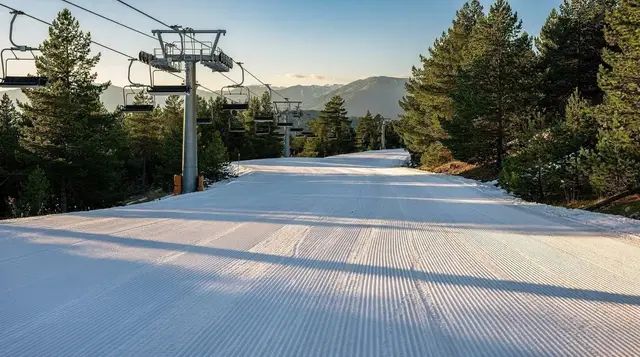
Bussalp sits at around 1,800 m, reached by postbus from Grindelwald station in about 20 minutes, with the road itself closed to private cars above a certain point once the snow season is under way. From Bussalp the toboggan run drops back down to Grindelwald village, around 4 km, losing roughly 700 m of altitude on a mix of open pasture and forest track. It is the easiest of the region’s runs, wide for most of its length, and the one to pick for a first attempt or for children sledging on their own.
Sledge rental is available at Bussalp itself, so there is no need to carry one up on the bus. Expect to pay in the region of CHF 15-25 for a day, sledge and rope included, with a small deposit or ID left against it. The run typically takes 30-45 minutes down, longer with children or in soft snow, and the postbus back up runs on a schedule worth checking before you commit to a second lap.
Bussalp gets its own share of winter walkers and snowshoers too, since the same road and open pasture feed into a snowshoeing route network. On a clear day the views back across to the Eiger, Mönch and Jungfrau are as good from the sledge run as from any of the marked trails.
Grindelwald First: the long one
A private day trip that pairs Harder Kulm with Grindelwald is one way to see First’s upper station without committing to the whole toboggan descent, but the run itself is the reason most people go up. First sits at 2,168 m, reached by gondola from Grindelwald Grund in about 25 minutes, and the toboggan run follows the gondola line down in two distinct stages that are usually opened separately depending on snow.
The upper section, First to Bort, is the harder half: narrower in places, with tighter bends and a steeper average gradient, and it is where speed builds fastest if you are not managing it. The lower section, Bort to Grund, is wider and more forgiving, and on days when only part of the run is open it is usually this half that stays available longest into the season. Ridden in full, First to Grund covers close to 15 km and is regularly described as one of the longest toboggan runs in the region - though “longest” here means longest continuous piste-style run, not the longest possible descent from the ridge above it, which is the Faulhorn route covered below.
A full descent from First to Grund typically takes 45-60 minutes at a sensible pace, more with stops. The Grindelwald First guide covers the gondola, the cliff walk and the other summer and winter attractions up there in more detail; this page sticks to the sledge run itself.
Night sledging at First
First runs floodlit toboggan evenings on set nights through the winter, typically once or twice a week depending on demand and staffing, with an evening gondola slot timed for dusk and lighting along the run down to Bort or Grund. It is a different experience from the daytime run - colder, slower by necessity since visibility is reduced even under floodlights, and usually paired with a fondue or raclette stop at one of the mountain restaurants before the descent. Bring more layers than you think you need; standing around waiting for a gondola slot after dark at 2,000 m is colder than the sledging itself.
Check the current night sledging schedule locally rather than assuming a fixed weekly slot - it depends on snow cover holding on the lower sections and on staff being available to light and groom the run, and it is one of the first things cancelled in a thin snow year.
The Faulhorn descent
The Faulhorn ridge, reached on foot or snowshoes from Bussalp or from First, feeds one of the longest toboggan descents in the Bernese Oberland, running back down to Bussalp over roughly 15 km with substantial altitude loss from close to 2,600 m. This is not a groomed, patrolled piste in the way the First run is. It is an unprepared route across open terrain, dependent entirely on natural snow, with no lighting, no rescue infrastructure along most of its length, and no realistic way to bail out partway down other than walking.
It suits people who already sledge confidently, are fit enough for the walk up first, and are comfortable navigating in featureless white terrain if visibility drops. It does not suit a first attempt at sledging, a family with young children, or anyone without proper winter clothing and a way to check conditions before setting out. If in doubt, do Bussalp or the lower half of First first, and only consider the Faulhorn once you know how a sledge behaves under you at speed.
Weather on the ridge above Bussalp changes fast, and the same altitude, weather and packing guidance that applies to summer hiking up there applies with more consequence in winter, when a whiteout means losing the route rather than just losing the view.
Renting a sledge
| Location | Typical daily rate | Notes |
|---|---|---|
| Bussalp base | CHF 15-25 | No need to carry a sledge on the postbus |
| Grindelwald Grund (First base) | CHF 15-25 | Combine with a First gondola ticket |
| Grindelwald sports shops | CHF 15-30 | Wider stock, including runners for children |
Prices vary by shop and season and are worth confirming on the day - Switzerland’s prices move, and a page like this one gets stale faster than the mountain does. The standard rental is a wooden Davos-style sledge: a rope for steering by shifting weight and dragging your feet, no brake in the way a bicycle has one. Helmets are not always included in the base rental price; ask, since a fall on an icy section without one is a genuinely bad way to end an afternoon.
A beginner ski package from Interlaken to Grindelwald is built around downhill skiing rather than sledging, but it is a useful comparison for anyone weighing up the two: skiing needs lessons and rental of boots, skis and poles, while sledging needs none of that and gets you moving within minutes of arriving.
The technique, in ten minutes
A toboggan has no edges and, on most rental models, no brake. Everything is weight and drag.
- Steering is done by leaning into the direction you want to go and, on the sharper wooden sledges, pulling gently on the corresponding side of the rope. Oversteering is the most common beginner mistake - small, early inputs work better than a late, hard correction.
- Slowing down means dragging both boot heels flat into the snow, weight back, rather than digging in one foot at a time, which tends to spin the sledge sideways.
- Sitting position matters more than most people expect. Sit further back than feels natural and keep weight low; sitting forward makes the sledge harder to control and easier to tip on a bend.
- Spacing between sledges should be generous, at least one full sledge-length more than feels necessary, since stopping distance on packed snow is longer than it looks from a standing start.
- Reading the run ahead - icy patches shine slightly differently to soft snow in good light, and the inside of a bend is usually where ice forms first from repeated braking.
None of this needs a lesson. Most people manage a passable first run within the opening few hundred metres, on the gentler sections of Bussalp or the lower half of First, which is why those two are the sensible starting point rather than First’s upper section or the Faulhorn.
When the runs close
Toboggan runs close for the same reasons the region’s cable cars and mountain railways do: not enough snow, too much wind at altitude, or a thaw that turns a fast piste into either bare ground or dangerous ice. Spring and autumn also bring scheduled maintenance closures on the lifts that serve these routes, the same window covered in when the mountain railways open and close. A closed or partially closed run is common enough in a marginal snow week that it is worth checking locally, ideally by phone or at the valley station, on the morning you plan to go rather than relying on a schedule fixed weeks in advance.
A private scenic train tour around Grindelwald is a sensible fallback on a day when the toboggan runs are closed but the trains are still running, since it covers much of the same ground by rail instead.
Pairing sledging with the rest of the day
Sledging afternoons are short enough - typically an hour or two including the ride up - to pair easily with something else. A morning in Grindelwald itself, lunch at Grund or Bussalp, then the sledge run down, is a full but unrushed day. For families splitting between skiers and non-skiers, Interlaken with kids and skiing in the Jungfrau region cover the wider set of options for the rest of the group while one half sledges.
A combined tour taking in Grindelwald, Lauterbrunnen and Mürren works well the day before or after a sledging trip, since it covers Lauterbrunnen and the car-free village of Mürren without needing to plan the connections yourself. Mürren has its own ski and toboggan options worth reading up on in the Mürren and Schilthorn ski guide, and Wengen - the other car-free village on the Lauterbrunnen side - covered in the Wengen and Lauberhorn ski guide has a similar mix of pistes and family-friendly runs.
Beatenberg, above Lake Thun rather than in the Grindelwald valley, has its own smaller sledging scene tied to the Niederhorn cable car, covered in the Niederhorn guide - a reasonable alternative on a day when the Grindelwald side is closed and the Beatenberg side is not, since the two sides of the region do not always get identical conditions.
Getting the transport right
A Swiss Travel Pass or the regional Jungfrau Travel Pass covers the postbus to Bussalp and the First gondola, which matters more here than it does for a one-off attraction visit, since a day involving two or three lift or bus rides adds up quickly at full fare. The general Swiss Travel Pass guide has the current pass options and prices in full. After dark, or after a long day on the Faulhorn route, check the cable cars and funiculars explained page for last-descent times - missing the final gondola down from First is an expensive taxi problem, not a minor inconvenience.
For an evening that ends with tobogganing rather than starts with it, the après-ski guide to the Jungfrau region covers where to eat and drink afterwards in Grindelwald itself, and Interlaken in winter covers the wider seasonal picture for anyone based down in the valley rather than staying in Grindelwald.
Sledging near Grindelwald: the questions people ask
Where can you go sledging near Grindelwald?
The main runs are Bussalp to Grindelwald (about 4 km), the Grindelwald First run down to Bussalp or the valley (up to 15 km), and the longer, harder Faulhorn descent. Sledges rent for around CHF 15-25 a day at the valley stations, and First runs floodlit night sessions on winter evenings.
Do I need to bring my own sledge?
No. Rental sledges, usually the wooden Davos style with a rope and no brakes to speak of, are available at the base of Bussalp, at Grindelwald Grund and at the First gondola station for roughly CHF 15-25 per day. Bring your own only if you already have one you like.
How hard is the Grindelwald First toboggan run?
The upper section from First to Bort is rated the hardest part, with tight bends and real gradient. Bort to Grund is gentler and suitable for competent beginners. Total descent is about 15 km if you ride the whole thing, closer to 3.5 km if you stop at Bort.
What is the Faulhorn toboggan descent?
It is a long, unprepared descent from the Faulhorn ridge, usually reached on foot or snowshoes from Bussalp or First, down to Bussalp. It runs to around 15 km with real altitude loss, is not floodlit, not patrolled in the way a piste is, and is a bad choice for a first attempt at sledging.
Is there night sledging near Grindelwald?
Yes. First runs floodlit toboggan evenings on set nights in winter, usually once or twice a week, with the last gondola up timed for dusk and the run lit down to Bort or Grund. Check the current schedule locally since it depends on snow and staffing.
What should I wear and bring?
Waterproof trousers matter more than a warm jacket, since you sit low and close to the snow. Gloves, a hat under the helmet if one is provided, and boots with grip for the walk to the start. Sunglasses or goggles for daytime runs, a head torch is sensible for night sessions.
Can children sledge these runs?
Bussalp to Grindelwald and the lower First run (Bort to Grund) work for children old enough to control a sledge alone, generally from about seven or eight. Toddlers ride in a parent’s lap on gentle sections only. The Faulhorn descent is not for children.
When is the sledging season?
Typically late December to March, snow depending. Runs close after a thaw or when the base gets icy and dangerous rather than fast, and the lift and run schedule is reviewed daily in marginal weeks. Ask at the valley station on the morning you plan to go.
Skiing & winter experiences on GetYourGuide
Verified deep-linked GetYourGuide tours. Book through these links and we earn a small commission at no cost to you.
GetYourGuide does not provide a product photo for this activity — the image shows the meeting point, photographed by us.