Interlaken in winter: the valley without the snow
Is Interlaken worth visiting in winter if you don't ski?
Yes. Interlaken itself sits at 568 m and is often snow-free even in January, while the mountain railways to Jungfraujoch, Schilthorn and the Grindelwald and Wengen ski areas keep running. Hotel rates drop noticeably, the town is quiet, and the high-altitude snow is a short train ride away rather than underfoot in the streets.
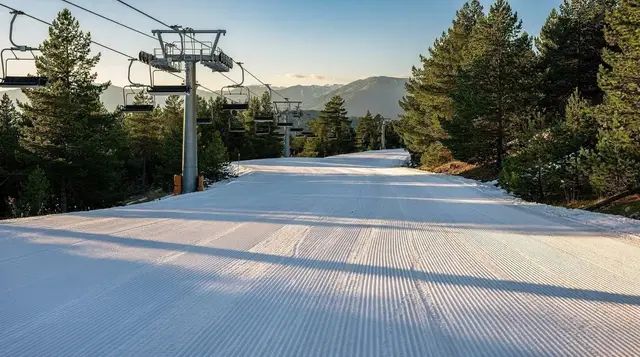
Most photos of Interlaken in winter show snow on the Hoheweg, chalets under a white roof, the Jungfrau glowing pink at sunset. Walk the same street in January and you are as likely to find bare grass on the Hohematte, a damp pavement and a temperature that never quite commits to freezing. Interlaken sits at 568 m, wedged between Lake Thun and Lake Brienz, and that altitude is low enough that the valley floor spends much of the winter in a grey, mild no-man’s-land while the peaks two or three thousand metres above it are unambiguously white. Understanding that split - snowless valley, snow-guaranteed mountain - is the key to planning a winter trip here without disappointment.
What “winter” means at 568 metres versus at 2,500 metres
Interlaken’s winter climate is shaped by its two lakes and its position in a trough between ridgelines, which keeps daytime temperatures hovering close to 0°C rather than deep into negative figures. Snow does fall on the town, but it rarely stays: a covering that would last a fortnight in Grindelwald or Wengen is often gone from Interlaken’s streets within 48 hours, washed out by rain or simply melted by daytime temperatures a couple of degrees above freezing. Locals treat this as normal rather than a failure of the season - the postcard snow lives up the mountain, not down in the Bödeli.
That contrast is worth building a trip around rather than fighting. A day that starts in a damp, 4°C Interlaken and ends on a sunlit, -8°C terrace at 3,454 m is not a planning failure, it is the standard shape of a winter day here, and it means packing for both climates in the same rucksack - see the FAQ below for specifics.
What stays open
The core mountain railways that make Interlaken a base for day trips keep running through winter, on reduced but reliable timetables. The Jungfrau Railway to Jungfraujoch operates daily, the Schilthornbahn to Piz Gloria keeps turning above Mürren, the Grindelwald First gondola and the lift network above Grindelwald run for skiers and sightseers alike, and the Harder Kulm funicular above Interlaken Ost usually operates into the shoulder season before its own winter closure - check the current schedule before relying on it in deep winter.
The two-lake boat network on Lake Thun and Lake Brienz thins out considerably: winter timetables run far fewer sailings than the summer schedule, and some routes suspend entirely. Trains and postbuses pick up the slack for every connection a boat would otherwise make, so nobody gets stranded, but a lake cruise is not a reliable November-to-February plan the way it is in June.
Restaurants, museums such as Ballenberg’s outdoor buildings (largely closed over winter, worth checking before a visit) and the town’s shops stay open, if on shorter hours, and the Bödeli itself - Interlaken, Unterseen and Matten - is entirely walkable regardless of weather.
What closes
Two of the region’s signature rack railways shut down for the winter rather than running a reduced service: the Schynige Platte line above Wilderswil and the Brienz Rothorn steam railway both close for the season, typically from late autumn until some point in late spring depending on snow clearance on the track. Neither is a winter option at all, which surprises visitors who saw them featured in summer photos.
Some hiking trails at mid-altitude become impassable without proper winter equipment, and a handful of scenic routes that are gentle walks in July turn into avalanche-risk terrain in January - this is not a place to improvise off-piste on foot. The passes over Grimsel and the Susten close to road traffic for the winter entirely, and the road up to Kandersteg’s frozen Oeschinensee needs winter tyres or chains even where it stays open.
The broader rule that catches people out even outside the depths of winter: lifts and railways across the region close for scheduled maintenance in spring and again in autumn, and some close on windy days regardless of season. A specific lift being “usually open in winter” is not the same as guaranteed open on the day you arrive - always check the operator’s live status page the morning of a mountain excursion.
The financial case for January over July
Interlaken’s peak-season pricing runs from around late June to early September, with a second, shorter spike around Christmas and the February half-term holidays when European families arrive for the ski slopes. Outside those windows - broadly, January to mid-February, and again in March before the spring school holidays - hotel rates on the Hoheweg and around the two stations commonly drop by a third or more compared with August. A double room that runs CHF 250-300 a night in summer can be found for CHF 150-190 in a quiet January week, and apartment-style stays in Unterseen see a similar swing.
What does not move is the price of getting up the mountains. Jungfraujoch and Schilthorn tickets are priced the same in January as in July - there is no winter discount on the railway itself, only on the bed you sleep in afterwards. Where winter genuinely saves money is on the softer end of a trip: cheaper rooms, quieter restaurants with no wait for a table, and activities like a guided winter walk with fondue or raclette that cost the same year-round but feel better value when everything else around them is discounted.
| Cost item | Peak summer (Jul-Aug) | Off-season winter (Jan-Feb, excl. Christmas) |
|---|---|---|
| 3-star double room, Interlaken centre | CHF 220-280 | CHF 140-190 |
| Jungfraujoch return ticket | Same year-round | Same year-round |
| Restaurant table, no reservation needed | Often a wait | Rarely an issue |
| Lake boat frequency | Full summer timetable | Reduced, some routes suspended |
| Town atmosphere | Crowded Hoheweg, full hotels | Quiet streets, visible off-season |
For a full cost breakdown across seasons, see Interlaken travel costs and Interlaken on a budget.
Why some visitors prefer January to July
A few things line up in winter’s favour that rarely make the marketing photos. First, visibility: cold, dry high-pressure days after a front has passed often give sharper mountain views than the haze of a warm July afternoon, and the Aletsch Glacier panorama from the Jungfraujoch’s Sphinx terrace can look genuinely different - cleaner, more defined - on a crisp winter morning.
Second, crowding. The queues that build at the Jungfraujoch ticket hall and the Grindelwald Terminal in August largely evaporate in January outside the Christmas and half-term weeks; the same train that takes ninety minutes to board in summer can be a short wait in deep winter.
Third, the town itself. Interlaken in summer is built around passing tourism - big buses, short stops, a transactional feel along the Hoheweg. In January, with far fewer visitors and no through-traffic of day-trippers, it reads as an actual small Bernese town of around 5,900 people rather than a gateway. Locals note the difference; so do repeat visitors who come specifically for the quiet.
None of this erases winter’s real costs: the short days covered below, the closed rack railways, and a valley floor that is often just cold and wet rather than picturesquely white. It is a trade, not a strictly better option - but it is a trade some visitors make on purpose, year after year.
Living with eight hours of daylight
At the winter solstice, Interlaken gets close to eight hours of daylight, sunrise around 8.15am and sunset around 4.45pm, and the surrounding ridgelines shorten that further in practice - direct sun can leave low ground in the valley by mid-afternoon well before the official sunset. This changes trip planning more than the cold does. One mountain excursion a day, started early, works better than trying to combine two in a single afternoon that runs out of light by 3.30pm.
Book the first cable car or train departure where possible: not just for the views before cloud builds, but because a 2pm arrival at Schilthorn or Jungfraujoch in December can mean descending in near-darkness by the time you are back at the valley station. Check when mountain railways open and close and the current timetable rather than assuming a summer departure schedule still applies.
Snow activities that don’t require a ski pass
Skiing and snowboarding dominate the region’s winter reputation, covered separately in the Jungfrau region skiing guide, the Wengen and Lauberhorn guide and the Mürren-Schilthorn guide. But a large share of winter visitors to Interlaken never clip into a binding, and the valley’s outdoor-activity operators run a genuine non-ski season alongside the slopes.
Sledging and tobogganing routes at altitude - detailed in sledging and toboggan runs - need no prior experience and are usually a half-day out with equipment provided; a guided sledding day from Interlaken handles the transport and gear rental that make this awkward to organise independently. Snowshoeing covers similar ground at a gentler pace, following marked winter trails away from the ski pistes; a guided snowshoe tour from Interlaken is worth it for a first attempt, since route-finding on unmarked snow is easy to get wrong.
For a lower-effort winter afternoon, a guided winter walk finishing with raclette and tea covers an easy loop near town before warming up over cheese - a reasonable answer to a short, dark afternoon that doesn’t call for full winter kit. And for guaranteed snow further afield when the valley itself refuses to cooperate, the Glacier 3000 cable car ticket reaches permanent snow above Gstaad, a longer day trip but a reliable one when lower elevations are bare and brown.
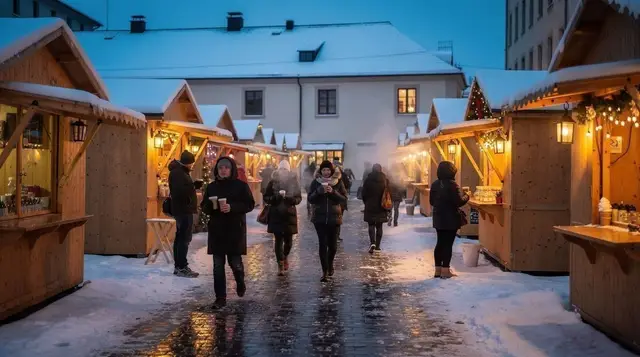
More sedate options include the region’s thermal baths, well matched to a cold, dark evening, and the seasonal stalls of the Bernese Oberland Christmas markets if travelling in early December.
Practical notes for a winter visit
Dress for two climates in one day, as covered in the FAQ: town-level layers for Interlaken itself, proper winter kit - insulated jacket, gloves, sunglasses against glare - for anything above 2,000 m. A car is more liability than asset; see driving and parking in the Jungfrau region if you’re arriving with one regardless, and note that chains are sometimes compulsory on passes above Kandersteg.
If the weather turns uncooperative for a full day, the wet-weather fallback options in Interlaken in bad weather and things to do in Interlaken when it rains apply just as well to a grey, drizzly winter day as to a summer downpour.
Anyone weighing winter against the rest of the calendar should also read best time to visit Interlaken for the broader comparison, and how many days in Interlaken for planning a shorter winter itinerary that respects the shorter daylight hours - four days rather than a rushed two gives enough slack for a delayed cable car or a fogged-out summit to be rescheduled rather than lost entirely.
Interlaken winter FAQ
Does it actually snow in Interlaken town in winter?
Not reliably. At 568 m between Lake Thun and Lake Brienz, Interlaken sits low enough that winter precipitation often falls as rain or wet snow that melts within a day or two. Snow that stays on the ground for weeks is the norm from around 1,000-1,200 m upward, which is why Wengen, Mürren and Grindelwald look like a ski poster while the Hoheweg down in town can be green grass and grey pavement.
Which mountain railways run through the winter months?
The Jungfrau Railway to Jungfraujoch, the Schilthornbahn to Piz Gloria, the Grindelwald First gondola, the Harder Kulm funicular and the lifts serving Wengen, Mürren and Grindelwald ski terrain all operate through winter, usually with reduced early and late departures. The Schynige Platte cog railway and the Brienz Rothorn steam railway are the main exceptions - both close for the season, typically reopening in late spring.
Is Interlaken cheaper to visit in winter than in summer?
Generally yes for accommodation, where three- and four-star hotel rates on the Hoheweg commonly drop by a third or more outside the July-August peak and the Christmas and February half-term weeks. Mountain railway tickets to Jungfraujoch and Schilthorn are not seasonally discounted and cost close to the same year-round, so the saving is on beds, not summits.
How short are the days in Interlaken in December and January?
Around eight hours of daylight at the winter solstice, roughly sunrise 8.15am to sunset 4.45pm, and the surrounding peaks cut into that further - direct sun can leave the valley floor by mid-afternoon even before official sunset. Plan one mountain excursion per day rather than two, and book early departures if you want good light at altitude.
Do I need snow chains or a car to see Interlaken in winter?
No. Interlaken town needs no car at any time of year, and the mountain excursions run by rail and cable car, which keep operating in weather that would close a mountain road. A car becomes a liability rather than an asset in winter here - parking at Lauterbrunnen or Stechelberg can mean scraping ice off a windscreen at the end of a day trip, and chains are sometimes compulsory on the passes above Kandersteg and Grimsel.
Is Jungfraujoch worth visiting in winter given the cost?
The ticket price is the same as summer, so the calculation doesn’t change on cost - only on crowding and visibility. Winter mornings after a clear cold night often give sharper views over the Aletsch Glacier than the hazier air of a July afternoon, and the Sphinx observation terrace and Ice Palace feel less like a queue and more like a viewpoint. Check the live webcam before committing - fog sitting in the valley can mean cloud at 3,454 m regardless of season.
What should I pack for an Interlaken winter trip?
Layer for two climates in one day: a waterproof jacket and ordinary boots cover the town and lakeshore, where temperatures often sit a few degrees above freezing, but anything above 2,000 m needs proper winter layers, gloves and sunglasses even on a day trip - the Jungfraujoch and Schilthorn terraces are exposed and can be -15°C with wind chill while Interlaken itself is at 2°C and drizzling.
Skiing & winter experiences on GetYourGuide
Verified deep-linked GetYourGuide tours. Book through these links and we earn a small commission at no cost to you.
GetYourGuide does not provide a product photo for this activity — the image shows the meeting point, photographed by us.