Christmas markets in the Bernese Oberland: Interlaken, Thun, Bern and Montreux
Which Christmas market is best from Interlaken: Thun, Bern or Montreux?
Bern's Waisenhausplatz market is the biggest and easiest to combine with the old town, about 55 minutes by train from Interlaken. Thun is smaller and only 25 minutes away, good for an evening. Montreux is the most impressive but is roughly three hours each way by train, so it needs a full day out.
Which market, on which evening
The Bernese Oberland does not have a single famous Christmas market the way Basel or Montreux does. What it has instead is a cluster of small-to-large markets within an hour or two of Interlaken by train, each with a different character, plus one genuinely large market at Montreux that justifies a full day trip on the GoldenPass line. None of them are secret, and none of them are free of tourist-trap pricing on the food stalls, but the walk through Bern’s old town with the smell of roasting chestnuts, or the lakefront lights at Montreux, is worth the ticket price of the train.
Here is the honest comparison before the detail on each one.
If you are still deciding when to come at all, Interlaken in winter and the wider best time to visit Interlaken explain what December feels like on the ground, and events and festivals in the Bernese Oberland puts the markets in the context of the rest of the season. The towns behind the markets have their own pages too: Interlaken, Thun, Bern and Montreux.
| Market | Distance from Interlaken Ost | Typical dates | Size | Best for |
|---|---|---|---|---|
| Interlaken (Höhematte) | On foot | First two to three weekends of December | Small, ~20-30 chalets | An evening without leaving town |
| Thun (old town / Rathausplatz) | ~25 min by train | Late November, one long weekend | Small-medium | Combining with the castle and old town |
| Bern (Waisenhausplatz) | ~55 min by train | Late November to 24 December, daily | Large, ~180-200 chalets | A full afternoon and evening |
| Montreux (lakefront) | ~3 hrs by train | Late November to 24 December, daily | Very large | A dedicated full-day trip |
Dates move by a few days year to year, and every one of these markets can close for a day in a Foehn storm or heavy snowfall, since most of the stalls are unheated wooden huts on open squares. Check the relevant tourism office site the week before you go rather than trusting a date printed here or anywhere else months in advance.
Interlaken’s own market on the Höhematte
Interlaken’s market sets up on part of the Höhematte, the protected meadow that runs along the Höheweg between the big hotels, usually across the first two or three weekends of December rather than for the whole month. It is small: a couple of dozen wooden chalets selling mulled wine, raclette, local crafts, and honey or jam from farms around Lake Thun and Lake Brienz, plus in some years a modest ice rink. It will not compete with Bern or Montreux for scale, and locals are candid that it exists mainly for residents and short-stay visitors who do not want to travel for an evening out.
What it is genuinely useful for is convenience. If you are staying near /destinations/interlaken/ and only have one evening free, this is the market that does not cost you a train fare or an hour of daylight. Mulled wine runs about CHF 6 to CHF 7 a cup, plus a CHF 5 deposit on the mug that you get back when you return it. A plate of raclette with potatoes and pickles is typically CHF 12 to CHF 15, on the expensive side for what it is, which is standard for anything sold within sight of the big hotels on the Höheweg.
If the stalls leave you hungry for something more substantial, the fondue and raclette guide shows where to sit down for a proper meal afterwards, and where to stay in Interlaken helps if you would rather walk home from the Höhematte than catch a late train. For a wider look at what the town offers once the lights are off, see Interlaken’s restaurant guide.
Thun: bridges, castle, and a market that fits an evening
Thun runs its own Christmas market in the old town, usually concentrated around the Rathausplatz and the covered upper level of the Obere Hauptgasse, across one long weekend in late November rather than the whole season. The setting does more of the work than the stalls themselves: Thun’s old town sits on a raised level above shop-lined arcades, with the Aare running fast and turquoise underneath the bridges and the castle on the hill behind. If you have already done the walk described in /guides/thun-old-town-and-castle-guide/, the market is worth timing your visit around rather than a separate trip.
Thun is a 25-minute train ride from Interlaken Ost, with departures roughly twice an hour, which makes it the easiest half-day or evening option outside Interlaken itself. Because the market only runs for a few days, check the specific weekend before booking anything around it; unlike Bern, there is no month-long fallback if you get the dates wrong.
Thun also sits on the lake that shares its name, so the market pairs with a look at Lake Thun in winter light, and Lake Thun boat trips explains what runs on the water when the season is quieter. The nearby villages of Spiez and Oberhofen and Hilterfingen are worth knowing about if you want to turn the evening into a slower lakeside day.
Bern: the Waisenhausplatz market, and Münsterplatz alongside it
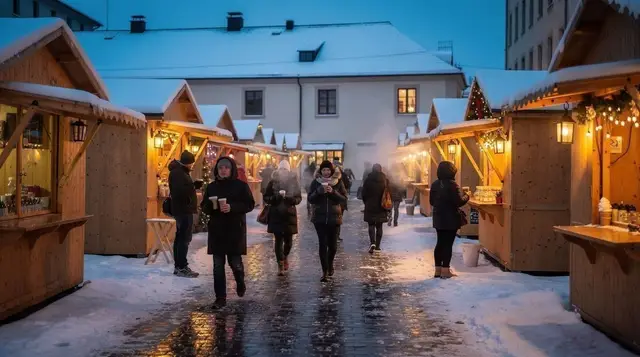
Bern’s main Christmas market fills the Waisenhausplatz, a large square about five minutes on foot from Bern station, right at the edge of the old town’s arcaded streets. This is the market most people mean when they talk about a proper Swiss Christmas market: something in the order of 180 to 200 wooden chalets, running daily from late November through to 24 December, with an evening lighting scheme along the arcades that makes the whole old town feel dressed for the season, not just one square.
A second, smaller market sets up most years on the Münsterplatz, in front of the cathedral, with more of a craft and local-produce focus than the food-and-drink concentration on Waisenhausplatz. If you have an afternoon, walking from one to the other takes you naturally through the arcaded Old Town covered in /guides/bern-old-town-walking-guide/, past the Zytglogge clock tower and down towards the Nydeggbrücke.
Trains from Interlaken Ost to Bern run roughly every 30 minutes and take about 55 minutes, so a market evening in Bern does not need to eat into a full day. Leave Interlaken by mid-afternoon, and you get daylight for the old town and the Bundesterrasse view over the Aare before the market stalls light up properly at dusk, which in December is well before 5pm.
Prices in Bern run a little higher than in Thun or Interlaken simply because of the volume of visitors: expect CHF 7 to CHF 9 for mulled wine, CHF 8 to CHF 10 for a Bratwurst in a roll, and CHF 15 upwards for a full raclette plate. Bring cash in small denominations; most stalls take cards now, but queues move faster with coins for a CHF 5 mug deposit.
For a daytime plan that leads into the market, the full Bern day trip from Interlaken lays out the city step by step, and Zentrum Paul Klee and the Bern museums is the answer if the weather turns and you want somewhere warm before dark. Visitors who like to browse as well as eat will also enjoy the markets of the Bernese Oberland and, for presents, Swiss souvenirs worth buying.
Montreux: a full day trip, not an evening add-on
Montreux’s Christmas market is on a different scale again, spreading along the lakefront promenade on Lake Geneva with a large illuminated fir tree, a bigger footprint of stalls than anywhere in the Bernese Oberland, and a setting against the water and the mountains across the lake that photographs better than any square in Bern or Thun. It runs daily from late November to 24 December.
The catch is the journey. From Interlaken Ost, getting to Montreux takes roughly three hours, usually with a change at Spiez or Zweisimmen onto the GoldenPass line, covered in more detail in /guides/goldenpass-line-guide/. That is six hours of travel for a market visit, which only makes sense as a full day trip rather than an evening out. Leave on an early train, spend the middle of the day in Montreux itself — the lakeside walk past the flower clock and towards Château de Chillon, covered separately at /destinations/montreux/, is worth two or three hours on its own — and treat the market as the reason to stay into the evening rather than the whole point of the day.
If a second full Christmas-market day trip appeals more than repeating Montreux, a guided day trip to the Christmas markets of Riquewihr in Alsace covers similar ground on the French side of the border, with wine tasting built into the itinerary, which the Montreux trip does not offer.
The Montreux and Chillon day trip guide builds the whole day around the lakefront, and if the wine side of Lake Geneva appeals, Swiss wine in Lavaux and the Oberland is the natural companion read. Lavaux and Vevey sit right next door.
Getting there without a car
None of these trips need a rental car, and driving into Bern or Montreux city centre during market season adds parking costs and traffic that the train avoids entirely. See /guides/trains-buses-and-boats-around-interlaken/ for how the regional network fits together, but in short:
| Route | Typical journey time | Frequency |
|---|---|---|
| Interlaken Ost to Thun | ~25 min | Every 30 min |
| Interlaken Ost to Bern | ~55 min | Every 30 min |
| Interlaken Ost to Montreux | ~3 hrs (change at Spiez or Zweisimmen) | Roughly hourly |
A Swiss Travel Pass covers all three routes outright, and is worth it if you are also using it for mountain excursions the same week; see /guides/swiss-travel-pass-guide/. Without a pass, a Half Fare Card cuts each of these fares roughly in half and pays for itself after two or three trips. Tickets do not need advance booking on any of these routes and can be bought on the SBB Mobile app on the platform if you are running late.
Winter timetables differ from summer ones, so when mountain railways open and close is worth a glance, and Bernese Oberland railways explained covers how the lines connect. Anyone building a longer stay around the markets can use the Interlaken winter itinerary for four days as a starting frame.
What a market evening actually costs
Budgeting for a Christmas market trip is less about the train fare and more about how much you eat and drink once you are there, since stall food adds up quickly for a group. A realistic evening for two people, including train fares from Interlaken to Bern, two mulled wines, one shared raclette plate, and a bag of roasted chestnuts, runs to roughly CHF 70 to CHF 90. Montreux, once you add the longer round trip and a lunch in town, moves closer to CHF 130 to CHF 160 for two. Neither is unusually expensive for Switzerland, and both are comparable to eating out in Interlaken itself, covered in more general terms at /guides/interlaken-travel-costs/.
Combining a market with the mountains
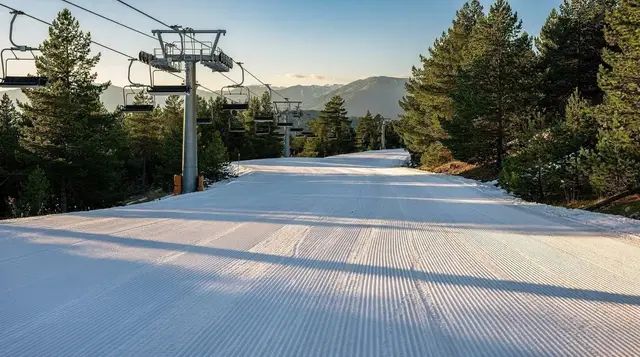
December is also when the ski season starts opening on the higher slopes, and a market evening pairs naturally with a daytime activity rather than standing alone. A guided day of sledging above Interlaken in the morning, followed by an afternoon train to Bern and an evening at Waisenhausplatz, makes for a full but manageable day without needing an overnight stay elsewhere. The same logic works with a guided snowshoe tour into the hills above Interlaken if sledging is not for you.
For the Montreux trip specifically, travellers who want to make the long journey count for more than one thing sometimes add on the Glacier 3000 cable car roundtrip near Col du Pillon, reachable from the same GoldenPass route, either before Montreux on the way out or as a separate day. It is a lot for one day if attempted together, so treat it as an alternative for a second visit rather than an addition to the market day itself.
If snow and short daylight hours are putting you off the idea of day trips altogether, /guides/interlaken-in-winter/ covers what the season is actually like around Interlaken, and /guides/events-and-festivals-bernese-oberland/ lists what else runs alongside the markets through December.
Frequently asked questions about Christmas markets near Interlaken
When do the Christmas markets near Interlaken open in 2026?
Most Bernese Oberland markets run from the last weekend of November to 24 December, though the exact opening weekend shifts by a few days each year. Interlaken and Thun run for shorter windows, often just two or three weekends, while Bern and Montreux run daily for the full four weeks. Always check the town’s own tourism site before travelling, since a market can be cancelled for a day in high wind or heavy snow.
Is there a Christmas market in Interlaken itself?
Yes, a small market sets up on the Höhematte in front of the grand hotels, usually across the first two or three weekends of December. It is modest compared with Bern or Montreux: a couple of dozen wooden chalets, mulled wine, and often a small ice rink, but it means you do not need to leave town for a festive evening.
What is the biggest Christmas market in Switzerland?
Bern’s Waisenhausplatz market is generally considered the largest in the country by number of stalls, and it runs for the whole of December rather than just a few weekends. Montreux markets itself as one of the biggest in Europe by visitor numbers, spreading along the Lake Geneva promenade with a large illuminated tree and a bigger footprint overall.
How do I get from Interlaken to the Bern Christmas market?
Direct trains run from Interlaken Ost, via Interlaken West, to Bern roughly twice an hour, taking about 55 minutes. The Waisenhausplatz market is a five-minute walk from Bern station, right by the old town, so there is no need for a local bus or tram once you arrive.
Is the Montreux Christmas market worth the trip from Interlaken?
It is worth it as a full day out rather than an evening trip, since the journey takes around three hours each way and usually involves a change at Spiez or Zweisimmen. The market’s lakeside setting and scale are genuinely different from anything in the Bernese Oberland, but build in enough daylight hours to see Montreux itself, not just the stalls.
What food and drink should I try at a Swiss Christmas market?
Vin chaud or Glühwein, mulled wine sold by the cup with a small deposit on the mug, is the standard drink at every market and typically costs between CHF 6 and CHF 9. For food, look for raclette scraped onto a plate with potatoes, Bratwurst or Cervelat sausages in a bread roll, roasted chestnuts, and Magenbrot, a soft spiced gingerbread sold by weight.
Do I need to book train tickets in advance for a market day trip?
No, Swiss Federal Railways point-to-point tickets do not need advance booking and can be bought on the SBB app right up to departure. A Swiss Travel Pass or a Half Fare Card covers or discounts all of these routes, and is worth having if you are combining a market trip with mountain excursions on the same visit.
Skiing & winter experiences on GetYourGuide
Verified deep-linked GetYourGuide tours. Book through these links and we earn a small commission at no cost to you.
GetYourGuide does not provide a product photo for this activity — the image shows the meeting point, photographed by us.