Snowshoeing and winter hiking near Interlaken
Can you go winter hiking or snowshoeing near Interlaken without skiing?
Yes. The region maintains a network of groomed Winterwanderwege (pink-signed winter walking trails) and separate marked snowshoe trails around Beatenberg-Niederhorn, Habkern, Grindelwald and Kandersteg. Most are free to walk, need no lift ticket beyond getting to the trailhead, and are graded on the same 1-5 avalanche danger scale as ski runs.
Interlaken markets itself hard on skiing, and the lift-served slopes above Wengen, Mürren and Grindelwald deserve the attention. But a large share of winter visitors never clip into a binding at all. They come for the cold, sunny valley air and the mountains standing white above two dark lakes, and the region’s answer to that is a genuine network of groomed winter walking trails and marked snowshoe routes that ask for nothing more technical than decent boots and a bit of caution about ice.
Winter walking without skis
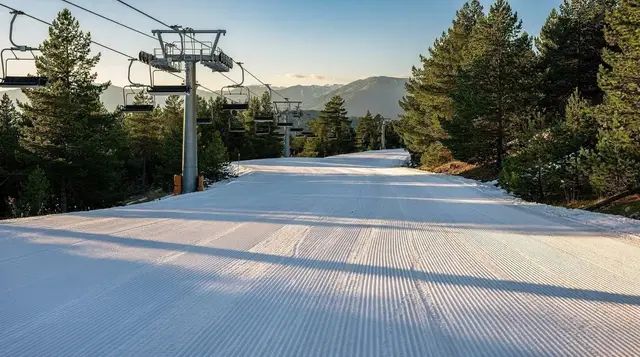
The Bernese Oberland tourist boards maintain two separate categories of winter trail, and mixing them up is the most common planning mistake. Pink-signed Winterwanderwege are machine-groomed with a piste basher, packed flat and wide enough for two people to pass, and they need nothing beyond sturdy footwear. Yellow-signed snowshoe trails run through looser, ungroomed snow, are narrower, and are where snowshoes actually add grip and float rather than being decorative.
Both categories close, or simply stop being maintained, once conditions turn genuinely unsafe, so a trail marked open in December can vanish under fresh snow with no warning sign in the valley. That is the trade-off of walking rather than skiing: no piste patrol groomers pass twice a day checking the route, so the responsibility for reading conditions sits more squarely with you.
Where the marked trails actually are
The biggest concentration of groomed winter hiking sits above Beatenberg, on the Niederhorn, reached by funicular and cable car from Beatenberg village on the Lake Thun side of the Bödeli. The Niederhorn guide covers the full lift chain and opening dates; the winter trails fan out from the mid-station and summit once snow settles, typically from December.
On the Lake Brienz side, Habkern sits at a similar altitude and links into trails toward the Suls-Lobhornhütte area, quieter than Beatenberg and popular with locals rather than tour groups. Over in the Jungfrau valley, Grindelwald keeps a valley-floor winter walking path running well past the ski season’s daily rush, flat enough for an afternoon stroll with mountain views that most skiers only see from a chairlift.
Further west, Kandersteg and the Oeschinensee offer a different kind of winter walk: the lake itself freezes most winters, and a groomed loop trail circles the shoreline with the Blüemlisalp wall rising directly behind it. The Oeschinensee hiking guide has the summer route detail, but the winter version is shorter, flatter and needs the cable car up from the village rather than the full hiking approach.
One trail that is not an option in winter is Schynige Platte. The Wilderswil and Schynige Platte cogwheel line only operates roughly from late May to late October, and the summit’s famous panorama and alpine garden are unreachable by rail once the season ends. The Schynige Platte guide is worth reading before you plan a winter trip there, purely to rule it out rather than discover the closure at the valley station.
Mürren, reached by cable car and train up from Lauterbrunnen and Stechelberg with no road access, keeps a short groomed winter path along the plateau with the Eiger, Mönch and Jungfrau lined up across the valley; see the Mürren page for the lift timetable, since the village runs on a fixed winter schedule with fewer departures than summer.
| Trail area | How to get there | Character | Groomed |
|---|---|---|---|
| Beatenberg–Niederhorn | Funicular + cable car from Beatenberg | Ridge and forest, wide views over Lake Thun | Yes, extensive |
| Habkern | Postbus from Interlaken Ost | Quieter, rolling farmland and forest | Yes, partial |
| Grindelwald valley floor | Train to Grindelwald | Flat, easy, mountain backdrop | Yes |
| Kandersteg–Oeschinensee | Train to Kandersteg, cable car up | Frozen-lake loop, dramatic cirque | Yes, on the loop |
| Mürren plateau | Cable car + train via Lauterbrunnen | Short, flat, big Eiger-Mönch-Jungfrau view | Yes |
Snowshoe routes versus groomed walking
Snowshoes only make sense where the snow has not been packed by a machine, which narrows the useful terrain considerably around Interlaken. The yellow-marked snowshoe trails above Beatenberg and around Habkern are the most accessible starting points, staying below the steeper open slopes where avalanche terrain begins. They are graded, like ski runs, by difficulty, and the easiest loops are genuinely suitable for a first attempt with rented gear.
Going beyond the marked yellow trails, into open bowls or ridgelines, moves you into avalanche terrain proper, and that is where local knowledge or a guide stops being optional advice and starts being the difference between a good day and a bad one. This is also where a short guided outing earns its price: a half-day guided snowshoe tour from Interlaken includes the equipment, a route chosen against that morning’s bulletin, and a guide who has walked the terrain often enough to read wind-loaded slopes that look identical to flat ones from the trailhead.
For a gentler introduction that pairs the activity with a Swiss winter tradition, a guided winter walk finishing with raclette and tea keeps the walking modest and the reward tangible, which suits families or anyone unsure whether winter walking is for them before committing to a longer route.
What to actually pack
The kit list for groomed winter walking is shorter than most outdoor shops would like you to believe. Waterproof, insulated boots with a grippy sole handle the majority of pink-marked trails without additional traction. Add gaiters if the trail report mentions loose snow, and carry poles: they matter more for descending icy sections than most people expect. Sunglasses or glacier goggles are not optional above the treeline, since snow glare at altitude on a clear Bernese Oberland day will cause genuine eye strain within an hour, and the same applies to sun cream even when the air temperature is well below freezing.
Layering matters more than any single expensive garment. A base layer that moves sweat away from the skin, an insulating mid-layer, and a windproof, waterproof shell you can vent or remove cover most conditions from a still, sunny morning to a windy ridge in the afternoon. Bring a hat and gloves you can put on and take off without stopping, since exertion on an uphill groomed trail heats you up faster than the still air temperature suggests.
Snowshoes and hiking crampons (microspikes) are situational rather than default. Rent snowshoes in Interlaken or at the valley station of whichever lift you are using if the trail report calls for them; renting locally, on the day, based on that morning’s conditions beats carrying a pair on the off-chance. The guide to altitude, weather and what to pack covers the broader seasonal kit list if you are combining winter walking with other activities during the same trip.
Reading the avalanche bulletin
Every marked snowshoe trail and most winter hiking areas around Interlaken sit inside terrain that the Swiss avalanche warning service (SLF, WSL Institute for Snow and Avalanche Research) rates daily on the standard five-level European danger scale, published at slf.ch and echoed on regional tourism sites and at valley stations. Level 1 (low) and 2 (moderate) cover the great majority of safe winter walking days on groomed trails.
Level 3 (considerable) is where open, off-piste terrain starts to demand real judgement, and it is the threshold at which most local guides start steering clients back onto groomed or forest trails rather than open ridgelines. Level 4 (high) and 5 (very high) are not conditions for independent winter hiking off marked, groomed paths, regardless of how settled the valley floor looks.
The bulletin also flags wind-loading, which matters more for snowshoe routes than for the machine-groomed Winterwanderwege: a slope that looks identical to its neighbour can carry a windward side scoured to old, stable snow and a leeward side loaded with a fresh, unstable slab. This is exactly the kind of read a hired guide is trained to make and a first-time visitor generally is not, which is the practical case for booking a guided outing on anything beyond the pink-marked network.
If anything goes wrong in the mountains, the number to call is 1414, the REGA Alpine rescue service, available around the clock and equipped to reach terrain no road serves.
Pacing a winter walk
Winter days feel shorter than the clock suggests. Light drops early behind the high ridges, and a trail that was in sun at midday can slip into cold shade well before you expect it. Plan the route so the uphill or the exposed stretch comes first, keep the easy return for the tired end of the day, and check the last departure of the lift or train you need before you set off rather than at the moment you reach it. Build in slack for photographs, a hot drink and a slow descent on packed snow, which is rarely as quick as it looks on the map.
Walking on snow is also more tiring than walking on a dry path, even when the gradient is gentle. Shorten your stride, keep your weight over your feet, and rest before you are tired rather than after. A thermos and something to eat in the rucksack make a bigger difference than most people expect, and a mountain restaurant stop is a sensible part of the plan rather than a luxury; the guide to mountain huts and berghaus dining explains how those places work.
Sharing the trail
Pink winter trails are shared by walkers, families with sledges and, on some routes, people pulling small children on sleds. Keep to one side so others can pass, step off the groomed surface to let a sledge go by, and keep dogs under control. Snowshoers should avoid walking down the middle of a groomed path, since the cleats chew up the surface that everyone else is relying on; use the soft edge instead. Where a yellow trail crosses a ski piste, stop, look uphill and cross quickly rather than lingering in the line of descent.
Leave the trail as you found it. Fenced pastures and forest edges are winter shelter for wildlife, and the animals have little energy to spare when the snow is deep, so stay on the marked route and keep voices low near the trees. The guide to wildlife and marmots is mostly a summer read, but it helps explain why the region asks walkers to stay on the marked line.
Light, views and photographs
Clear winter air gives the best views of the year, and the low sun makes the Eiger, Mönch and Jungfrau look sculpted. If photography is part of the plan, the guide to Interlaken viewpoints lists places that work without a long walk, and it is worth reading alongside this page when you choose between a ridge trail and a valley loop. Cold drains phone batteries quickly, so keep the phone in an inside pocket and take pictures in short bursts.
Combining a winter walk with other days
Winter hiking rarely fills a whole trip on its own, and it slots naturally alongside a day of sledging or a first ski outing. The guide to sledging and toboggan runs covers the region’s marked runs for a lower-effort snow day, while the guide to skiing in the Jungfrau region is the reference if part of your group wants lifts and pistes while the rest walk.
For a bigger single day out, the Glacier 3000 area above Gstaad adds a high-altitude cable car ride and a viewing platform reachable without any hiking at all; the Glacier 3000 cable car roundtrip ticket is worth pricing against a Niederhorn or Kandersteg day if you want altitude and a view without committing to a walking route.
Transport is the other planning variable. A Swiss Travel Pass covers most trains, postbuses and many of the mountain cable cars used to reach these trailheads, and is worth costing against individual tickets if you are combining several winter days. Because winter weather in the valley can differ sharply from conditions at altitude, check the guide to bad weather in Interlaken before locking in a plan built around a single clear-weather trail, and keep the guide to winter in Interlaken open as a general seasonal reference for opening dates and typical conditions month by month.
Winter hiking and snowshoeing near Interlaken: FAQ
Do I need snowshoes, or can I just walk in ordinary winter boots?
On the pink-marked Winterwanderwege the snow is machine-groomed and packed, so sturdy winter boots with a good sole are usually enough. Snowshoes only earn their keep off the groomed network, on the yellow-marked snowshoe trails or open terrain, where fresh snow is unpacked and knee-deep.
Where are the marked winter hiking trails near Interlaken?
The largest network sits above Beatenberg on the Niederhorn, with further groomed routes around Habkern, on the Grindelwald side of the valley, and around Kandersteg’s Oeschinensee, which also has a winter walking loop around the frozen lake.
Is Schynige Platte open for winter walking?
No. The Schynige Platte cogwheel railway only runs from around late May to late October, so the summit and its trails are inaccessible by rail in winter unless you ski-tour up, which is a different undertaking entirely.
How do I check avalanche risk before a winter hike?
Read the daily bulletin from the SLF (WSL Institute for Snow and Avalanche Research) at slf.ch before leaving, and treat anything rated 3 (considerable) or above as a reason to stick to groomed valley trails rather than open slopes.
What should I pack for a winter hike around Interlaken?
Insulated waterproof boots, gaiters, poles, sunglasses or goggles, high-factor sun cream, a hat and gloves, layered clothing you can vent, and a charged phone. Snowshoes and crampons are extra items for off-groomed or icy terrain, not a default requirement.
Can a beginner join a guided snowshoe tour without experience?
Yes. Guided half-day snowshoe tours from Interlaken are designed for first-timers, include the snowshoes and poles, and stay on graded terrain with a guide who reads the day’s avalanche bulletin before choosing the route.
Are the winter hiking trails free to use?
The trails themselves carry no toll, but reaching most trailheads means paying for a cable car, funicular or postbus, and Beatenberg’s Niederhorn cable car and Kandersteg’s approach are the two most common paid links in the chain.
Skiing & winter experiences on GetYourGuide
Verified deep-linked GetYourGuide tours. Book through these links and we earn a small commission at no cost to you.
GetYourGuide does not provide a product photo for this activity — the image shows the meeting point, photographed by us.