The alpine descent in September
I heard it before I saw it: a slow, uneven clanking coming down the valley road outside Lauterbrunnen, the kind of sound that doesn’t resolve into anything until the first cow rounds the bend. Then it was obvious. Treicheln, the big hand-forged bells some farms still use, swinging under the throats of maybe forty animals, three or four of them wearing wreaths of dried alpine flowers the size of dinner plates. A farmer in shirtsleeves walked behind with a stick he never used. That was my first Alpabzug, and it is worth being honest about what it is and isn’t before you go looking for one.
Cows only wear the crown if nobody died
The flower headdress, the Blumenkranz, isn’t decoration for tourists. It’s awarded, informally, by the farming family, and the rule is old and specific: the herd gets crowned only if the summer up on the alp passed without a serious accident or death among the animals. Lose a cow to a fall, a lightning strike, or disease over the three or four months of high pasture, and that year’s descent comes down plain, bells and all, but no flowers. It’s a small piece of information that changes how you watch the parade — a crowned herd is being quietly announced as a good year, an uncrowned one as a harder one. Guides and hotel staff around Lauterbrunnen and Grindelwald will usually tell you which it was, if you ask.
The economics behind it are unglamorous and worth knowing too. Cattle spend roughly 100 to 130 days on alpine pasture between June and September, partly because Swiss agricultural subsidies are tied to it and partly because it’s simply better grazing at altitude while the valley hay grows for winter. When the grass thins or the first proper cold snap arrives, the herd goes down. Nobody consults a diary.
Real dates, and why nobody can promise you one
This is the part that trips up visitors who plan a trip around a single day. There is no fixed date. Farmers watch grass, weather, and the ten-day forecast, and a descent can move by a week in either direction from one year to the next. What I can give you is the pattern that’s held for years across this region:
| Area | Typical window | Character |
|---|---|---|
| Justistal (above Sigriswil, Thunersee side) | Early-to-mid September, one Saturday | Working descent plus the Chästeilet cheese division; oldest and least staged |
| Kandersteg / Oeschinensee valley | Mid-September | Small, agricultural, few spectators |
| Adelboden / Lenk / Saanenland | Mid-September to early October | Several separate farm descents rather than one town event |
| Grindelwald / Lauterbrunnen valleys | Mid-September onward, weather-dependent | Descents pass directly through the villages |
| Emmental (day trip distance from Bern) | Late September | Larger dairy-region events, more market stalls |
The one I’d point a first-timer to is Justistal, up behind an e-bike loop around the Interlaken lakes country toward Sigriswil. It pairs the cattle walk with the Chästeilet, the ceremony where the summer’s cheese production is divided among the farming families who share that pasture — wheels of alp cheese stacked and weighed and portioned out in public, which is a far stranger and more interesting sight than the cows, honestly. It draws a crowd now, but it began as, and largely still is, the actual division of actual cheese, not a re-enactment.
Where the folklore gets reconstituted
Not every “Alpabzug” you’ll see advertised on a village noticeboard in September is what it looks like. In the more heavily touristed spots, some of what draws the crowd is timed for a weekend rather than for the cows: a brass band, a market of raclette and Alpkäse stalls, women and children in traditional Tracht who did not spend the summer on the mountain.
None of that is dishonest exactly — it’s a harvest festival built around a real agricultural event — but it is a different thing from watching a farmer bring his own herd down on the day the grass ran out. If a poster gives you an exact date and start time weeks in advance, you’re looking at the festival layer, which is fine to enjoy, just don’t mistake it for the working descent itself.
The genuinely unplanned version is harder to catch and worth more, in my opinion. It usually means asking at a farm shop or a Tourist Information desk in Interlaken or Lauterbrunnen in the first week of September which valley is expecting cows down that week, and being willing to stand on a road with no printed programme.
What to actually do with a September week here
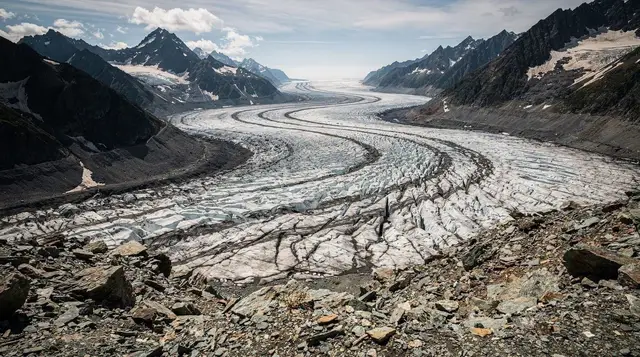
If the descent itself doesn’t line up with your dates, September is still the best month I’ve had in this region for other reasons — the crowds from August have gone, the light through the valley is flatter and better for photos, and the higher trails are usually still clear. I’d spend a morning on the rail trip up to the Jungfraujoch before the first proper snow closes in on the glacier saddle, since visibility in early autumn is often sharper than in high summer haze.
On a day when the valleys stay warm, the e-bike route out to Iseltwald and the Giessbach falls along Lake Brienz has none of the July queues at the jetty. And if you’re staying up in Grindelwald, the cable car up to Grindelwald First is running its normal autumn schedule right through this window, weather permitting — it’s one of the lifts that does close for a maintenance break, so check the day before rather than assuming.
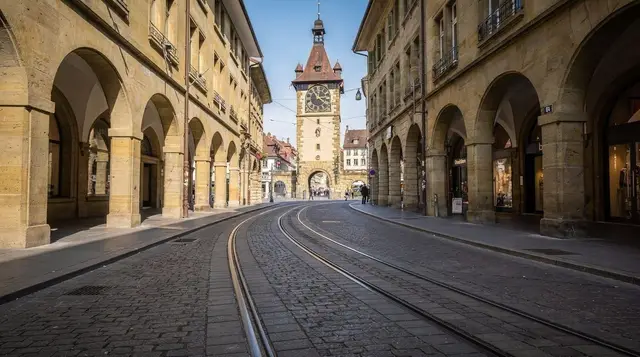
Villages worth building a September visit around, beyond Lauterbrunnen itself, include Kandersteg and its Oeschinensee, Adelboden, and the Saanenland around Gstaad — all places where dairy farming is still the backbone of the local economy rather than a display for visitors. Bern’s old town and the Emmental dairy region make a reasonable day trip from Interlaken if you want to see the cheese side of this without the cattle. And if you miss the descent entirely, the cheese it produced turns up on menus everywhere from October, so the season isn’t wasted either way.
Reading the rest of the season around the descent
The descent makes more sense once you see it as one beat in the Oberland year. The guide to Interlaken in autumn covers the wider mood of the season, and events and festivals in the Bernese Oberland is the place to check which village celebrations are likely to sit around your dates. If you are still deciding when to come at all, the best time to visit Interlaken puts September next to the other months.
The cheese is the other half of the story. Cheese dairies of the Bernese Oberland explains where the alp milk ends up, and fondue and raclette in Interlaken tells you where to eat it once the herds are down. For the dairy-country side trips mentioned above, see the pages on Gruyères, the Emmental and Bern, and for the Saanenland end of the region, Gstaad.
If you want to be standing in the right valley on the right morning, the villages themselves are the best base. Lauterbrunnen and Grindelwald are where the herds tend to come through the streets, while Kandersteg and Oeschinensee is quieter and more purely agricultural. Sigriswil and Merligen is the way in to the Justistal side of Lake Thun.
Plan for weather that changes your mind. Early autumn can turn cool and wet, and Interlaken in bad weather has ideas for the days when no herd comes down the road. A loose plan is a better fit for this season than a tight one; Interlaken in one day and the three-day itinerary are easy to shuffle around a descent that decides its own date.
Alpabzug and désalpe: questions I get asked
Is the Alpabzug the same thing as the désalpe?
Yes. Alpabzug (sometimes Alpabfahrt) is the German-Swiss name, désalpe the French one, for the same September or early-October movement of cattle from high alpine pasture down to the valley for winter.
Can I find out the exact date in advance?
Not reliably. Farmers decide within days of the descent based on grass and weather, so tourist offices publish a likely window, not a fixed date, until a week or so before. Villages that run an organised festival around it announce that date separately and earlier, since the food stalls and band need booking.
Why do only some cows wear flower crowns?
The crown, or Blumenkranz, is only put on a herd that made it through the summer on the alp without a serious accident or death. It’s a mark of a good season, decided by the farming family, not by an organiser.
Where near Interlaken is the least touristy place to see one?
Justistal, above Sigriswil on the Lake Thun side, is generally reckoned the most authentic and least staged, partly because it combines the descent with the genuine Chästeilet cheese division rather than a separate festival programme.
What’s the difference between the real descent and the village festival?
The descent is the actual walk down by the farmer and the herd, timed to weather and grass. Many villages then build a market day, brass band, and costumed procession around it for visitors, usually fixed to a weekend — worth attending, but a layer added on top of the agricultural event rather than the event itself.
Do the mountain railways and cable cars still run in September?
Yes, on their normal autumn timetable, though some lifts take a short maintenance closure in the shoulder season and a few close early on windy days, so it’s worth checking the operator’s status page the morning of your trip rather than assuming.
Is there anywhere I can watch a cheese division without the cattle?
Some dairy villages in the Emmental and around Gruyères hold separate cheese-related events into autumn even after the cattle are already down, so a missed Alpabzug doesn’t necessarily mean a missed Chästeilet.
Should I book anything in advance for this?
No — the working descents aren’t ticketed events, and even the organised village festivals are usually free to walk around. The only booking worth doing is your own transport and, if you want a guaranteed autumn day up high, a mountain excursion like the Jungfraujoch railway, which is worth reserving a couple of days ahead in high season habits even though September is quieter.
tours.Culture
Verified deep-linked GetYourGuide tours. Book through these links and we earn a small commission at no cost to you.
GetYourGuide does not provide a product photo for this activity — the image shows the meeting point, photographed by us.