Interlaken in summer: heat, storms and crowds
What is summer like in Interlaken?
June to August brings valley temperatures of 22-28C, cold mountain air above 2000m, and near-daily afternoon thunderstorms from July. Lake Thun and Lake Brienz are swimmable from mid-June, and the Jungfraujoch, Schilthorn and Grindelwald First all need earlier starts or advance tickets to avoid the worst of the crowds.
Two climates, one town
Interlaken sits at 568m between Lake Thun and Lake Brienz, and in summer that low altitude means real heat: 22-28C most afternoons from mid-June to late August, with the odd heatwave pushing past 30C. The Hohematte fills with people lying on the grass between paragliding landings, and the Aare channel running through town becomes a genuine swimming spot for locals cooling off after work.
None of that tells you anything about the mountains. Ride the Jungfraubahn up to the Jungfraujoch at 3,454m and the temperature drops roughly 6-7C for every 1,000m of ascent, meaning a 26C morning in Interlaken can be 4C and windy at the top, sometimes with fresh snow on the glacier even in July. The same gap, smaller but still real, applies at the Schilthorn at 2,970m and Grindelwald First at 2,168m. Anyone planning a same-day trip from lake to summit needs to dress for both, not just the one they start in.
The afternoon storm pattern
From late June through August, the Bernese Oberland has a fairly predictable rhythm: clear or partly cloudy mornings, cumulus building over the peaks by early afternoon, and thunderstorms arriving anywhere from 1pm to 6pm, most commonly around 3pm. July is the wettest month by storm frequency, though the rain rarely lasts more than an hour or two before clearing.
This matters for planning, not just for packing an umbrella. Cable cars and the summit railways can suspend running during lightning and high wind, and visibility on an exposed viewpoint drops to nothing inside a cloud.
The practical response is to front-load the day: book the earliest reasonable departure to the Jungfraujoch, Schilthorn or Harder Kulm, aim to be back down or at least below the peak by early afternoon, and treat anything after 2pm as a lower-risk activity such as a lake cruise or a town walk. See Interlaken in bad weather for wet-day fallback options when a storm sets in for longer than an hour.
Swimming: Lake Thun warms up, Lake Brienz mostly doesn’t
The two lakes behave differently in summer, and it is worth knowing which is which before packing swimwear. Lake Thun is shallower and fed less directly by glacial meltwater, so its surface warms to a genuinely swimmable 22-24C by August, with public lidos at Thun, Spiez and Oberhofen offering changing rooms, diving platforms and grass to lie on for a few francs’ entry.
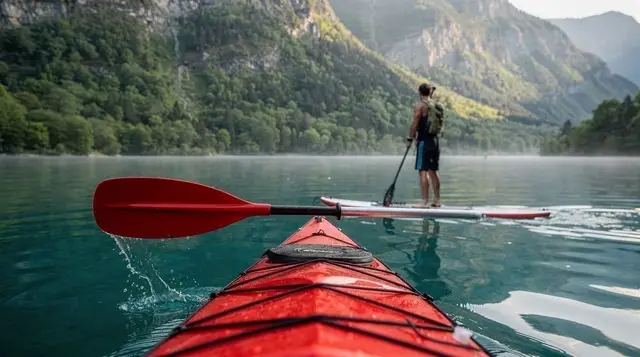
Lake Brienz, by contrast, gets its striking turquoise-green colour from rock flour carried down by glacial rivers, and that same glacial source keeps the water noticeably colder even in the height of summer, often still in the mid-teens. It is swimmable, and popular for exactly that reason at spots like Iseltwald and the Giessbach shore, but it is a colder swim than Lake Thun on the same afternoon. Full detail, water temperatures by month and the best access points for each lake are in swimming in Lake Thun and Lake Brienz.
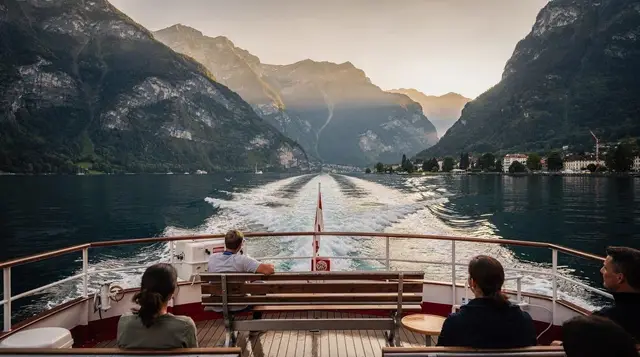
Boat trips on both lakes run their full summer timetable from roughly May to October; see the Lake Thun boat trips guide and Lake Brienz boat trips guide for routes, and the two-lake cruise guide for combining both in one day.
| Lake | Typical August water temperature | Best for |
|---|---|---|
| Lake Thun | 22-24C | Lidos, longer swims, families |
| Lake Brienz | 15-18C | Short swims, dramatic colour, cold-water dips |
What sells out and what doesn’t
Summer is peak season for the Jungfrau region’s rail and cable-car network, and a few things genuinely need booking ahead rather than turning up on the day.
| What | Book ahead in summer? | Why |
|---|---|---|
| Jungfraujoch ticket | Yes, online with a timed departure | Ticket-hall queues at Interlaken Ost and Grindelwald routinely run 30-60 minutes in July-August |
| Schilthorn cable car | Recommended for midday slots | Piz Gloria draws steady coach traffic from Lauterbrunnen and Mürren |
| Lake cruises | Rarely necessary | Frequent departures, capacity is high |
| Popular restaurants (Hoheweg, Harderplatz) | Yes for dinner | Peak-season tables fill by 7pm |
| Grindelwald First trottibike and mountain cart | Yes | Limited daily allocation, sells out by mid-morning in good weather |
The Berner Oberland Pass and Jungfrau Travel Pass guide covers how multi-day passes interact with peak-season pricing, since some regional passes exclude the final stretch to the Jungfraujoch itself and require a top-up.
Timing the big three to dodge the crowds
The three viewpoints that draw the heaviest summer traffic are the Jungfraujoch, the Schilthorn and Harder Kulm, each for different reasons: the Jungfraujoch as the highest point reachable by rail in Europe, the Schilthorn for its 360-degree panorama and Piz Gloria restaurant, and Harder Kulm for being an eight-minute funicular ride straight out of Interlaken Ost.
The pattern that works at all three is the same. The first cars and trains of the day, typically departing before 9am, carry a fraction of the midday volume, and the light is usually better before the afternoon haze and cloud build up. Coach tour groups tend to arrive from Lucerne, Zurich and Bern between 10.30am and 2pm, which is the window to actively avoid if crowding bothers you. A late-afternoon visit, after 4pm, is the other quiet slot, though it narrows the time available before afternoon storms or the last descending services.
For a side-by-side comparison of the two headline peaks, see Jungfraujoch vs Schilthorn, and for the full seasonal closure calendar, when mountain railways open and close — a genuinely useful check since some lifts close for scheduled maintenance in shoulder weeks either side of peak summer, and others close on high-wind days regardless of season.
Summer is the season for Interlaken’s outdoor activities
Interlaken’s identity as an adventure-sports hub is really a summer identity: warm valley air, long daylight and reliable thermals make June to September the core season for paragliding off the Harder or the Schynige Platte onto the Hohematte, canyoning in the gorges above Lauterbrunnen and Grindelwald, and whitewater rafting on the Lütschine and Aare. A rafting trip paired with a raclette dinner is a fixture of the local operator scene in summer — an afternoon on the water followed by a raclette meal covers both without requiring two separate bookings.
Waterfalls are also at their fullest in early summer as snowmelt peaks, making June and early July the best window to see the Staubbachfall and the Trümmelbach Falls at full force; by September, flow has usually dropped noticeably. A guided morning tour through the valleys and waterfalls around Lauterbrunnen is a straightforward way to see several in a single outing without arranging trains and buses independently.
Cycling and e-biking are at their best in summer too, with the valley floor route between the lakes largely flat and shaded in places. Renting an e-bike for a day around the Bodeli covers the lake shores and villages at a manageable pace even in midday heat, and for something more adrenaline-driven, a scenic skydive over the Bernese Alps runs on clear-weather summer days when visibility across the Jungfrau range is at its best.
See paragliding in Interlaken, canyoning in the Bernese Oberland and cycling and e-bike routes for the full picture of conditions, operators and seasonal limits.
For hikers, summer is when the high trails actually open: snow typically clears from routes like the Bachalpsee hike and the Faulhorn and Bussalp loop by mid-to-late June, and stays clear through September. Earlier in the season, always check current trail conditions before committing to a full-day route above 2,000m, since a late snow year can keep sections closed into July.
Building a summer day around the weather
The easiest way to use the weather pattern is to think of the day in three blocks. The morning belongs to the mountains: that is when the air is clearest, the queues are shortest and the risk of a storm is lowest. The middle of the day suits anything that keeps you close to shelter or shade, such as a long lunch, a museum visit or a slow stroll along the lake shore. The late afternoon and evening are for the water, the Hohematte and a terrace dinner once the heat eases.
If the forecast looks unsettled, do not cancel the big viewpoint, just move it earlier and keep a flexible plan for the afternoon. Many visitors lose a day by waiting for a perfect forecast that never arrives in July. A clear morning followed by a storm is the normal shape of a summer day here, and it rarely spoils a trip planned around it. The best mountain excursions from Interlaken guide helps you choose which peak deserves your best-weather morning, and Interlaken free things to do fills the gaps when you would rather not spend anything on the flexible hours.
It also helps to check conditions the evening before and again at breakfast, rather than relying on a forecast made days ahead. Mountain weather changes quickly, and the valley view can be misleading: a sunny town does not guarantee a clear summit, and a grey start does not always mean a grey day above the cloud. Talk to the staff at your hotel or at the station, who see the webcams and the real conditions all day.
Heat, sun and staying comfortable
Valley heat catches people out because the mountains feel so cold in photographs. On a hot afternoon the streets around the Hoheweg and the station areas can be warm and still, so plan the walking part of your day for the morning or evening. Drink water regularly, wear a hat, and use sun cream even on cloudy days, since the sun is stronger at altitude and the glare off snow and rock adds to it.
If you are travelling with children or older relatives, build in shade and water breaks. The lake shores, the shaded stretches of the valley cycle route and the covered boat decks all offer relief. Our Interlaken with kids guide and the guide to easy flat walks around Interlaken suggest gentle options, and the swimming guide shows where to cool off safely. Remember that glacial water can be cold enough to surprise even confident swimmers, so enter slowly and stay near the shore.
Staying and eating in peak season
Because summer is the busiest period, the sensible habit is to decide the fixed points early and leave the rest loose. Rooms in and around town are in demand, so the where to stay in Interlaken guide is worth reading before you commit to a base, and the Interlaken restaurant guide and fondue and raclette in Interlaken help with dinner. On warm evenings many people prefer a lighter meal outside, and bars with a view in Interlaken is a pleasant way to end a long day. Those watching their spending will find ideas in Interlaken on a budget and eating cheap in Interlaken.
Getting around is straightforward in summer, but trains, buses and boats all feel the crowds at midday. The trains, buses and boats around Interlaken guide explains how the pieces fit together, and the Swiss Travel Pass guide is useful if you plan several long days of travel.
What to pack
A single packing list has to cover a 25C valley afternoon and a windy, potentially near-freezing summit within the same day, which is the main packing challenge Interlaken presents in summer.
The altitude, weather and what to pack guide goes through this in detail, but the short version: light layers for the valley, a proper windproof or softshell jacket for any trip above 2,000m, closed shoes rather than sandals for anything involving a funicular platform or gravel path, sunglasses and sun cream for the reflective glare at altitude, and a compact rain shell for the near-daily chance of an afternoon shower. Swimwear is worth including even on a short visit, given how central the lakes are to how locals actually spend a hot afternoon.
Planning the rest of the trip
Summer’s long daylight, typically light until after 9pm in June and July, makes it realistic to combine a mountain excursion in the morning with a lake swim or boat trip in the afternoon and evening, something that is far tighter in shoulder seasons. The how many days in Interlaken guide and the Interlaken 3 days itinerary both build around this longer summer day.
For anyone weighing whether to come in July and August at all versus the quieter shoulder months, best time to visit Interlaken and Interlaken in summer vs autumn lay out the trade-offs between weather reliability, crowd levels and prices directly.
Summer in Interlaken: your questions answered
Is Interlaken hot in summer?
The Bodeli valley floor regularly hits 25-28C in July and August, occasionally higher during a heatwave. It cools at night and drops fast with altitude, so a hot day in town can mean single digits at the Jungfraujoch.
Does it rain a lot in Interlaken in summer?
Yes, in short bursts. Mornings are usually clear, and cumulus builds through the day into thunderstorms between roughly 2pm and 6pm, most often in July. Mornings before 11am are the more reliable window for mountain trips.
Can you swim in Lake Thun and Lake Brienz in summer?
Lake Thun warms to around 22-24C by August and is comfortable for swimming from public lidos and lakeside spots. Lake Brienz, fed by glacial meltwater, stays several degrees colder even in high summer and its turquoise colour comes from suspended rock flour.
Do I need to book the Jungfraujoch in advance in summer?
Booking a timed ticket online is strongly advised from June to September. Walk-up demand at Interlaken Ost and Grindelwald in peak weeks routinely fills the first available trains, and a pre-booked slot avoids standing in the ticket queue.
What time of day has the fewest crowds at the main viewpoints?
The first departures of the day, generally before 9am, are consistently quieter at the Jungfraujoch, Schilthorn and Harder Kulm. Late afternoon, after day-trip coach groups head back towards Lucerne or Zurich, is the second-best window.
Is Interlaken too crowded in July and August?
The town itself absorbs crowds reasonably well since day visitors spread across the Jungfraujoch, Schilthorn and lake boats rather than staying in Interlaken. The Hoheweg and the two stations feel busiest around midday; early mornings and evenings are notably calmer.
What should I pack for a summer trip to Interlaken?
Layers are essential: a T-shirt and shorts for the valley, plus a windproof jacket, jumper and closed shoes for anything above 2,000m. A light rain shell covers the afternoon storms, and swimwear is worth packing even on a short visit.
Lake cruises & boat tours on GetYourGuide
Verified deep-linked GetYourGuide tours. Book through these links and we earn a small commission at no cost to you.
GetYourGuide does not provide a product photo for this activity — the image shows the meeting point, photographed by us.