Seven days in Interlaken and the Jungfrau region
Seven days is the point where an Interlaken trip stops being a list of summits and starts covering the region properly: the two valleys that fan out from the Bödeli, three of the mountain balconies, both lakes, and Kandersteg’s Oeschinensee on the far side of the Lötschberg. It is also long enough to build in two lower-effort days, which matters more than it sounds — four consecutive lift-and-hike days in a row is where most itineraries fall apart by day five.
This plan uses Interlaken as a single base for all seven nights, which keeps packing to a minimum since both Lake Thun and Lake Brienz valleys, plus Grindelwald and Lauterbrunnen, sit within half an hour of Interlaken Ost or West. Check when the mountain railways open and close before booking: several lifts close for a week or two of maintenance in spring and autumn, and high-altitude sections shut in strong wind regardless of the calendar.
| Day | Focus | Overnight | Rough cost per person |
|---|---|---|---|
| 1 | Arrival, the Bödeli, Harder Kulm | Interlaken | CHF 40-60 |
| 2 | Jungfraujoch (3,454m) | Interlaken | CHF 200-230 |
| 3 | Grindelwald and Grindelwald First | Interlaken | CHF 90-110 |
| 4 | Lauterbrunnen valley to Mürren | Interlaken | CHF 70-90 |
| 5 | Mürren, Gimmelwald, Schilthorn | Interlaken | CHF 110-140 |
| 6 | Two lakes, boat and shoreline | Interlaken | CHF 50-70 |
| 7 | Kandersteg and Oeschinensee | Interlaken | CHF 60-80 |
Before you commit to a base, the where to stay in Interlaken guide helps you choose between the two station areas, and best time to visit Interlaken explains how the season changes what this week can include. If you would rather see the same region with a few longer excursions mixed in, compare it with the seven-day plan with day trips; walkers who want more trail time should look at the six-day hiking itinerary.
Day 1: settling into the Bödeli
Arrive into Interlaken Ost or Interlaken West — check which one your hotel is nearer, since they sit a 20-minute walk apart on opposite sides of town. Interlaken Ost handles the Jungfrau railways, the Lake Brienz boats and the Brünig line to Lucerne; Interlaken West is closer to the Hoheweg and the Lake Thun boats. Spend the afternoon walking the Bödeli: the Hoheweg past the grand hotels, the 14-hectare Höhematte meadow where paragliders land most afternoons in good weather, and the old towns of Unterseen and Matten on the far side of the Aare.
In the early evening, take the eight-minute funicular from Interlaken Ost up to Harder Kulm at 1,322m. It is the cheapest of the region’s viewpoints (a round trip runs about CHF 40, discounted with the Swiss Travel Pass) and the closest, which makes it the obvious first-evening outing: you get the two-lake view from the platform without giving up a full day. See the Harder Kulm guide for last-lift times, which shift with the season.
If your bags arrive before your room is ready, the luggage and lockers guide saves you dragging a suitcase around the Hoheweg. For dinner on this first night, keep it easy: the Interlaken restaurant guide and the notes on fondue and raclette in Interlaken are good places to pick something relaxed, and an early night pays off because the next morning starts early. The common mistakes first-time visitors make are also worth a skim now, while nothing has been booked yet.
Day 2: the Jungfraujoch
This is the expensive day and it deserves the whole day. The Jungfraujoch, at 3,454m, is the highest railway station in Europe, opened in 1912 after a tunnel was bored through the Eiger and the Mönch. There are two approaches from Interlaken: via Grindelwald and the Eiger Express gondola to the Eigergletscher (about 15 minutes, running since December 2020), or via Lauterbrunnen and the rack railway through Kleine Scheidegg. Either way, allow 2-2.5 hours each way from Interlaken and go early — cloud tends to build over the glacier by early afternoon even on a clear morning down in the valley.
a day trip from Interlaken to the Jungfraujoch bundles the return rail journey and skips some of the ticket-counter logistics, which is worth it on a day this tightly timed. Budget 3-4 hours at the top for the Sphinx observation terrace, the Ice Palace tunnels, and the Aletsch Glacier viewpoint if visibility holds. Read what nobody tells you about the Jungfraujoch before you go — it is a genuinely crowded, commercialised summit, not a quiet Alpine outpost, and knowing that in advance changes expectations for the better. Full logistics are in the Jungfrau railway guide.
Dress for the summit, not for the valley: the altitude, weather and what to pack guide explains why a light jacket that feels right in Interlaken is not enough at the top. Because this is the day with the most to lose from a poor forecast, keep Interlaken in bad weather in mind as the fallback, and read the cost of a glacier if you want an honest sense of what the ticket pays for. The Jungfraujoch guide goes deeper on what to see once you arrive.
Day 3: Grindelwald and Grindelwald First — balcony one
Grindelwald is the larger of the two valley villages and the base for the first of the week’s three “balcony” viewpoints. Take the train to Grindelwald (about 35 minutes from Interlaken Ost) and then the gondola up to Grindelwald First at 2,168m.
the Grindelwald gondola and Mount First adventure ticket covers the return trip and, if you want it, one of the attractions up top — the First Cliff Walk, a mountain cart descent, or the summer toboggan. The straightforward option is the walk out to Bachalpsee, roughly two hours round trip on a good path with the Wetterhorn reflected in the lake on a still day; see the Grindelwald First guide for the full route options and the best day hikes from Interlaken for alternatives if First is closed for wind, which happens more often than on the valley floor.
Take your time on the way up and down. The cable cars and funiculars explained guide describes how the different lifts work, which helps when you are deciding whether to ride one way and walk the other. If you cannot decide between this balcony and its neighbours, First vs Männlichen vs Kleine Scheidegg sets out the differences, and the Grindelwald vs Lauterbrunnen comparison explains why the two valleys feel so different from each other.
Day 4: the Lauterbrunnen valley to Mürren
Head to Lauterbrunnen, 20 minutes from Interlaken Ost, and walk the valley floor first. The Staubbachfall, at 297m, is visible straight from the village street; the paid Trümmelbach Falls a few kilometres further on take you inside the mountain to see ten glacial waterfalls in sequence, worth the entry fee if you have not seen anything like it before. The Lauterbrunnen valley waterfall walk lays out the full route, and an e-bike tour to Lauterbrunnen and Isenfluh is a reasonable way to cover the valley floor and the balcony road above it in one outing if walking all day doesn’t appeal.
In the afternoon, take the cable car from Stechelberg up to Mürren, a car-free village perched on a shelf 800m above the valley. Cars stop at Lauterbrunnen or Stechelberg; everyone continues by cable car or train. Stay for the sunset light on the Eiger, Mönch and Jungfrau from the village promenade before heading back down to Interlaken.
The Wengen vs Mürren comparison is useful if you wonder which of the two villages deserves your evening, and the Bernese Oberland railways explained guide untangles the rack railways and cable cars you will use today. Leave a little slack at the end of the day: connections run to a timetable and the last ride down is not one to miss.
Day 5: Mürren, Gimmelwald and the Schilthorn — balcony two
Return to the Lauterbrunnen valley and go back up to Mürren, then walk or take the short cable car down to Gimmelwald, the smallest and least developed of the car-free villages — worth 30-45 minutes even if you don’t stop for long. From Mürren, the cable car climbs to the Schilthorn at 2,970m, home to the revolving Piz Gloria restaurant familiar from the 1969 Bond film.
a private trip covering Lauterbrunnen, Mürren and the Schilthorn is the way to do this without juggling three separate tickets and connections in one day. The Schilthorn and Piz Gloria guide covers current lift prices, which run higher than Grindelwald First’s, and how the view compares to the Jungfraujoch — most visitors who’ve done both prefer the Schilthorn’s open 360-degree panorama to the enclosed Sphinx terrace.
If you want to weigh this summit against the week’s biggest one, Jungfraujoch vs Schilthorn is the clearest side-by-side, and Interlaken viewpoints lists the lower lookouts for days when the top is in cloud. Bring layers and sunglasses, and start early so the clearest part of the morning is spent at the summit rather than in a queue.
Day 6: two lakes, active rest day
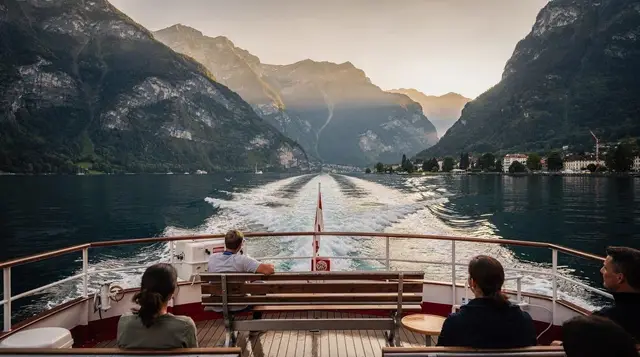
After three lift-heavy days, drop the altitude and take a boat instead. Interlaken sits directly between Lake Thun and Lake Brienz, and both are served by CFF/SBB paddle-steamer and modern boats from Interlaken West and Ost respectively.
The Interlaken two-lake cruise guide lays out routes; a half-day on Lake Brienz to Iseltwald and back, with its turquoise water and the Giessbach Falls opposite, covers the more scenic of the two. See the Lake Brienz boat trips guide and the Lake Thun boat trips guide for timetables, which thin out sharply outside May-October.
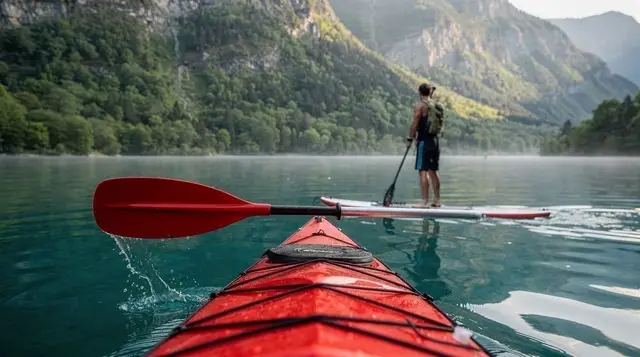
This is also a fair day to do very little: swim off one of the public lidos if it’s warm enough, or walk the flat path along Lake Thun’s shore between Interlaken and Bönigen or Unterseen. The point of the day is recovering leg strength for Kandersteg tomorrow, not adding a fourth summit.
For the swimming option, swimming in Lake Thun and Lake Brienz covers where people actually get in, and Lake Thun vs Lake Brienz will help you choose which shore to spend the afternoon on. The trains, buses and boats around Interlaken guide shows how the lake services connect with the stations, and the paddle steamers of the Bernese Oberland is worth reading if you want to ride a historic boat.
Day 7: Kandersteg and the Oeschinensee
The last day goes further afield, over to Kandersteg and the Oeschinensee on the Bernese Oberland’s southern side, reached by train via Spiez (about an hour from Interlaken). From Kandersteg village, a chairlift or a roughly 90-minute uphill walk gets you to the Oeschinensee, an alpine lake at 1,578m ringed by the Blüemlisalp glacier and limestone cliffs — one of the better lake-and-mountain combinations in the region and less crowded than anything closer to Interlaken. The Oeschinensee hiking guide covers the loop path around the lake, which takes 2-2.5 hours at an easy pace with several places to swim or rent a rowing boat in summer.
Head back to Interlaken by early evening. Before packing, it’s worth checking the Swiss Travel Pass guide against what you actually used this week — for a trip this transport-heavy, the maths on the pass versus individual tickets and the regional Berner Oberland Pass can go either way depending on how many summit lifts you rode at full price versus the pass’s 25% discount, and it’s easier to work out in hindsight with a week of receipts in hand.
Budget, pacing and what to swap
A week like this is easier to enjoy when the money question is settled early. The Interlaken travel costs guide breaks down where the spending really goes, and the Jungfrau and Berner Oberland Pass page is the place to test whether a regional pass beats individual tickets for your particular days. Treat the order of the days as flexible: the only fixed point is that the two summit days should go to the best weather you get, and the lake day and the first evening are the easiest to move around. If the week turns wet, A rainy week in Interlaken shows how it can still be a good trip.
Making it work: passes, timing and car-free villages
Nothing in this itinerary requires a car, and driving to Wengen, Mürren or Gimmelwald isn’t possible in any case — see how car-free villages work if you’re used to driving between trailheads. What does matter is booking the Jungfraujoch day around a settled weather window rather than a fixed date if your schedule allows it; it is the one day in this itinerary where a bad forecast genuinely wastes the ticket price, unlike the lower balconies at Grindelwald First or Harder Kulm, which are still worth doing in patchy cloud.
Lake cruises & boat tours on GetYourGuide
Verified deep-linked GetYourGuide tours. Book through these links and we earn a small commission at no cost to you.
GetYourGuide does not provide a product photo for this activity — the image shows the meeting point, photographed by us.